

Audio By Carbonatix
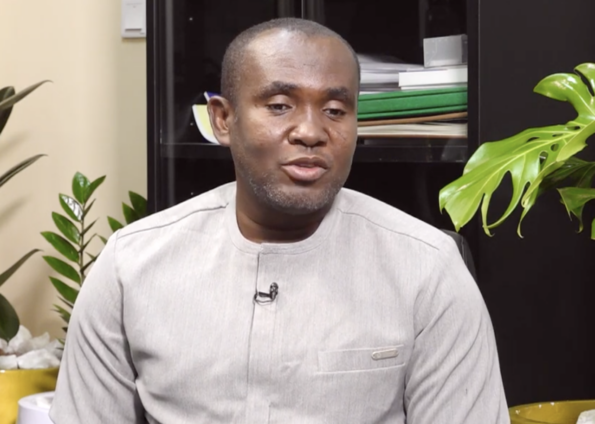
The Executive Secretary of the Public Utilities Regulatory Commission (PURC), Dr Shaffic Suleman, says Ghana spends an average of $92 million every month beyond electricity tariffs to keep power flowing across the country.
Speaking on JoyNews’ PM Express Business Edition on Thursday, he disclosed that the Ministry of Finance has been making substantial monthly interventions to sustain the energy sector and prevent power supply disruptions.
According to him, proceeds from the ¢1 levy on petroleum products have already been deployed to tackle long-standing liabilities in the sector.
“A report from the Finance Ministry indicates that the ¢1 on the petroleum products that was passed has been used,” he said.
Dr Suleman explained that a report submitted to Parliament and reviewed by him showed that about ¢8 billion had accumulated from the levy.
He said the funds had been used to settle most arrears owed to Independent Power Producers (IPPs), restore risk guarantees linked to the Sankofa Gye Nyame gas project and clear debts that had negatively affected Ghana’s credit standing.
“We’ve also used some of it to pay to get back the risk guarantees on the Sankofa Gye Nyame gas production, and then we’ve also paid off the accumulated debt that was putting Ghana’s credit rating at a very terrible outlook,” he stated.
He added that Ghana had restored the World Bank risk guarantee with ENI, a move he said had improved the country’s image and strengthened its credit profile.
“So it’s now making Ghana look so good, and our credit rating has also taken shape,” he noted.
The PURC boss further revealed that part of the money had been used to pay gas suppliers, including the Sankofa and Jubilee partners.
“We are using all that for the accounts I’ve seen to pay and sustain that part, and that’s actually what is keeping the light on,” he stressed.
Asked whether the intervention had significantly reduced the sector’s debt burden, Dr Suleman replied in the affirmative.
“Yes! It dropped the debt significantly. Now that’s what I’m saying, it’s not a debt-debt. So the government had to go and borrow to come and sustain the power sector,” he said.
He explained that maintaining a stable electricity supply throughout the year requires continuous financial support from the state.
“Every year, before our lights can be kept on consistently for 12 months, the Ministry of Finance must cough up money to ensure that we pay for the cost of all these fuels,” he said.
“So every month on average is $92 million. As we speak, it’s $92 million. So when you see your lights on for 30 days, what it means is that aside the tariff we are paying, the Ministry of Finance is also putting in $92 million to make the lights come on.”
Latest Stories
-
Prof. Mike Oquaye recounts how he blocked Special Prosecutor’s attempt to arrest Bawku Central MP
12 minutes -
Make health sovereignty a priority for Africa – Mahama
23 minutes -
Dorimon Naa, Wa West DCE lead massive clean-up exercise; threaten sanctions against recalcitrant residents
40 minutes -
Photos From Adom FM Y2K Jam
43 minutes -
Praye Tiatia steals the show at Adom FM Y2K Jam [Watch]
52 minutes -
Boakye Agyarko congratulates John Boadu, pledges support for NPP leadership
1 hour -
Antwi HiMight thrills fans with Antwi ne Antwi hits at Adom FM’s Y2K Jam [Video]
1 hour -
Amb. Edward Boateng congratulates Boadu, Kodua on election wins
2 hours -
John Boadu pledges to rebuild NPP from grassroots and restore ‘winning machinery’
2 hours -
Ashaiman Assembly deploys monitoring system to curb dumping in storm drain
2 hours -
John Boadu must rebuild, unite NPP for 2028 – Edward Boateng
2 hours -
Executive intimidation of opposition undermines separation of powers – Prof Oquaye
2 hours -
I have no issue with John Boadu; we’ll work together – Justin Kodua
3 hours -
Adom FM Y2K Jam delivers a night of music, fashion and nostalgia
4 hours -
Lawrence Kobena Nsarko Otoo, Esq
5 hours