

Audio By Carbonatix
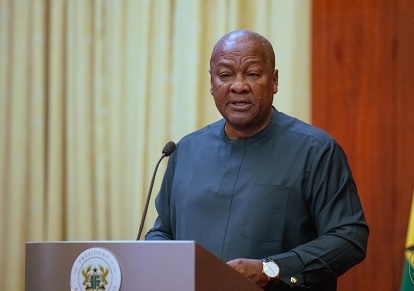
President John Mahama has attributed the devastating flooding that swept through parts of Accra on Monday to a combination of unusually intense rainfall, changing climate patterns, inadequate drainage infrastructure and human activities that have obstructed the city's natural waterways.
The President made the remarks after conducting an aerial assessment of flood-affected communities on June 29, during which he observed the extent of the destruction caused by the heavy rains.
He described the flooding as one of the most severe the capital has experienced in recent years, noting that the rainfall far exceeded previously recorded levels.
According to President Mahama, approximately 140 millimetres of rainfall was recorded in Accra within a single day, compared with a peak of 56 millimetres recorded on a heavy rainfall day during the same period last year.
He explained that data from the Ghana Meteorological Agency also shows a consistent rise in rainfall intensity, with June rainfall increasing from 85 millimetres in 2024 to 172 millimetres in 2025 and reaching 333 millimetres in 2026 over comparable periods.
He said the increasing frequency of rainfall has prevented drainage systems from recovering between storms, thereby worsening flooding in vulnerable communities.
The President further pointed to Accra's geographical setting and rapid urbanisation as significant contributors to the recurring floods.
He explained that the city lies between the Akwapim mountain range and the Atlantic Ocean, with natural watercourses that have gradually been encroached upon by unplanned development.
According to him, population growth and indiscriminate construction have blocked or narrowed many of the channels through which stormwater naturally flows into the sea, creating serious drainage constraints.
President Mahama also blamed irresponsible human activities for aggravating the situation, particularly the indiscriminate disposal of refuse into drains and the destruction of wetlands through illegal dumping and construction.
He expressed concern over reports that some wetlands are deliberately filled with waste before being sold for development, warning that such practices significantly increase flood risks for surrounding communities and undermine efforts to address Accra's perennial flooding challenges.
Latest Stories
-
Sherif Ghali steps down as CEO of Ghana Chamber of Young Entrepreneurs after 10 years
35 seconds -
Signals Bureau case: ‘I had about 60 questions’ – Atta Akyea welcomes extra cross-examination day
2 minutes -
Africa’s colonial ecological debt could exceed hundreds of trillions of dollars – Report
20 minutes -
Ibrahim Sulemana joins Sassuolo on loan from Atalanta
24 minutes -
Former UK Prime Minister Keir Starmer to stand down as MP to focus on world affairs
30 minutes -
Built to Last, Left to Rot: Ghana’s maintenance crisis
36 minutes -
Number of debit cards issued by banks decreased by 11.8% to 5.7m in 2025
56 minutes -
Total mobile money transaction values grew by 50.8% to GH¢4.54trn in 2025
60 minutes -
Private aggregators, not state, will bear local refining costs – GoldBod
1 hour -
Ablakwa urges African leaders to adopt new leadership paradigm to create opportunities for youth
1 hour -
Photos: Mahama holds talks with Serbian President in Belgrade
1 hour -
Local gold refining good for economy but costs must be controlled – Economist
1 hour -
Keir Starmer announces he is standing down as MP
1 hour -
One still missing after Grand Canyon floods kill two and prompts rescue efforts
1 hour -
Mahama Ayariga calls for major overhaul of Ghana’s waste management system
1 hour