

Audio By Carbonatix
India has emerged as a global leader in advancing clean energy. By the end of December 2025, non-fossil fuel sources accounted for 51.93 per cent of India’s installed power capacity, surpassing the 50 per cent target set under the country’s second Nationally Determined Contribution.
According to the International Renewable Energy Agency’s Renewable Energy Statistics 2025, India ranks fourth globally in total installed renewable energy capacity.
India’s energy transition must be understood in the context of its development needs. The country has not yet reached peak energy demand, while energy access, affordability and security remain central to its development pathway.
Its strategy therefore combines the expansion of renewable energy, energy efficiency, nuclear power, green hydrogen, carbon sinks and carbon markets with industrial competitiveness and job creation.
Green hydrogen has emerged as an important component of this strategy because it can support decarbonisation in sectors where direct electrification may not be sufficient. Green hydrogen serves both as a fuel and an industrial feedstock.
Its production using renewable energy can replace fossil fuel-derived inputs in petroleum refining, fertiliser production, steel manufacturing and other hard-to-abate sectors, while also supporting the decarbonisation of long-haul road transport, railways and marine vessels. The Indian Railways has recently demonstrated its capacity to operate hydrogen-fuelled trains.
The National Green Hydrogen Mission provides the central policy framework for scaling up this opportunity, linking the energy transition with industrial policy and external economic opportunities. The mission targets annual production of five million metric tonnes of green hydrogen by 2030.
Production capacity of 862,000 tonnes per year has already been allocated to 18 companies, while 15 firms have been awarded 3,000 MW of annual electrolyser manufacturing capacity.
Three green hydrogen hubs have also been identified at the Deendayal Port Authority in Gujarat, the V.O. Chidambaranar Port Authority in Tamil Nadu and the Paradip Port Authority in Odisha.
A key feature of the strategy is the focus on connecting green hydrogen with concrete industrial applications. In the fertiliser sector, data indicate an aggregate procurement capacity of 7.24 lakh metric tonnes per annum of green ammonia at ₹55.75 per kg.
In petroleum refining, green hydrogen is being used to reduce the industry's carbon footprint, while in the steel sector, five pilot projects involving public and private producers are testing the use of green hydrogen for iron reduction and other processes under Indian operating conditions.
India's green hydrogen strategy also has a clear international dimension, with the country seeking to use voluntary cooperation under Article 6 of the Paris Agreement on Climate Change. This international orientation is significant because green hydrogen is expected to become an important component of future clean energy trade.
India's green hydrogen efforts therefore not only respond to domestic decarbonisation needs but also position the country to contribute to the development of the rules, markets and supply chains of a future low-carbon global economy.
India is also positioning itself within emerging international hydrogen platforms and partnerships. It entered the international hydrogen community at the World Hydrogen Summit in Rotterdam in 2024 with its first India Pavilion.
Cooperation is expanding under the EU-India Trade and Technology Council, where more than 30 joint proposals have been received on hydrogen production from waste. India and the United Kingdom have engaged on hydrogen standardisation, while work is being undertaken with Germany on market-based mechanisms and joint tender designs for exports. Indian companies have also secured long-term offtake agreements with Japanese companies for green ammonia and green methanol.
India has been at the forefront of promoting solar energy in the Global South, not only through its advocacy but also through the demonstrative effect of its domestic actions. Its proactive efforts on green hydrogen could have a similarly significant positive impact across the Global South.
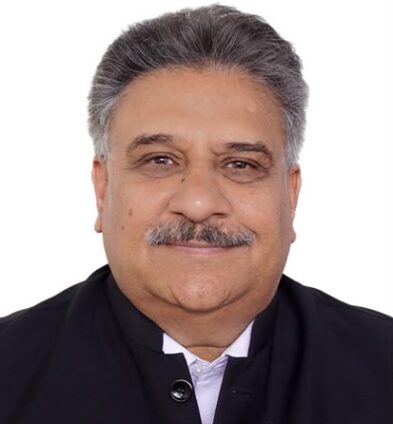
Ambassador Manjeev Singh Puri is a former Indian diplomat who served as Ambassador to the European Union, Nepal, Belgium and Luxembourg.
He has also served as India’s Ambassador and Deputy Permanent Representative to the United Nations.
Latest Stories
-
Republic Bank deepens commitment to homeownership with nationwide JoyNews Habitat Fair Partnership
4 minutes -
Archbishop Duncan-Williams links galamsey to Ghana’s wider culture of indiscipline
7 minutes -
India’s clean energy leadership in green hydrogen
16 minutes -
Ghana’s Road Safety Crisis: We must move from reaction to prevention
18 minutes -
Duncan-Williams urges Church to educate Ghanaians on dangers of galamsey and gold smuggling
29 minutes -
New Defence Minister pledges technology-led defence posture
34 minutes -
India and Africa: Relations beyond rhetorics
36 minutes -
Top Zambian opposition figures arrested days after presidential vote
37 minutes -
‘I’m not against enforcing the law’ – Archbishop Duncan-Williams defends call for prayer against galamsey, gold smuggling
42 minutes -
Tantalus or Triumph? Ghana and the Harvest of Economic Recovery
50 minutes -
Ghanaians have no idea how much foreigners make from galamsey – Archbishop Duncan-Williams
1 hour -
Today’s front pages: Monday, August 17, 2026
1 hour -
‘If you want to imprison me over my friendship with Bawumia, go ahead’ – Rev. Kusi Boateng
2 hours -
Wontumi Out, COKA In: How NPP’s new Ashanti chairman differs from his predecessor
4 hours -
With unity, we will win 2028 election – Bawumia
4 hours