

Audio By Carbonatix
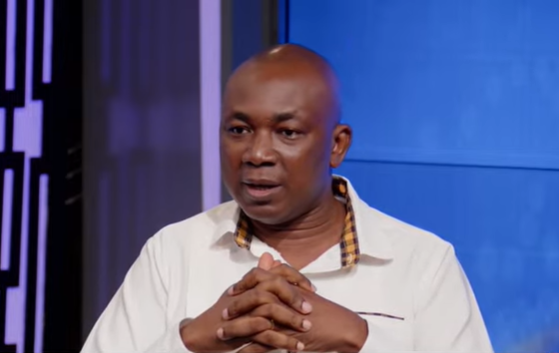
Economist Professor Godfred Alufar Bokpin says the true cost of Ghana’s gold-buying intervention goes beyond the losses reported in the Bank of Ghana's (BoG) books.
He said a proper assessment of the Ghana Gold Board (GoldBod) must consider the wider fiscal and financial costs of the programme, including taxes the state surrendered to attract artisanal and small-scale gold producers into the formal market.
Professor Bokpin was speaking on Joy News’ PM Express on Tuesday as GoldBod marked about a year of operations.
GoldBod was established in April 2025 as the central institution responsible for the purchasing, trading, and exporting of gold, particularly from the artisanal and small-scale mining sector.
The intervention was designed to formalise gold trading, curb smuggling and increase the amount of foreign exchange entering Ghana through gold exports. The programme has since become a major source of foreign exchange and reserve accumulation for the country.
The IMF has acknowledged those benefits but has also raised concerns about the financial cost. Its latest assessment put losses from the Domestic Gold Purchase Programme at more than US$1.7 billion in 2025. The Fund said the losses were linked to factors including fees, assay charges, trading margins, off-taking costs and exchange-rate differences.
Professor Bokpin believes the US$1.7 billion figure does not capture the full cost to Ghana.
“Well, my position after examining the data, and Evans, this is not a new position. I’ve been talking about this way back last year, that if you look at the losses we are talking about here, huge. They were design defects of the program,” he said.
He argued that the programme could have been better designed to reduce losses while retaining its benefits.
“They were design defects because I’m sure that with better planning and then expert input about the whole design, looking at the value chain approach, I am sure that we could have minimised these losses and vis-à-vis the benefit that we are getting.”
Professor Bokpin said the gains from increased gold-related foreign exchange inflows should not be used to overlook the financial burden created by the intervention.
He also rejected the suggestion that GoldBod should receive credit for broader macroeconomic stability, while the costs are treated solely as a BoG problem.
“Macroeconomic stability comes from essentially fiscal and monetary, which is the Bank of Ghana and all of that, so we cannot say that when it comes to macroeconomic stability, which essentially is the work of the Bank of Ghana and then the fiscal side, the Ministry of Finance, the Gold Board can take that benefit.”
He said Ghana must assess the intervention as one national programme because the losses ultimately affect the wider economy.
“I think it’s one country. It’s one economy we are looking at, and all of that.”
Professor Bokpin further pointed to the abolition of the 1.5% withholding tax on gold from artisanal and small-scale miners.
He said this represented an additional fiscal cost that should be included in any comprehensive assessment.
“So, if you look at the total gold exports from artisanal small-scale miners, which are more than $10 billion, is that okay? And you want to do the analysis in terms of the fiscal losses, which could have gone to our revenue envelope, probably to fund roads, schools, and infrastructure; we have to give up that one also, all in the name of trying to make sure that we are able to crowd in the FX related.”
Professor Bokpin nevertheless acknowledged GoldBod's success in bringing more gold-related foreign exchange into the formal economy.
“There is no doubt that Gold Board has helped significantly in crowding in gold-related FX.”
He said the narrowing gap between Ghana’s gold export figures and those recorded by importing countries suggests that smuggling has decreased since the intervention was introduced.
“I think that is a credit to Gold Board.” But he maintained that the benefits must be weighed against the full cost of the intervention.
“If you look at it and adopt a value chain approach entirely, you see that the losses actually go beyond the 22 billion that we see.”
Professor Bokpin said the benefits remain substantial, particularly in terms of economic stability. But he warned that the costs cannot be ignored.
“I think that if you look at the benefit in terms of the macroeconomic stability and all of that, I will say that the benefit is quite substantial, but we must also recognise the cost, the huge cost associated with implementing this intervention.”
His comments come as the government and the BoG move to reduce the programme's cost. The IMF says the share of domestic gold purchases in gross gold purchases fell from 15.3% in 2025 to 11.7% in the first quarter of 2026, with further reductions needed to reach the 5% target.
Professor Bokpin said the government itself recognises that the existing cost structure cannot continue.
“The reason I’m saying so is that the government itself, together with the Gold Board and the Bank of Ghana, recognise that these losses are not sustainable going forward.”
Latest Stories
-
Liberia agrees to accept up to 1,200 third-country deportees from US
32 minutes -
At least nine killed in hotel fire in India’s Kolkata
41 minutes -
Earl Spencer to ‘tell the truth’ about his sister Princess Diana in new book
50 minutes -
Meta hooked children on Facebook and Instagram, US court hears
1 hour -
African forest investment takes centre stage at Lagos business roundtable
1 hour -
Venus Williams given US Open singles wildcard – will Serena join her?
1 hour -
Premier League to publish verdicts on referee and VAR decisions
2 hours -
The 10.94 Cedi to 1 USD Paradox: Macroeconomic triumph, the import subsidy trap, and the threat to youth employment
2 hours -
Fifa sacking ‘deeply troubling’ – Uefa executive
2 hours -
Bezos consortium bought almost 40% of Liverpool
2 hours -
Kane set to begin talks over new Bayern contract
2 hours -
Aston Villa agree deal for West Ham’s Wan-Bissaka
2 hours -
GoldBod’s real cost to Ghana far higher than reported losses – Bokpin
2 hours -
Trump pauses new tariffs on Canada and says countries close to a deal
2 hours -
Camilla admits it was ‘difficult’ to keep King Charles’ cancer diagnosis a secret
3 hours