

Audio By Carbonatix
Economist Professor Godfred Alufar Bokpin says the GoldBod intervention has significantly helped Ghana to retain foreign exchange from the country’s gold sector but argues that the programme has suffered major “design defects”.
He said better planning and expert input could have reduced the losses associated with the domestic gold purchase programme.
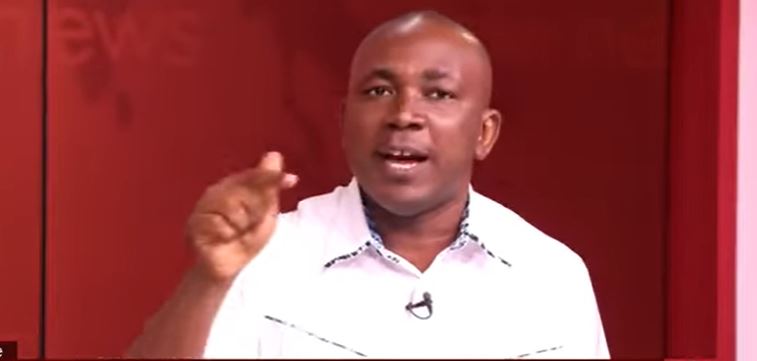
Prof Bokpin made comments on Joy News’ PM Express on Tuesday while assessing GoldBod’s performance one year after its establishment.
He acknowledged the role GoldBod has played in bringing gold-related foreign exchange into the formal economy.
“You indicated in your introduction that the level of smuggling, in terms of whether you measure the difference between gold export data from Ghana and then importing countries, if you do the reconciliation, you can see that the gap has narrowed significantly with the introduction of the Gold Board.”
“And I think that is a credit to Gold Board,” he added.
According to him, both the NPP and NDC identified the need to address illegal mining, gold production and the reporting of gold exports ahead of the 2024 elections.
He said the NPP proposed reducing the final withholding tax on gold exports from artisanal and small-scale mining to encourage miners to declare their gold.
The NDC, he said, opted to establish GoldBod to operate in a manner similar to COCOBOD.
Prof Bokpin, however, said the gains in foreign exchange retention must be weighed against the cost of the intervention.
“That said, this whole domestic gold purchase arrangement for which Gold Board essentially became the face of it from 2025 has also come at a significant loss to us, has come at a significant loss.”
He argued that some of the losses could have been avoided through better programme design.
“There were design defects in the program. Let me put it that way. They were design defects because I’m sure that, with better planning and then expert input about the whole design, looking at the value chain approach, I am sure that we could have minimised these losses and vis-à-vis the benefit that we are getting.”
Prof Bokpin also rejected attempts to attribute macroeconomic stability gains directly to GoldBod.
“Macroeconomic stability comes from essentially fiscal and monetary, which is the Bank of Ghana and all of that, so we cannot say that when it comes to macroeconomic stability, which essentially is the work of the Bank of Ghana and then the fiscal side, the Ministry of Finance, the Gold Board can take that benefit.”
He said the losses recorded by the Bank of Ghana must also be considered when assessing GoldBod’s overall impact.
He further pointed to the abolition of the 1.5% withholding tax on artisanal and small-scale gold producers as another cost to the state.
“So, if you look at the total gold exports from artisanal small-scale miners, which are more than $10 billion, is that okay? And you want to do the analysis in terms of the fiscal losses, which could have gone to our revenue envelope, probably to fund roads, schools, and infrastructure; we have to give up that one also, all in the name of trying to make sure that we are able to crowd in the FX related.”
He said a full value-chain assessment would therefore show losses beyond the GH¢1.7 billion figure being discussed.
“If you look at it and adopt a value chain approach entirely, you see that the losses actually go beyond the 22 billion that we see.”
Prof Bokpin nevertheless said the benefits from retaining gold-related foreign exchange were substantial.
“I think that if you look at the benefit in terms of the macroeconomic stability and all of that, I will say that the benefit is quite substantial, but we must also recognise the cost, the huge cost associated with implementing this intervention.”
He said the government, GoldBod and the Bank of Ghana had recognised that the losses could not continue at their current level.
“The reason I’m saying so is that the government itself, together with the Gold Board and the Bank of Ghana, recognize that these losses are not sustainable going forward.”
He said the planned exit arrangement seeks to reduce the losses from about 17% or 14.5% to about 5%.
Latest Stories
-
Phone dealer murder: 3 suspects remanded as court adjourns Teshie case
46 seconds -
Seamless Technologies CEO Calls for Strategic AI adoption to transform Ghana’s financial services sector
4 minutes -
Cargill, ICI equip 111 youth with vocational skills to tackle child labour
5 minutes -
Council of State member donates $5,000 to NDC UK and Ireland Aldershot branch for water project
10 minutes -
Education Ministry renews return-to-class appeal despite teachers’ refusal to end strike
15 minutes -
Remains of dozens of suspected kidnap victims found in Nigerian forests
15 minutes -
Four bodies found after avalanche hits Himalayan climbing group
22 minutes -
Adipa residents give government seven days to halt Agbogbloshie waste transfer
31 minutes -
Desks rotting in abandoned Kintampo South E-Block: A decade of neglect and a waste of state resources
33 minutes -
West Africa cannot simply import security models without accounting for local realities – WAMS
34 minutes -
Bono East Minister directs MCE to stop hotel project near Konkrompe SHS
57 minutes -
AGN Chair urges action-driven tracking and reporting on inclusive climate adaptation in Ghana’s agriculture
59 minutes -
Man City rule breaches not my concern – Mancini
60 minutes -
NSA releases PIN Codes for 2026/2027 national service private candidates and foreign-trained graduates
1 hour -
GMet forecasts thunderstorms, rain across parts of Ghana this evening
1 hour