

Audio By Carbonatix
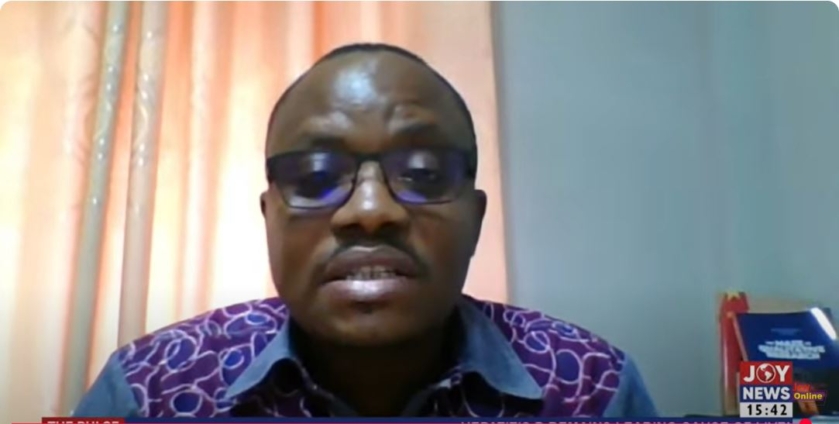
International Relations analyst Dr Ishmael Hlovor says Ghana’s decision to decline a GH¢20 million donation from MTN Ghana for victims of xenophobic attacks in South Africa is part of a broader diplomatic strategy to maintain pressure on the South African government.
According to him, while accepting the donation could make economic sense and provide support to affected victims, rejecting it sends a stronger diplomatic message to South Africa that Ghana considers the recurring attacks on foreigners a serious issue requiring sustainable solutions.
Speaking on JoyNews’ The Pulse on Wednesday, August 26, Dr Hlovor said Ghana wants South Africa to openly engage with the issue and take responsibility for addressing the conditions that continue to facilitate xenophobic attacks.
“I think that it's just a continuation of what Ghana intends to do about this regular attack on foreigners in South Africa. That is ensuring that you bring much more diplomatic pressure [on] the South African government and let South Africa engage openly to provide sustainable solutions to the issue of xenophobic attacks,” he said.
His comments come after Ghana declined a GH¢20 million donation offered by MTN Ghana to support Ghanaian victims of recent xenophobic attacks in South Africa.
Dr Hlovor explained that accepting the donation could allow South African authorities and businesses to portray themselves as supporting victims, while avoiding a deeper conversation about their responsibility to condemn and address the attacks.
Dr Hlovor described the proposed donation as potentially forming part of what he called “backdoor channels” aimed at helping South Africa manage the damage to its international image.
“Ghanaians are not willing to allow South Africa to use backdoor channels to try and clean its image,” he stated.
He noted that South African authorities had previously called on other African countries to bear the cost of repatriating their citizens affected by the attacks.
Against that background, he said, it would be difficult to separate donations by South African-linked entities from broader diplomatic and reputational considerations.
“The same South African government is calling on other African nations to pay for repatriation of their citizens, and then you have the South African entities who are now trying to donate to countries that have suffered from the xenophobic attack and who have put a lot of resources into repatriating their citizens,” he said.
Dr Hlovor stressed that the issue therefore goes beyond the immediate financial benefit of the GH¢20 million.
He said that from an economic perspective, accepting the money may appear sensible because it could assist victims and communities affected by the attacks. However, from an international relations perspective, declining the offer could help Ghana sustain diplomatic pressure for a more permanent solution.
Latest Stories
-
APL demands forensic probe into GoldBod following $1.7billion gold-trading losses
4 minutes -
Government workers without valid NIA details risk salary suspension from September 15
10 minutes -
OSP must investigate everyone in AKSA deal’s value chain – Mary Addah
16 minutes -
Tribute to the late Kwabena Kesse (Stephen Boateng) from the May 9 Foundation and its president, Mr. Herbert Mensah
20 minutes -
Naming persons of interest in AKSA case is a step towards accountability – Mary Addah
29 minutes -
Recycle Up! Ghana calls for more government support to expand green entrepreneurship
35 minutes -
Police arrest two suspects over alleged lynching at Daboya
43 minutes -
Mustapha Abdul-Hamid promises ideological revival as he files for NPP Vice Chairmanship
49 minutes -
Rosemary Selasi Dogbe-Asante
53 minutes -
Contractor working on Adenta-Dodowa road incorporates pavement blocks at 17 major intersections
55 minutes -
Ghana sees MTN’s GH¢20m donation as South Africa’s ‘back-channel diplomacy’ – International relations expert
1 hour -
Future of Energy Conference: Africa must power production, not just consumption – Policy leaders
1 hour -
Tarkwa residents petition government to renew Gold Fields mining leases
1 hour -
Bagre Dam spillage likely to begin Friday, August 28
1 hour -
NRSA to deploy Traffictech to apprehend traffic offenders, introduce mandatory towing to curb crashes
1 hour