

Audio By Carbonatix
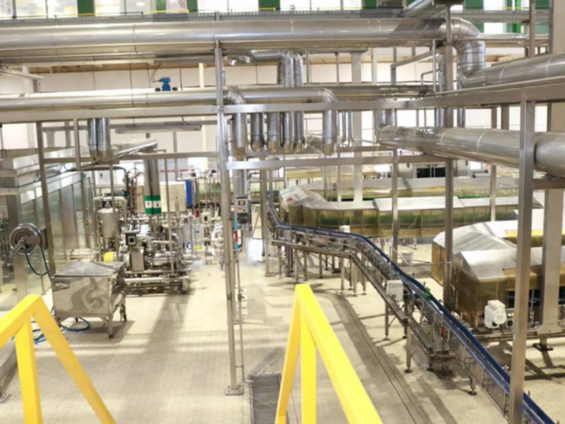
Accra Brewery PLC (ABL) is raising concerns over amendments to Ghana’s beer excise duty sliding scale, warning that the revised regime could unintentionally undermine local production, discourage future investment and put thousands of jobs across the beer value chain at risk.
Ghana’s local manufacturing sector plays a critical role in economic development, supporting jobs, creating demand for locally sourced agricultural products and contributing to the growth of agro-processing and related industries. Incentives that encourage local production are therefore essential to sustaining investment and strengthening Ghana’s industrial base.
However, the proposed changes to the beer Local Raw Materials (LRM) sliding scale could have the opposite effect, particularly if implemented in 2026.
For Accra Brewery, the potential impact on its budget is estimated at US$7.5 million, based on FY27 implementation assumptions. More importantly, the implications extend beyond one company or one industry.
The proposed structure creates a significant imbalance between companies that import beer for distribution and companies that have invested heavily in manufacturing beer locally.
Importers would not face the same level of business impact, while local producers would carry a significantly higher burden despite their investments in factories, employees, supply chains and local sourcing.
This raises an important question for Ghana: Can a tax policy designed to mobilize revenue also protect and encourage the local manufacturing investment Ghana needs to create jobs and grow its economy?
The beer value chain is extensive. According to Oxford Economics, “The beer sector supported 52,000 jobs in 2023, equivalent to 0.4% of total employment, with around 98% of these jobs fostered beyond breweries.”
The potential employment impact is therefore significant. Based on current assessments, the changes could put up to 2,000 jobs across the beer value chain at risk, affecting not only brewery employees but also distributors, retailers, farmers, logistics providers, hospitality businesses and other enterprises that depend on the sector.
Supporting Revenue Mobilization While Protecting Local Production
Accra Brewery recognizes Government’s need to strengthen domestic revenue mobilization and supports efforts to create a sustainable fiscal environment.
We also note the Minister of Finance’s previous indication that the reforms would include a review of the existing sliding-scale excise rates for beer and stout, with the dual objective of supporting Government revenue goals while preserving incentives for local production.
It is against this objective that ABL believes the revised beer sliding scale requires further consideration.
In its current form, the revised sliding scale risks creating an unintended incentive for imported beer over locally produced beer. This is unlikely to stimulate local manufacturing, investment or the development of Ghana’s agro-processing ecosystem.
A tax framework should not inadvertently make importing a product more attractive than manufacturing that same product locally.
Accra Brewery calls for the existing beer sliding-scale rates to remain unchanged for FY26 and FY27, allowing sufficient time for Government and industry stakeholders to undertake a robust and evidence-based consultation on the appropriate long-term structure.
They believe a meaningful consultation should consider:
The impact of the proposed rates on local manufacturing and future investment;
The competitiveness of locally produced beer versus imported beer;
The contribution of the beer industry to employment and the wider economy;
The role of local production in supporting agriculture and agro-processing; and
Government’s revenue objectives alongside the need to maintain a sustainable manufacturing sector.
Ghana should not have to choose between revenue mobilization and local industrial growth. We believe both are achievable with a balanced and predictable excise framework.
Accra Brewery says it remains committed to Ghana and to investing in local production, supporting jobs and contributing to the communities and value chains in which we operate.
The company urges government and industry stakeholders to continue the dialogue and work together towards an excise regime that raises revenue while protecting local production, jobs and Ghana’s future investment.
Latest Stories
-
ADB-UCC open new chapter of institutional collaboration
3 hours -
Reform of all social media should come with Meta changes, UN says
4 hours -
GMTF, Ho Teaching Hospital begin work on Volta Cardiology Centre
4 hours -
How Telecel M’ahitti promo is transforming lives nationwide
4 hours -
Mason jailed 35 years for defiling two daughters
4 hours -
Ayitey Powers remanded over alleged death threat to NSA boss
4 hours -
Court orders the state to file disclosures in Wontumi bank fraud case
4 hours -
Ghana among 8 countries selected to pilot WHO tool for stronger clinical trial systems
4 hours -
Selma Yudha joins race for 60th NUGS President with promise of student-focused leadership
4 hours -
NSMQ 2026: Botwe denies Wesley Girls’ seeded spot, secures quarter-final spot after fierce battle
5 hours -
Zoomlion begins disinfection and disinfestation exercise across Upper East Region
5 hours -
Ghana AIDS Commission strengthens community-level HIV data collection to track 2030 target
5 hours -
Parliament approves three new Supreme Court Justices
5 hours -
Zoomlion intensifies disinfection, disinfestation exercise across Ahafo Region
5 hours -
GHASALC income rises 89% to GH¢1.84m as sector prepares for 2027 reforms
5 hours