

Audio By Carbonatix
All of social media should be designed to be safe for children, the UN human rights chief has said after Meta settled a massive court case in the US.
Part of the deal the tech giant struck with almost all US states was to add more child safety measures - but Meta also called on TikTok and YouTube to add the same features.
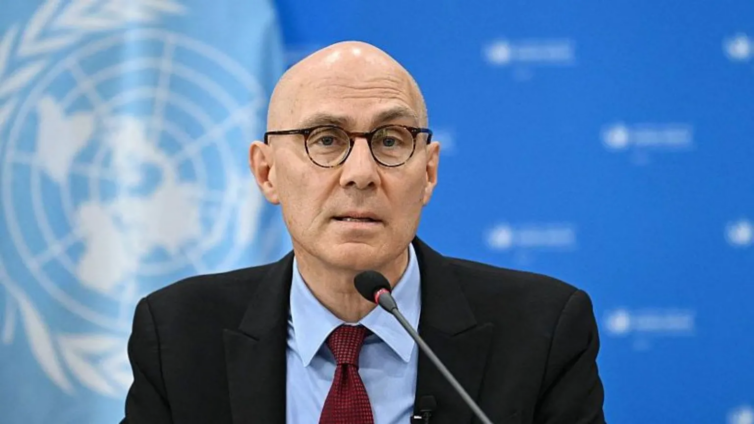
The UN's high commissioner for human rights Volker Türk said governments needed to "step up rather than wait for courts and companies to act".
He added: "Children should not have to wait for a lawsuit to be safe online."
Türk said Meta's proposed changes, which include time limits and parental supervision controls, aligned with what he had been calling for - "but we're not there yet".
In May, Türk's office released a 10-point framework for regulating social media.
It included steps such as protecting data privacy and focusing on safer platform design, including better methods for verifying a user's age and avoiding exposure of such users to addictive design features.
However, the framework rejected the idea that outright bans on children's social media use were a good idea.
Meanwhile, California Attorney General Rob Bonta, who represented one of the leading states in the Meta lawsuit, said he was "looking to ensure" that TikTok adopted measures similar to Meta's.
In agreeing on Wednesday to make various changes to end the states' lawsuit, Meta said they would only be truly effective "if all our peers join us."
Bonta told US News outlet CNBC he was "interested" in speaking to TikTok and YouTube, and that TikTok was "interested in speaking with us".
Neither company has responded to requests for comment since then.
Bonta added that he had communicated with Snap, another popular social media platform among younger users.
But he warned he was "willing to take additional steps" if they did not voluntarily make changes along the lines that Meta will be making.
On Tuesday, Meta agreed to pay up to $18bn (£13.3bn) to 48 US states, plus the District of Columbia and three US territories.
The penalties will be paid over 10 years, but $5.3bn of it is contingent on YouTube and TikTok also implementing the following measures:
- One-hour daily time limit
- Night mode
- Age assurance measures
As part of the settlement, Meta did not admit to any wrongdoing.
Latest Stories
-
Tiptoe Lane’s tech takeover: The story behind Ghana’s booming informal phone market
48 minutes -
Abanga vows to use social media to counter NDC messaging ahead of 2028 elections
50 minutes -
Okai Mintah seeks Sabah Zita Benson’s support for NDC National Youth Organiser bid
1 hour -
Okai Mintah vows to strengthen NDC campaign machinery ahead of 2028
1 hour -
Mother of four and Jasikan teacher among new Telecel M’ahitti Promo winners
1 hour -
International Youth Shakers Conclave 2026 set to bring global young leaders to London
1 hour -
Gov’t is committed to addressing teachers’ conditions of service, deprived-area allowance – Education Minister
1 hour -
GoldBod’s structure encouraging galamsey – Afenyo-Markin
1 hour -
Tullow starts selling Jubilee, TEN crude to Ghanaian refineries
1 hour -
Local Government Service authorises rationalisation, redistribution of staff
1 hour -
PURC assures consumers of working to ensure quality services in Northern Region
1 hour -
Ghana develops US$4.28bn water financing framework
2 hours -
Christian Council calls for protection of mission schools’ religious identity
2 hours -
Mahama holds discussions with India’s External Affairs Minister
2 hours -
Even when you cough, they come after you — Abanga accuses Mahama govt of criminalising free speech
2 hours