

Audio By Carbonatix
Meta's decision to settle the case on Wednesday came as a surprise.
I was expecting weeks of courtroom drama as 29 states – almost two-thirds of North America - took on one US tech giant.
Technically, the trial was about children's online privacy. It was based on a US law called the Children's Online Privacy Protection Act (COPPA), which is nearly 30 years old and predates all of today's biggest social platforms.
It centred on Meta's historic collection and use of data from children under 13 over several years.
In reality, it was a co-ordinated attack on the firm's online safety credentials.
Meta, alongside other social media apps, is under fire around the world as 2026 is shaping up to be a year of reckoning for the entire industry - perhaps our days of doomscrolling are numbered.
Meta has fought hard, over multiple lawsuits spanning many months and at great expense, to defend its commitment to protecting children on its platforms.
More than once, I've been invited to detailed presentations at Meta's London HQ, where senior executives have walked journalists like me through the many safety tools the company has launched over the years designed to give children better protection on its apps.
I have also met the parents of young people who have come to harm on those same platforms, and others who admit to being totally overwhelmed by the sheer number of safety tools that require their oversight - at the last count Meta had more than 60 of them, and that was just on Instagram.
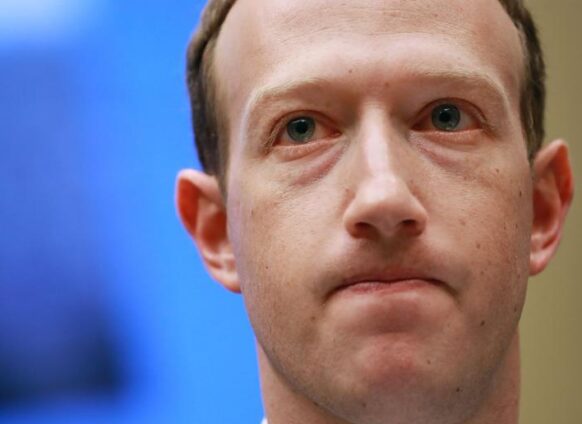
The trial went on for just five days, and came to an end before CEO Mark Zuckerberg took to the stand.
But it was rough for Meta.
Whistleblower Arturo Bejar, who once worked at Instagram, claimed that in the past he had told bosses that harmful stuff was happening to children on the platform, and no action was taken.

Another executive said he didn't remember writing in a slide deck that Meta sometimes chose to pay fines for violating regulations rather than make changes.
Internal memos suggested that the firm knew opt-in tools tended to have low adoption rates, yet it still launched safety features that were not enabled by default.
There had been intense speculation that Meta would have faced hundreds of billions of dollars in fines if it had lost.
The worst-case scenario, which would have been the maximum penalty imposed for every single child who used one of its platforms for more than half an hour a day during a 12-year window, was $1.4tn (£1tn) – roughly the same as the company's entire value.
That of course was never going to happen, but a more realistic figure was still in the hundreds of billions.
By comparison, up to $18bn (over a period of 10 years) is significantly smaller.
Meta is not admitting to any wrongdoing.
You could argue that settling protects its core business - social networks are still the way in which it makes most of its money.
Instagram and Facebook's billions of users provide the company with a goldmine of data, and adult data can be used to sell ads.
Meta may say it is now laser-focused on AI, but it still needs the vast revenue generated by its social apps.
What is Meta changing?
As part of the settlement, the social media giant has agreed to make several changes to how Instagram and Facebook operate for its youngest users.
Some experts say it is long overdue.
The new safety barriers include a two-hour time limit across both platforms, which will be a default setting for known teen users. But direct messaging on the platforms will not count towards the daily use limit.
Notifications will be muted between midnight and 06:00 and on school days between 08:00 and 15:00.
Likes on posts and content will also be entirely hidden on teen platforms.
Most of these new features will be made either default or an option for teens within six months.
However, Meta's new efforts to better identify which users on its platforms are children will take up to a year to roll out.
I would be surprised if these measures remain confined to the US for very long, as other countries will almost certainly be keen to adopt them as well.
Meta also says the new features will only truly help children if all of its rivals adopt them as well.
It's a highly competitive industry, but given the global backlash against social media and its impact on children, perhaps others like TikTok and Snapchat may have to follow suit.
The question then is whether children will still bother with them, once they are deliberately toned down into a much blander offering.
And perhaps that would bring the social media era to a natural end, as existing adults gradually aged out of it.
Arturo Bejar, the ex-Instagram engineer turned whistleblower, says the proof of the pudding will be in whether the new teen safety features are effective.
"At the end of the day, Meta needs to be held accountable for results, not efforts," he told me.
Latest Stories
-
PAC summons Northern Regional Births and Deaths Director over withdrawals totalling GH¢71,300
2 minutes -
Government must clarify fate of 29,000 teachers awaiting promotion – NAGRAT
10 minutes -
Paramount takes over Warner Bros in $110bn Hollywood merger
39 minutes -
Human resource practitioners asked to embrace digital revolution for efficiency in service delivery
44 minutes -
AMA intensifies enforcement to reclaim BRT bus shelters from traders
48 minutes -
TGMA controversy hasn’t affected my relationship with Diana Hamilton – Piesie Esther
53 minutes -
Cliff Cheqona to take TP Masterclass to Lagos and Abuja in 2027
56 minutes -
Bond market: Turnover rises 77% to GH¢2.76bn
57 minutes -
Be lovers of the environment – Archbishop Kwofie calls for stronger fight against environmental injustice
1 hour -
BoG declares FX compliance “non-negotiable” as it moves to tighten rules
1 hour -
Government to prioritise creation of decent jobs – Finance Minister
1 hour -
Ghana’s ocean is not land under water: Why the Fisheries Commission is right to demand a proper assessment of offshore gold exploration
1 hour -
Teacher unions maintain strike as FWSC, GES negotiations yield no deal
1 hour -
Paramount takes over Warner Bros in $110bn Hollywood merger
1 hour -
Photos: Mahama Ayariga engages World Bank on sustainable cities development
1 hour