


Audio By Carbonatix
The Ghana Association of Savings and Loans Companies (GHASALC) has recorded a significant improvement in its financial performance, with total income rising from GH¢972,207 in 2024 to GH¢1.84 million in 2025.
The association’s surplus also increased from GH¢149,029 in 2024 to GH¢373,433 during the period under review.
Addressing stakeholders at GHASALC’s 16th Annual General Meeting, Board Chairman Dr. Fred Safo-Kantanka attributed the improved performance to the effective discharge of responsibilities by the board of directors and its various committees.
“I wish to commend my colleagues on the board and the members of the various committees for their dedication and commitment to the governance of the association," he said.
According to the audited financial statements, membership dues increased from GH¢542,500 in 2024 to GH¢807,500 in 2025, while other income rose from GH¢429,707 to GH¢1.03 million.
Total assets also increased from GH¢690,621 to GH¢1.19 million, while the accumulated fund rose to GH¢1.00 million.
Dr. Safo-Kantanka, however, cautioned that the improved financial position must be matched by prudent financial management.
“These results are encouraging. However, financial performance must always be accompanied by financial discipline and accountability,” he stressed.
He said the board would continue to ensure that the association’s resources are “prudently managed and deployed towards programmes and initiatives that provide value to members and advance the interests of the industry.”
GHASALC to transform ahead of 2027 reforms
Meanwhile, the chief executive of GHASALC, Tweneboah Kodua Boakye, says the association is repositioning itself to reflect the changing structure of Ghana’s microfinance sector following the Bank of Ghana’s reforms.
“The industry is changing. The regulatory framework is changing. The technology is changing. The customer is changing. And the Association must change with them,” he said.
Mr. Boakye disclosed that members have resolved to adopt a new name effective January 2027 to reflect the nomenclature that may emerge from the final regulatory framework.
He stressed that the planned transformation goes beyond changing the association’s name.
“It is about repositioning the association to become the voice, knowledge hub, advocacy platform, and strategic partner of the new industry,” he said.
He outlined the association’s priorities for the next phase as financial sustainability, stronger advocacy, digital transformation, capacity building, stronger governance, and industry unity.
BoG assures industry on reforms
The second deputy governor of the Bank of Ghana, Matilda Asante, meanwhile, says the Central Bank is taking steps to address concerns raised by industry players over the implementation of the reforms.
She said the reforms seek to consolidate the sector into clearly defined categories, including microfinance banks, community banks, credit unions, and last-mile providers.
“So, the reform addresses this directly by consolidating the sector into very clear categories: microfinance banks, community banks, credit unions, and the last-mile providers,” she explained.
According to her, each category will have defined mandates and consistent regulatory and supervisory expectations.
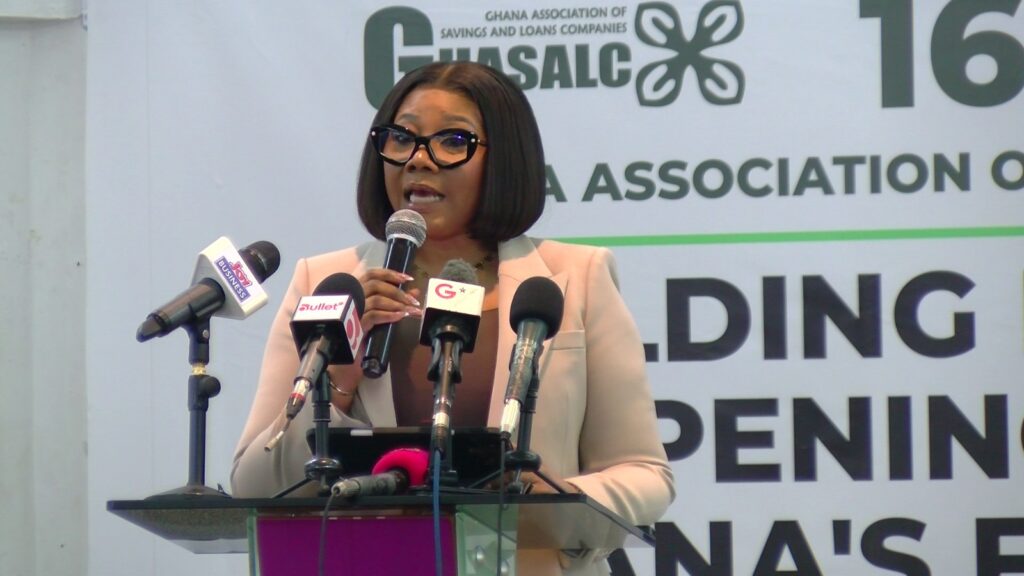
Matilda Asante said the bank had taken note of concerns regarding timelines and transition arrangements following engagements with GHASALC and other stakeholders.
“I think it’s important that we mention the fact that we’ve taken note of the concerns that were raised over timelines and transition arrangements,” she said.
She disclosed that a technical committee will engage further with stakeholders to help resolve outstanding issues surrounding the reforms.
The Bank of Ghana will also issue a suite of aligned regulations covering areas including corporate governance, risk management, business models, and guidelines for last-mile providers.
“These will be published for industry comment,” she said, urging industry players to actively participate in the process.
“We want your input. In fact, we need your input,” Matilda Asante stressed, adding that practitioners’ contributions would help ensure the regulations reflect the realities on the ground.
She said the reforms are expected to provide greater clarity in the sector and ultimately strengthen trust and confidence in Ghana’s financial system.


Latest Stories
-
Power restoration fault suspected in Kumasi Central Market fire
2 hours -
The 7-foot giant of Ngleshie Amanfro: Seven-foot Ghanaian Ephraim Saawa dreams of joining the national basketball team
3 hours -
Government promises support for Kumasi Central Market fire victims
3 hours -
Vibes The Movie: Big Ghun’s Ghanaian film earns five nominations at 2026 REFFA
4 hours -
MamaCare CEO warns unresolved conflicts among health workers could undermine maternal and neonatal care
4 hours -
Health professionals urged to translate medical knowledge into practice to save mothers
4 hours -
Conflicts among care providers linked to maternal, neonatal deaths – Expert
6 hours -
GIS marks 10th TIME conference, champions improved teaching practices
6 hours -
BRICS Or Balance? What Ghana’s bid really means
6 hours -
GPRTU wants full TRAFFITECH-GH implementation to start in 2027
7 hours -
Mahama announces plans to import electric wheelchairs for PWDs
7 hours -
KGL U17 Colts 2026: Western beat Prempeh Elite Academy to set up final final with Greater Accra Region
7 hours -
Late Solanke strike salvages 10-man Spurs draw at Man United
7 hours -
Gender Ministry to monitor welfare of Nana Akua Addo’s children amid domestic violence case
7 hours -
Benedict Okyere Yeboah: Ghana’s football problem goes beyond sacking a coach
7 hours