

Audio By Carbonatix
Ghana has been selected as one of eight countries worldwide to pilot a World Health Organization (WHO) benchmarking tool designed to assess and strengthen institutional capacity for conducting high-quality clinical trials.
The pilot, led in Ghana by the National Vaccine Institute (NVI), is intended to help institutions identify strengths and capacity gaps in the systems needed to support ethical, efficient and scientifically rigorous clinical research.
According to a statement issued by the NVI, the draft WHO benchmarking tool moves beyond measuring the number of clinical trials conducted by an institution. Instead, it provides a structured and evidence-informed framework for assessing the systems and capabilities that support clinical trials.
The framework examines seven functional areas, including patient engagement, scientific research design, regulatory oversight, data management, trial operations, leadership and infrastructure. It includes 32 functional objectives and 112 specific outcomes.
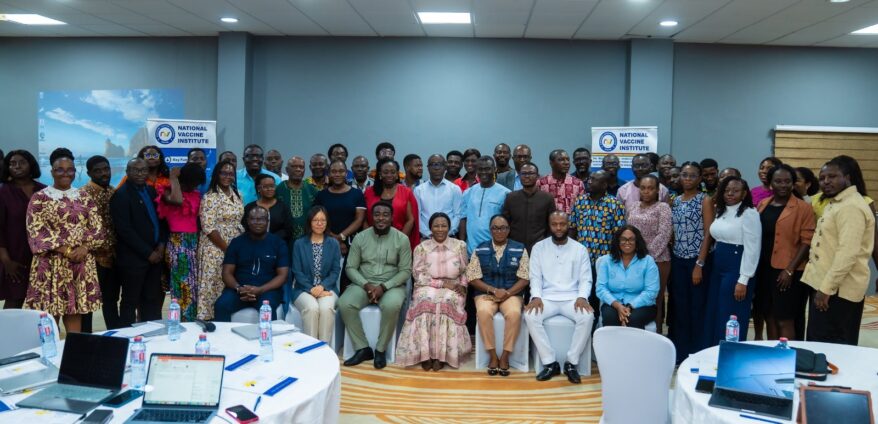
As part of the pilot, the NVI and WHO convened a training workshop in Ho in the Volta Region to introduce institutional teams to the benchmarking tool and prepare them for self-assessments.
A comprehensive assessment exercise was subsequently conducted from Aug. 10 to 13, 2026, involving 13 Ghanaian institutions.
The participating institutions included the Noguchi Memorial Institute for Medical Research at the University of Ghana, the University of Ghana Medical Centre, the West African Centre for Cell Biology of Infectious Pathogens, Revna Bioscience, the University of Cape Coast and Enchi Government Hospital, Dodowa Health Research Centre, the University of Health & Allied Sciences in Hohoe, the Centre for Plant Medicine Research in Mampong, KNUST's Kumasi Centre for Collaborative Research, KNUST IVI–Agogo, Kintampo Health Research Centre, the University for Development Studies in Tamale and Navrongo Health Research Centre.
NVI officials emphasised that the exercise is not intended to rank institutions against one another.
Instead, the goal is to support capacity development and continuous improvement across Ghana's clinical research ecosystem.

The Chief Executive Officer of NVI, Dr. Sodzi Sodzi-Tettey, said the work is also connected to Ghana's longer-term ambitions in vaccine development and manufacturing.
“We are starting with fill-and-finish as a practical entry point, with the long-term goal of full end-to-end manufacturing,” Sodzi-Tettey said. “The expertise gathered in this room represents the enormous brain power we need to map our institutional capability gaps and begin closing them.”
The initiative comes as Ghana seeks to strengthen its health and scientific infrastructure and expand its capacity to support research and vaccine manufacturing.
Deputy Minister of Health Dr. Grace Ayensu-Danquah said building institutional systems is an important part of achieving greater health sovereignty, particularly because research conducted outside Africa may not always adequately address the needs of African populations.
“True health sovereignty depends on the less visible groundwork—systems, policy, and institutional capacity—that precedes actual vaccine production,” she said.
Dr Ayensu-Danquah also raised the prospect of greater regional cooperation, with African countries developing specialised capabilities and working together as centres of excellence rather than each country attempting to independently produce every health product.
WHO Technical Officer for Integrated Service Delivery Dr. Angela Ackon said the benchmarking exercise would give participating institutions a structured way to evaluate their current capabilities and identify areas for improvement.
“This benchmarking exercise gives Ghanaian institutions a structured, evidence-based way to understand their own capabilities and chart a clear path for improvement,” Ackon said. “WHO is proud to stand with the National Vaccine Institute and the Government of Ghana in this important step.”
The findings from the 13 participating institutions are expected to help identify common capacity gaps and guide future investments and national priorities.
As one of eight countries involved in the global pilot, Ghana will also contribute to the further development of the WHO's benchmarking tool before its broader adoption, potentially strengthening the country's position as a destination for clinical research in Africa and beyond.
Latest Stories
-
Business dies when luxury takes over leadership
12 minutes -
No family should lose everything to save a loved one – GMTF administrator
14 minutes -
Bawumia has the dignity to lead and the vision Ghana needs – Gabby
29 minutes -
GOC, GFA chart Olympic qualification roadmap for Black Queens, Black Meteors
30 minutes -
Absa InspireMe 2026 highlights opportunities for women-led business growth
31 minutes -
The only thing that flows regularly is THE BILL
37 minutes -
KGL U17 Colts 2026: Prempeh Elite Academy lead Group A as Western Region secures top spot in Group B
39 minutes -
‘You’ve never been touched by any scandal’ – Gabby celebrates Bawumia on his 63rd birthday
40 minutes -
WPL 2026/27: GFA unveils dates for start of new season as Ampem Darkoa Ladies begin title defence
49 minutes -
Ghana Embassy in Washington pays tribute to late academic Dr Kofi Akamani
49 minutes -
Ibrahim Mahama urges Ghanaians to overcome fear and venture into business
1 hour -
2026 U-17 WWC: Black Maidens lose to China in pre-tournament friendly
1 hour -
Who gave Gbande the EOCO remote control?
1 hour -
Ghana begins review of 1999 National Land Policy, targets new framework by 2027
2 hours -
Tiptoe Lane’s tech takeover: The story behind Ghana’s booming informal phone market
3 hours