

Audio By Carbonatix
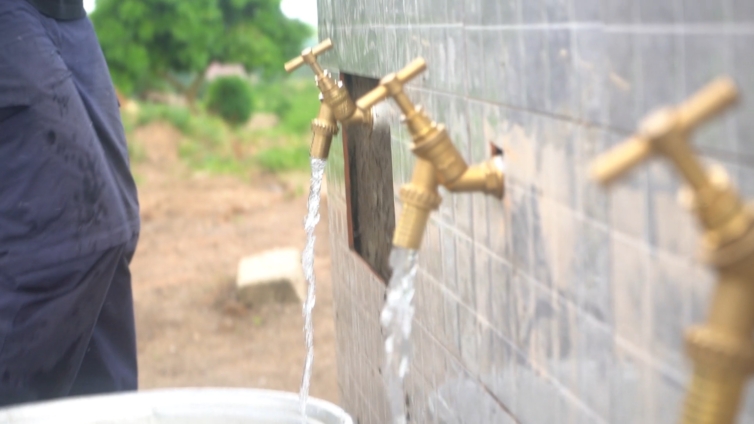
Ghana Water Limited has assured consumers that its treated pipe-borne water is safe for direct drinking, including water sourced from rivers affected by illegal mining, commonly known as galamsey.
The company’s Managing Director, Adam Mutawakilu, said rigorous treatment processes and regular testing had not detected harmful levels of heavy metals in the treated water supplied to households.
Speaking on Joy FM’s Super Morning Show on Wednesday, September 2, during a discussion on “Is Ghana’s water quality & access under threat?” as part of Joy Sustainability Month, Mr Mutawakilu said Ghana Water was working with researchers from universities and other laboratories to monitor water quality, particularly in areas affected by illegal mining.
He said the company was collaborating with researchers to assess whether contaminants detected in polluted raw water persisted after treatment.
“We collaborate with them to see how it is true that at the end of the day we have heavy metals in the water that our people drink, and it has now been proven that there are [no] heavy metals in the water,” he said.
Mr Mutawakilu said Ghana Water had also intensified monitoring in areas severely affected by galamsey, with five mobile laboratories currently operating in some of the hardest-hit areas.
“As we speak, we have about five mobile vans that are in the hard-hit illegal galamsey sites so that there can be easy movement and testing of water, both raw and finished processed water,” he said.
He assured consumers that water undergoes rigorous testing before it is supplied to households.
“So I can assure Ghanaians that the water that we drink is safe. We are doing rigorous testing. We are collaborating with the institutions,” he said.
Mr Mutawakilu added that the company was working with researchers to ensure that the water it produces consistently meets the required quality standards.
He further disclosed that the tariff approved by the Public Utilities Regulatory Commission (PURC) includes provisions for the acquisition of mobile laboratories and the construction of additional laboratories to strengthen Ghana Water’s water-quality monitoring capacity.
Expert raises concerns
Despite the assurance, water expert and Chairperson of the Water, Environment and Sanitation Group of the Civil Technical Division of the Ghana Institution of Engineering, Dr Bertha Dartey, has raised concerns about whether existing treatment processes are sufficient to guarantee the long-term safety of water, particularly water sourced from galamsey-affected areas.
Dr Dartey said heavy metals could present a particular challenge because contaminants may sometimes occur at very low concentrations that are difficult to detect but could still pose health risks.
She said the priority should be to ensure that water reaching consumers consistently meets the required safety standards.
“The most important thing is to ensure that when it is getting to the consumer, we do not have high levels or, you know, very... I think there are standards,” she said.
Dr Dartey cautioned that failure to detect a contaminant does not necessarily mean there is no potential risk.
“Sometimes what I see is that there could be traces, but it is a risk, and it's a risk that you could have a high level of contamination from these,” she said.
She explained that some heavy metals could be present at very low concentrations and may not always be detected depending on the testing method used.
“And some of these heavy metals, you may not detect them, or their level of concentration may be so low that you may miss them, but they are in the water,” she said.
According to Dr Dartey, the potential risk warrants particular attention given the extent of pollution associated with illegal mining.
She suggested that Ghana Water could, in the future, consider additional treatment processes to address heavy metals and other contaminants associated with severely polluted water sources.
“I think looking forward, Ghana Water may change its treatment methods and add on some tertiary treatment to deal with the heavy metals,” she said.
Latest Stories
-
Mr David Boa Essilfie
2 minutes -
GoldBod, the microphone and the media’s duty beyond ‘He said’ and ‘She said’
3 minutes -
Shamima Muslim Writes: The honour and duty of representation
6 minutes -
Traders Advocacy Group calls for removal of Transport Minister over port charges, fares
7 minutes -
IEA opposes system allowing President to choose principal advisers on Council of State
11 minutes -
IEA backs lifestyle audits and reverse burden of proof for public officials
13 minutes -
Ghana Medical Trust Fund Administrator hails Health Minister’s support as Fund marks first year
15 minutes -
Societe Generale Ghana engages women business owners on financing and growth
27 minutes -
IEA backs proposal to bar MPs from serving simultaneously as ministers
28 minutes -
Health Minister engages Global Fund over commodity shortages and programme sustainability
30 minutes -
President Mahama dissolves Fred Awaah-led NSA board with immediate effect
36 minutes -
When will Ghana’s creative industry become as big as its stars?
40 minutes -
Congratulations on your degree; GTEC has a small question
40 minutes -
IEA rejects presidential nomination of MMDCE candidates, backs open local elections
41 minutes -
IEA warns against ‘rushed’ constitutional review, calls for comprehensive national consultation
42 minutes