

Audio By Carbonatix
Spanish Prime Minister Pedro Sánchez has said no-one foresaw the influx of 72,000 migrants in the exclave of Ceuta, as pressure mounts over his handling of the crisis.
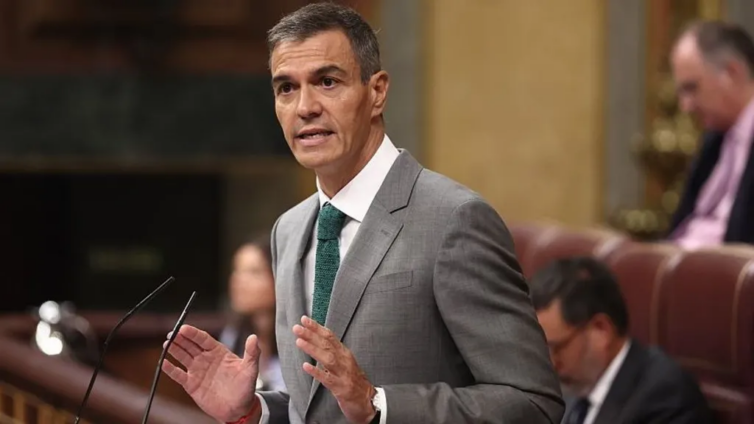
"It's absurd to think that the government knew and did nothing," Sánchez told Spain's parliament on Thursday, hours after tens of thousands of people joined protests across the country backed by opposition parties.
Sánchez also maintained there was no evidence Morocco was behind the mass crossing and there had been "close co-ordination" between the two countries.
A Spanish police report has highlighted the "total permissiveness" of Moroccan security forces, although senior officials insist it does not point the finger at Rabat.
Although most of the migrants have been sent back to Morocco, some 5,000 remain on the streets and beaches of Ceuta, on the North African coast, including as many as 1,400 children.
There have been several reports that Spanish officials had been warned of a rise in sea arrivals over the border at Ceuta, following a Spanish court ruling that many migrants misunderstood to mean they would not be pushed back if they swam across.
Opposition People's Party leader Alberto Núñez Feijóo accused the government of lying and a cover-up, and said the prime minister should resign.
Spain's handling of the migrant influx angered some of its European partners, and Italy responded by imposing border restrictions on arrivals from Spain.
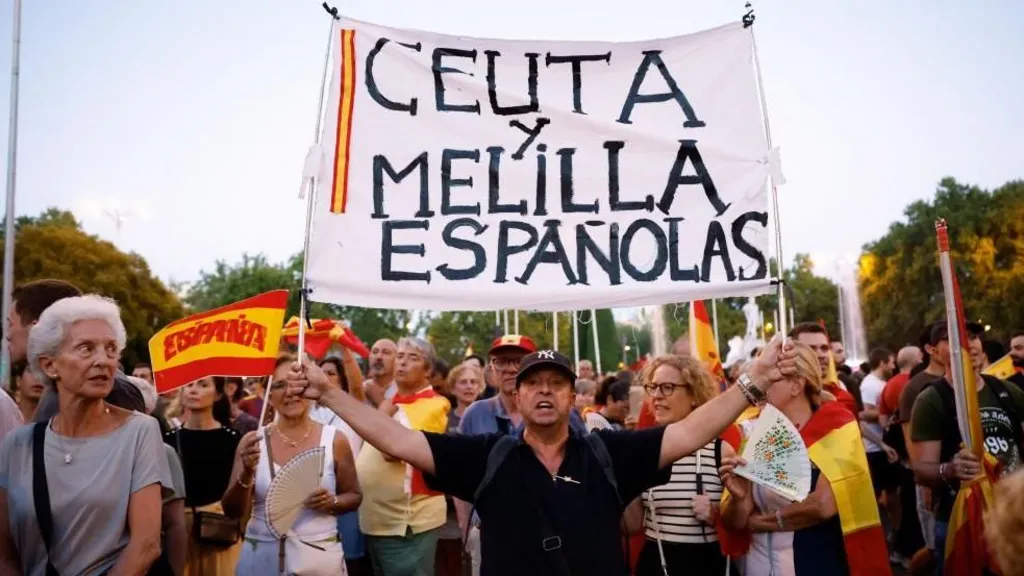
The large turnout for the demonstrations in Madrid and other cities on Wednesday underlined the pressure Sánchez is under domestically too.
The protests were ostensibly held to express support for the people of Ceuta, but as frequent anti-government chants have shown, they also reflected public anger at the ongoing crisis.
As Thursday's fierce debate in Congress showed, the situation in Ceuta has developed from a humanitarian and logistical crisis into a major political challenge for the Socialist leader.
One of the issues Sánchez is having to explain is his government's bilateral relationship with Morocco.
He has tried to walk a delicate line between defending his refusal to blame Morocco while reprimanding it for the sovereignty claims it has been making in recent weeks on both Ceuta and its fellow Spanish exclave of Melilla.
Sánchez has been careful until now not to criticise Rabat and he said he would stick to "proven, verified facts", although he did complain of "unacceptable" statements by two Moroccan ministers about Ceuta and its sister city Melilla.
The two cities have the EU's only land borders in North Africa and Sánchez told parliament: "Ceuta is not the border of Spain, it is Spain on the border [of Europe]."
Politicians to both his left and right point to what they say is Morocco's track record of using the border with Spain as leverage when it has a grievance.
Many have interpreted the police report pointing to the role of Moroccan security forces in the July crossing as reinforcing this theory, although Sánchez maintained there was no solid evidence of government involvement.
Responding to the police report, as well as reports before the influx, Feijóo told MPs that it had "originated in Morocco, was consented to by Morocco and there are indications that Morocco co-ordinated it and the Government knew because it had been warned about it".
Morocco has denied orchestrating or being involved in the mass crossing.
Sánchez praised the response of Ceuta police who had chosen to "defend human life" when the influx took place, rather than defend the border. He also highlighted close co-operation with Moroccan authorities over the return of more than 90% of the migrants in the following 72 hours.
He addressed the "difficult times" faced by the residents of Ceuta, as he explained the "complexity" of what had happened on 30 and 31 July.
He spoke of an "episode in which numerous actors and interests converge", doubling down on his assertion that hoaxes and rumours spread by social media had sparked the crisis.
He has already blamed trafficking gangs and angered Russia and Israel for highlighting social media linked to both countries along with "an international far-right movement". He told MPs that there was no evidence of state actors being involved but doubled down on his allegations of accounts linked to the two countries.
Ceuta was "a humanitarian crisis and also an administrative challenge within the city itself", he added.
Latest Stories
-
‘Resign and join NDC’ – NPP tells Chief Justice over alleged political commentary
1 minute -
Underage riders driving motorcycle crashes, union claims
13 minutes -
About 14,800 candidates with aggregates 6–12 apply for 1,300 Achimota places – CSSPS
26 minutes -
PETROSOL engages dealers to strengthen retail network and improve customer experience
39 minutes -
GRIDCo warns encroachers as activities under high-voltage lines threaten power supply
45 minutes -
The coup doesn’t need soldiers anymore: Social media and the new assault on African democracy
55 minutes -
Works and Housing Minister pushes to cut Kaneshie road closure from one year to 6–9 months
58 minutes -
Joy FM Back-to-School Fair: Patrons to enjoy up to massive discounts from vendors
1 hour -
Mahama gives TMA, TDC 14 days to resolve development control dispute
1 hour -
‘We cannot arrest the entire school, but we know the ringleaders’ –– Police warns Okuapem, Mount Sinai students
1 hour -
UN warns of ‘supersized’ El Niño as countries prepare for impact
1 hour -
Channel smuggling gangs resort to ‘mega-dinghies’ as crackdown limits small boat supply
1 hour -
Embattled Spanish PM Sánchez insists no prior warnings before Ceuta crisis
1 hour -
Palestinian teens killed during settler attack on West Bank village, officials say
1 hour -
Foreign Affairs Ministry responds to Fourth Estate attestation investigation, bars middleman from premises
1 hour