

Audio By Carbonatix
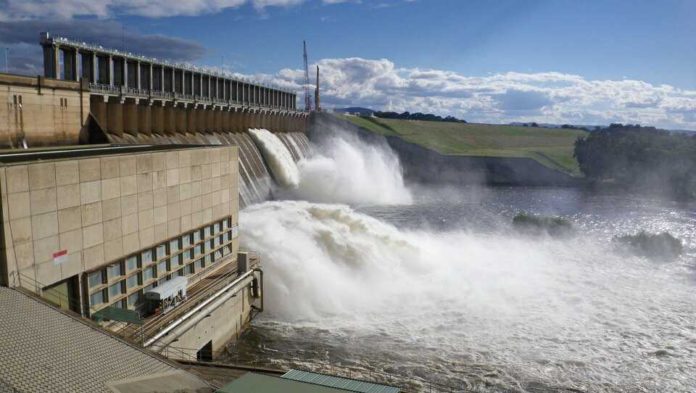
A $350 million flood control project is set to begin by the close of the year to tackle the perennial flooding caused by spillage from the Weija Dam and protect several communities downstream of the dam.
The initiative, known as the Dam Spillage Flood Control (DSFC) Project, is expected to begin in December 2026 and be completed in two years (December 2028).
It is being initiated by the Weija-Gbawe Municipal Assembly, in partnership with Hi-Limit Group, a private development partner.
The project involves the construction of a high-level reinforced concrete levee canal extending from the Weija Dam site to the Atlantic Ocean, with a permanent estuary, as well as the development of inner town roads in Tetegu.
Outlining the scope of the project in an interview with the Ghana News Agency (GNA), the Chief Executive Officer of Hi-Limit Group, Emmanuel Larbi, said the project was designed to provide a permanent solution to flooding caused by the perennial spillage of water from the Weija Dam.
He said the canal would channel excess water directly into the Atlantic Ocean, thereby preventing it from inundating downstream communities.
“We will make sure that the canal will follow the pattern of the natural waterways into the sea, so that it doesn't affect the residents in any way,” he said.
Mr Larbi said the project developers had already undertaken community entry activities and extensively engaged residents on the project, adding that the communities had expressed their support for the initiative.
He assured residents that the project would not involve demolitions, stressing that its primary objective was to protect communities from the recurrent flooding.
Communities expected to benefit include Tetegu, Oblogo, Weija, including Weija Old Town and New Weija, Sampah Valley, Bortianor, Ashalaja, Ada Kope, Glefe, White Cross, Choice, Ash Bread, Tsokomey, Pambros, Weija-Away, Faana and Amelipo.
Already, Hi-Limit Group has secured $325 million from its financial partners in the United States to support the project, while the Assembly is expected to facilitate the mobilisation of $25 million in counterpart funding through internally generated funds and a canal levy.
Mr Larbi explained that the counterpart funding represented the commitment of the government side to the project, while the private-sector financing would support the larger project cost.
The United Bank for Africa Ghana (UBA) has been engaged as the project banker to assist with the collection of the counterpart funds and administer project funds for disbursement to contractors and service providers.
Feasibility studies, detailed design, an Environmental and Social Impact Assessment (ESIA), and a housing census, Mr Larbi said, were currently underway.
The China Railway Construction Engineering Group has been named the General Engineering, Procurement and Construction (EPC) Contractor for the project.
Latest Stories
-
Passengers stranded at Aayalolo Tudu Terminal as drivers strike over unpaid bonuses
3 minutes -
The Inconvenient Truth: Debt does not make a nation poor; wasting it does
6 minutes -
Stonebwoy ignites new ‘beef’ with Sarkodie in social media posts
13 minutes -
GTP, Woodin acquisition puts local private equity expertise in the spotlight
20 minutes -
BoG affirms 8 ± 2% inflation target
23 minutes -
CHRAJ holds training on ending gender-based violence
25 minutes -
GPL 2026/27: Debibi United coach Nii-Armah apologises over ‘racist’ comments
31 minutes -
Beyond the F9 Barrier: Why Ghana needs a Universal Secondary Education Transition and Remediation Programme
34 minutes -
GES disowns fake EduPack notice directing SHS, TVET boarding students to pay
37 minutes -
Every improved public road to get electronic tolling system – Agbodza
43 minutes -
54,985 unplaced BECE graduates could end up on streets – Angel Carbonu
43 minutes -
Decolonise science and development ideas or risk failure – Scholars at Global Value Summit in Jirapa
45 minutes -
Prudential Life Insurance Ghana awarded ‘CSR Company of the Year 2025’
45 minutes -
Boarding schools are a colonial legacy, Ghana needs quality local day schools – Prof Stephen Adei
46 minutes -
$350m project to end Weija Dam flooding to commence this year
52 minutes