

Audio By Carbonatix
A few hours into the night shift, I identified a patient with refractory hypoxia despite receiving 15L/min via NRBM. I initiated an ICU referral; however, the ambulance crew ( 1 driver, 2 EMT personnel) was hesitant to transport due to the patient’s critical status. They requested a clinician escort from the ER to facilitate the transfer.
I agreed to go.
We are taught that the line between life and death is thin, but tonight I learned that in our healthcare system, that line is held together by nothing more than Scotch tape and whatever I can scramble to fit into my pockets before an ICU transfer.
Before we set off, I had the gut feeling to slip an ampule of adrenaline, a few syringes, and gloves into my pockets “just in case.” I didn’t know I was packing for a war our system had already surrendered.
Mid-transfer, the oxygen tubing (the literal lifeline for a woman gasping for air), tore! And then came the sound: a long, breathless fooooooo of oxygen leaking freely into the air of a moving van, instead of moving into her lungs. Life-saving gas, escaping into nothing, while she fought for every breath.
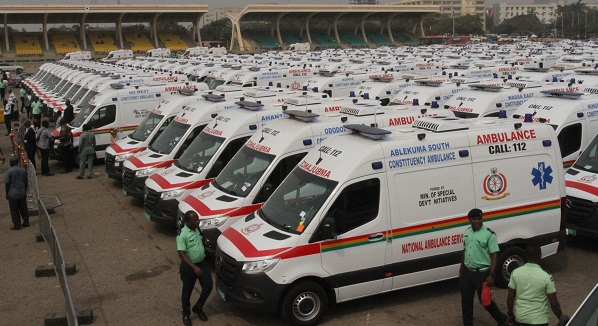
We stopped the ambulance. We tried to tape the tube. Before the tape could hold, it snapped again at a different point entirely. A national ambulance, stopped on a dark road in the middle of the night, held together by tape and desperation. That image alone should be enough to make every administrator in this country lose sleep.
We diverted to a nearby facility to source mobile oxygen, searching for it like it was some rare treasure, not a basic requirement of emergency care. While we searched, I was bagging her manually, one breath at a time, watching her deteriorate while the equipment we are supposed to trust fell apart in our hands.
I checked her pulse. Unfortunately, but not surprisingly, there was none.
We began CPR. I called for adrenaline.
“We don’t have any,” they said.
I pulled the ampoule from my pocket and handed it over because I was still bagging, and someone else needed to push the drug.
“We don’t have a syringe,” they said.
I reached back into my pocket.
With the syringe finally in hand, the crew member paused and asked me whether to push the full dose. In the middle of a cardiac arrest? Are we sending people to the frontlines without training them to use the weapons?
We did everything. Compressions. Bagging. The adrenaline from my pocket.
I sighted an Automated External Defibrillator. Does this work? I asked. Got a disappointing ‘no’ for an answer.
We fought until there was nothing left to fight for.
She is gone, sadly.
Now the driver is outside. Parked in the middle of the road, in the dark, reporting the “incident” to National on his phone. The paperwork is moving. The bureaucracy is functioning perfectly.
But the oxygen was leaking. The cupboards were bare. And I am sitting here in this ambulance, next to a body, wondering how many others will die before anyone decides this is unacceptable.
I want these failures named clearly, so they cannot be minimised in whatever report gets filed tonight:
— Oxygen tubing that had not been inspected before deployment, which was faulty and fatal
— No backup oxygen source on the ambulance
— No adrenaline in the emergency drug supply
— A crew uncertain about basic resuscitation drug dosing
— No protocol in place when primary oxygen delivery failed mid-transfer
Every single one of these is preventable. Every single one is someone’s responsibility. And tonight, all of them became hers to pay for.
“JUST IN CASE” CANNOT BE A MEDICAL STRATEGY
I am writing this because it is a scandal that I had to. “Just in case” is not a clinical protocol. The instinct that made me prepare saved nothing tonight because no individual’s foresight can substitute for a system that is built to function.
We are trained to save lives. We are not trained to perform miracles with broken tubes and empty cabinets. There is a difference between medicine and improvisation, and tonight we were forced to choose the latter. We should never have had to.
I am formally calling for an immediate audit of ambulance emergency drug stocks, oxygen delivery equipment, and resuscitation readiness. I am calling for mandatory crew training on drug administration during cardiac arrest.
Tonight, the system did fail again!
Latest Stories
-
‘Families are going hungry’ – Horse owners, jockeys raise alarm over Race Course demolition
1 minute -
NPP demands sack of officials over Ghana’s cocaine busts, accuses Mahama of weak leadership
15 minutes -
Fully mobilise back to Dome-Kitase road this week – Roads Minister directs First Sky Construction
19 minutes -
2027 AFCONQ: Baba Rahman latest to pull out of Black Stars squad
29 minutes -
CPP renews call for return of properties seized after Nkrumah’s overthrow
32 minutes -
Education Minister challenges universities to align programmes with job market needs
37 minutes -
Adequate provisions made for feeding in Senior High Schools —Education Minister
39 minutes -
Demonstrations don’t start road projects; resources do – Roads Minister tells Dome-Kitase residents
39 minutes -
Who is Ghana Jollof? The woman behind the viral TikTok account
46 minutes -
Sekou Nkrumah calls for democratic socialism and clear ideology to revive CPP
58 minutes -
World Vision Ghana, Somoco Ghana partner to improve healthcare access in Agortime
59 minutes -
Adopt scientific formula for setting transport fares – COPEC urges operators
1 hour -
What Is Wrong With Us: The world must be ashamed that childhood has become so dangerous for so many children
1 hour -
Extractive revenue volatility threatens GH₵30bn expressway dream; contingency measures needed – CIPAC
1 hour -
Agribusinesses must invest across entire value chain, not just land and machinery – Gladys Sampson
1 hour