

Audio By Carbonatix
Let me begin with a clear declaration. I am a Christian. I believe in Jesus Christ, the Son of God and my Redeemer. I believe in the preaching of His gospel, and I support the mission of taking the Word of God to all nations. I believe the Church has a responsibility to spread the message of salvation, hope, love and repentance. I also believe that those entrusted with leading God's people must be held to a higher standard of conduct, wisdom and integrity.
My faith is not in conflict with my ability to question the conduct of religious leaders. In fact, I believe genuine faith should make us more willing to examine ourselves, confront wrongdoing and distinguish between the Word of God and the personal interests of those who claim to represent Him.
It is against this background that I find some of the reactions by certain pastors to the new restriction on preaching and hawking in moving vehicles troubling. What should have been a reasonable public discussion about law, order, safety and the use of public spaces has, in some quarters, been presented as an attack on the Church and the gospel itself.
But is every regulation that affects a religious activity an attack on Christianity? Must every government policy that inconveniences a pastor be read as persecution? And since when did the gospel become so fragile that a law regulating where and how people conduct their activities could threaten its very existence?
The gospel is sacred, but not every activity conducted in its name is beyond question.
What the regulation actually says
Before anything else, the facts. Regulation 141 of the Road Traffic Regulations, 2026 (L.I. 2519) prohibits preaching and hawking inside public or commercial vehicles while they are in motion. The penalty is a fine of 10 to 50 penalty units, which the press has put at GH¢120 to GH¢600, imprisonment for up to eight months, or both.
Three things are worth noticing. First, it applies to everyone. The same provision covers the trader selling goods on a moving bus and the preacher with a Bible in the aisle. Second, it does not touch preaching in churches, at crusade grounds, in markets or at lorry parks. It concerns the moving vehicle. Third, it is not new. The earlier Road Traffic Regulations, 2012 (L.I. 2180) carried a similar prohibition. What changed in recent weeks was enforcement.
The reaction was swift. One prominent pastor told his congregation that the restriction was an attempt to gag the church. A pastor who is also a Member of Parliament appealed to the President to scrap what he called a bogus regulation that would jail innocent pastors and evangelists. On 9 October, the President responded that it is not true that the government has banned preaching in vehicles. No one, of any faith, may preach or sell in a moving vehicle, he said, but they may do so when it is stationary. The government has since reportedly suspended implementation, although the details of the suspension remain unclear.
Suspension may calm the temperature. It does not settle the principle, and the principle is what I want to address.
God is a God of order
One of the things that makes some of these arguments difficult to understand is that the Bible itself places considerable emphasis on order. In 1 Corinthians 14:40, Paul instructs believers to let everything be done decently and in order. He was speaking about the gathered church, but the principle reaches beyond the four walls. It speaks to the broader Christian responsibility to conduct ourselves in ways that respect others and reflect the character of the God we serve.
If God values order, why should Christians automatically resist reasonable attempts to regulate activities that affect public safety, traffic, noise, movement and the peaceful use of public spaces?
We cannot insist that society must respect the Church while dismissing the legitimate interests of other members of that same society. Drivers, passengers, pedestrians, traders, workers and residents also have rights. A preacher's desire to win souls does not erase the right of others to travel safely, conduct their business or enjoy a public space without undue interference.
Indeed, if we believe that human life is sacred, then safety regulations should concern us. If we believe that God expects us to love our neighbours, then we must consider how our actions affect them. And if we believe in order, we should be prepared to demonstrate it in our public conduct.
The question, therefore, should not be whether the government has the right to attack the gospel. It should be whether the particular law is reasonable, lawful, proportionate and necessary to address the problem it seeks to solve. That is where an intelligent discussion ought to begin.
When regulation becomes persecution
Some pastors have interpreted the restriction as an attempt to suppress Christianity. Others have extended the argument to include other religious groups, suggesting a wider attack on religious practice. I find this approach deeply problematic.
A law regulating hawking or preaching in moving vehicles does not automatically amount to a prohibition on evangelism. A restriction on the place or manner in which a person conducts an activity is not necessarily a restriction on the belief that motivates it. There is a difference between preventing someone from preaching the gospel and regulating the circumstances under which that preaching takes place.
Ghana's Constitution draws the same line. Article 21(1)(c) guarantees the freedom to practise any religion and to manifest that practice. But Article 12(2) says that the fundamental rights and freedoms in the same chapter are enjoyed subject to respect for the rights and freedoms of others and for the public interest. Religious freedom is real, and it is not unlimited permission to do whatever one wishes in any public space.
If a law genuinely discriminates against Christians, or prohibits them from practising their faith while allowing comparable activities by others, then the Church has every right to raise concerns. But such concerns must be established through evidence and careful reading of the law, not through emotional appeals designed to provoke fear among believers. We must be careful not to turn every disagreement with public policy into a spiritual battle between God and government.
Such language can be particularly powerful in religious settings, because many believers trust their pastors and are reluctant to question their interpretations. When a pastor declares that a government action is an attack on God, some members may accept that conclusion without examining the facts. Others may feel guilty for supporting a law their religious leaders have condemned. Still others may become hostile towards public officials simply because they have been told that their actions threaten the Church.
This is where the misuse of faith becomes dangerous. The pulpit should help people develop spiritual discernment, not discourage them from thinking critically. The gospel should enlighten the conscience, not frighten people into accepting every opinion expressed by a religious leader.
Why drag other religions into the argument?
I am equally concerned about attempts to turn this discussion into a debate about how other religious groups worship. Why should a conversation about the regulation of a particular activity become an opportunity to question the practices of people of different faiths?
Ghana is a religiously diverse country. Christians, Muslims and people of other religious convictions live, work and conduct their affairs alongside one another. Our constitutional commitment to freedom of religion means we must respect the right of others to practise their faith, subject to the law.
The danger of bringing other religions into this debate without a clear reason is that it shifts attention from the legal question to religious rivalry. It can encourage suspicion, deepen divisions and create the impression that public regulation is a contest over which religion has greater influence. That is a dangerous direction for a country such as Ghana.
The proper question is whether the law is fair, whether it serves a legitimate public purpose and whether it respects the rights of everyone affected by it. If it is discriminatory, challenge the discrimination. If it is unreasonable, explain why. If it is poorly drafted, call for clarification or amendment. But do not turn a discussion about public order into an invitation to disparage the beliefs of others. Religious freedom cannot be meaningful if we defend it only when our own religious interests are involved.
Why the law deserves serious consideration
I believe the restriction deserves serious consideration because a moving vehicle is not a conventional place of worship. It is part of a transport system in which safety must take priority. Anything that distracts the driver, crowds the aisle, or exposes passengers to avoidable risk while the vehicle is moving deserves to be regulated, whether it is selling, preaching or anything else. The President's clarification that preaching remains permitted when the vehicle is stationary shows that the target is the movement, not the message.
There must also be room to distinguish between preaching that causes a public nuisance and preaching that is done peacefully without interfering with anyone's rights. A reasonable law should be applied fairly and proportionately, and on that point, I think the critics have a fair question. The aim of the regulation is legitimate. Whether a prison term of up to eight months for a person who preaches on a bus is a proportionate way to achieve it is a different matter, and one on which reasonable people, including Christians who support the regulation's purpose, can disagree. A fine, a warning, or simply a requirement to stop when the bus moves may protect road safety just as well.
That is the kind of argument I would welcome from the pulpit: specific, evidence-based and respectful of the law's purpose. It is a very different thing from claiming that the government is fighting God.
My position is simple. The gospel must be preached, but the preaching of the gospel does not remove the need for public safety, lawful conduct and consideration for others. We cannot claim that our mission is to save lives while behaving carelessly towards the lives of those around us.
Why don't we preach in moving aeroplanes?
I have a question for the pastors who have presented restrictions on preaching in moving vehicles as an attack on the gospel. When you travel on a commercial aeroplane, why don't you stand up and preach to all the passengers?
You may spend several hours on that flight. You may watch a film, listen to music, read a book or talk to the person beside you. Yet how often do you insist that the entire aircraft must become your congregation because you have a divine mandate to preach the Word? Why don't you demand the right to take over the public address system and preach from take-off to landing?
The answer should be obvious. An aeroplane operates under safety procedures and rules designed to protect everyone on board. The fact that a person is a pastor does not exempt him from the arrangements governing the flight. Watching a film does not mean that every other activity must be permitted, and permission to do one thing does not create an unrestricted right to do another.
The point is not that a road vehicle and an aeroplane are identical. They are not. The point is that the setting in which an activity takes place matters. Safety, the rights of other passengers and the rules governing a particular environment cannot be dismissed because someone wishes to carry out a religious activity. If we understand that principle when we travel by air, why does it suddenly become hard to understand when public authorities regulate activities on our roads?
Why don't we preach in banking halls?
Let me ask another question. Why don't pastors walk into banking halls and begin preaching to customers waiting to transact business?
After all, a bank is full of people. Some may be worried about their finances, some may be going through personal difficulties, and some may need hope and the message of salvation. If the presence of people who need the gospel were enough to justify preaching anywhere, why should a banking hall be excluded? Why don't we insist that every bank allow pastors to preach to customers in the queue?
The reason is that a banking hall has a specific purpose. People go there to conduct financial transactions, and the institution has responsibilities for security, privacy, orderly service and the protection of customers. A pastor's good intentions do not automatically override those responsibilities. A person may have a genuine desire to share the gospel and still need to consider whether the place and manner are appropriate.
The same reasoning applies to hospitals, courtrooms, classrooms and offices. Religious expression matters, but it must be weighed alongside the rights and legitimate interests of others. If we accept these boundaries in other settings, we should be able to discuss similar boundaries in public transport without immediately invoking persecution.
The problem of religious blackmail
What troubles me most is the tendency to use the gospel as a shield against reasonable questions and public accountability.
I use the word blackmail deliberately, and I am describing a tactic, not condemning any individual. When a religious leader suggests that questioning his position amounts to fighting God, he is asking for an authority that no human being should possess. When disagreement with a pastor is presented as hostility towards Christianity, the discussion stops being about the merits of an argument. It becomes an attempt to silence criticism through fear. It places believers in a difficult position: agree with the pastor or risk being seen as an enemy of the gospel. It discourages honest discussion and allows personal opinions to take on the appearance of divine instruction.
But a pastor is still a human being. Pastors can misunderstand laws, make poor arguments, pursue personal interests and respond emotionally to criticism. Their positions should be examined with the same care we apply to the claims of politicians, public officials and other leaders. The title of pastor does not make every opinion correct. A pulpit does not turn an interpretation into scripture. And the ability to quote the Bible does not mean that every argument made in its name is sound.
The Church must be especially careful here, because religious leaders hold considerable influence over people who trust them. That influence must be exercised responsibly. We should be able to ask a pastor why he holds a particular position without being made to feel that we have offended God. We should be able to disagree with a religious leader without being threatened with spiritual consequences for questioning his legal or political opinions. Faith should produce discernment, humility and responsibility. It should not become a tool for protecting leaders from scrutiny.
Let us practise what we preach
I stand with the gospel any day. I support the preaching of Jesus Christ and the mission of taking His message to all nations. I believe the Church has a vital role in shaping moral values, offering hope and calling society to righteousness. But I also believe that those who preach the gospel must be willing to live by the principles they teach.
If we preach humility, let us be humble enough to listen to arguments that challenge our views. If we preach truth, let us represent the law accurately. If we preach love, let us consider the rights and safety of people who do not share our faith. If we preach order, let us stop behaving as though rules should apply to everyone except religious leaders. And if we preach wisdom, let us reason before we react.
The Church must not confuse its mission with the personal preferences of its leaders. A regulation affecting a particular activity does not automatically threaten Christianity. If a law is unjust, let us demonstrate its injustice. If it infringes on religious freedom, let us make that case with facts, sound legal reasoning and constitutional principles. If it is reasonable, let us have the courage to acknowledge that, even when it places limits on activities some of us would prefer to conduct without restriction.
There is no shame in a pastor admitting that a law serves a legitimate public purpose. There is no loss of faith in acknowledging that the rights of others matter. And there is no betrayal of the gospel in insisting that religious leaders should act responsibly. What we must stop doing is using the name of God to frighten people into agreement, presenting every disagreement as persecution, and dragging the gospel into controversies that can be settled by reasoned discussion.
Christianity does not need manipulation to survive. The truth does not need intimidation to defend itself.
I will continue to stand for Jesus Christ, for the preaching of His gospel and for the freedom to practise my faith. But I will also stand for reason, public order, fairness and accountability. I will question religious leaders when I believe they are wrong, just as I will question political leaders and public officials when they abuse their positions. My Christianity does not require me to surrender my judgement to another human being.
Let us preach the gospel. Let us win souls. Let us defend religious freedom. But let us also respect the law, consider the rights of others and be honest about our motives. And above all, let us stop pretending that every criticism of a pastor is an attack on God, stop using the gospel to blackmail believers into silence, and start practising what the Bible teaches.
The gospel deserves to be preached with conviction, defended with wisdom and lived with integrity.
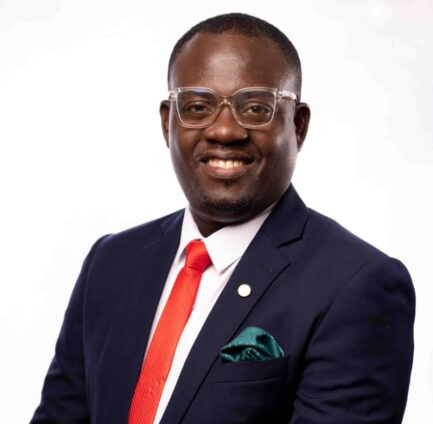
Dr Michael Kubi is a lecturer at the University of Professional Studies, Accra, a governance consultant and an author.
Latest Stories
-
Ghana Enterprise Brands Awards 2026: Leading brands, business trailblazers to shine on November 30
3 minutes -
T-bills auction: Demand improves as government exceeds target by about 76%; interest rates soften
9 minutes -
Ziope undertakes initiative to build a technologically inclined community, commissions self-help ICT lab
34 minutes -
ECG announces power outage in parts of Tema, Central Region due to network fault, maintenance
1 hour -
When the Gospel Becomes a Weapon: The church, blackmail and the abuse of faith
1 hour -
JoyNews’ Jacqueline Ansomah Yeboah selected for UK Media Excellence for Emerging Technology Fellowship
2 hours -
Mental Health Alliance urges government to operationalise Mental Health Fund
2 hours -
Ghana–Holy See agreement heads to Parliament after Cabinet approval
2 hours -
Luv FM Corporate Games 2026: Kumasi Central Prisons, Amanfiman Bank win big amid fun
2 hours -
WAFU B U17: Ghana top Group A after win over Togo
3 hours -
Ho Central Mosque reopens amid unresolved leadership dispute that led to closure
4 hours -
Minority caucus questions GH¢16.4m in Ablakwa’s SA evacuation spending, demands independent audit
4 hours -
Gender Ministry meets Nana Akua Addo’s husband over domestic violence after hospital discharge
5 hours -
UG Vice-Chancellor urges swift operationalisation of National Research Fund
5 hours -
Pope Leo to have surgery after lump found in lung
5 hours