

Audio By Carbonatix
Education Minister Haruna Iddrisu has called for greater tolerance of dissent and constructive criticism in Ghana’s democracy, stressing that opposing views can help improve governance and the lives of citizens.
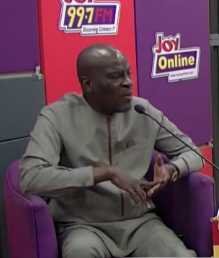
Speaking on Joy FM on Tuesday, October 13, the Tamale South MP said public office holders must focus on making life easier for Ghanaians, regardless of their political differences.
“For the good of our democracy, it’s good to tolerate dissent, and it’s good to tolerate constructive criticisms,” he said.
He explained that such criticism should help strengthen the country’s governance structures and improve the quality of life of the Ghanaian.
“Ultimately, we’re all looking to a Ghana where life is easier for Ghanaians to make a living,” he stated.
Mr Iddrisu, a former Minority Leader, made the remarks while reflecting on parliamentary leadership and the challenges facing the current Minority.
He said Minority Leader Alexander Afenyo-Markin was doing his best but faced constraints because of his side’s numerical disadvantage in Parliament.
“The current Minority Leader, Afenyo-Markin, is doing his utmost best, but he’s simply overwhelmed with the numbers. Very little to do, very little influence with those numbers,” he said.
Drawing on his own experience, Mr Iddrisu recalled periods when the Minority’s limited numbers meant that even a walkout could have little impact on parliamentary proceedings.
He noted that numerical strength could determine the outcome of debates, even when the smaller side had a valid argument.
“In every democracy, the most important institution is Parliament. That’s why it’s referred to as the citadel of democracy, where right and wrong is debated, but right must always prevail,” he said.
Mr Iddrisu also highlighted the importance of consensus, explaining that parliamentary leaders must sometimes allow backbenchers to take the lead on issues before engaging them to help resolve differences.
“Consensus is the beauty of any democracy,” he said.
On the handling of parliamentary disputes, he argued that the House should exhaust its internal mechanisms before referring matters of privilege to the courts.
“I rather will exhaust any matter of privilege within Parliament than want to refer it to a court to decide,” he said.
He linked that position to the separation of powers, stressing the need for Parliament to resolve matters within its authority through its own procedures.
Latest Stories
-
Ghana records progress on reparatory justice agenda – Ablakwa
11 minutes -
Mahama commissions Christian Tetteh Yohuno Ward Complex at Police Hospital
26 minutes -
Vice President calls for wider access to Ghana’s political party histories
26 minutes -
Republic Bank JoyNews Habitat Fair to connect prospective homeowners with exhibitors in Ho from October 16 to 18
36 minutes -
Obaasima Summit: ‘AI is not a spiritual attack’ — Rev. Dr. Ofori-Boateng urges young women to embrace technology
46 minutes -
GHS to distribute 80,000 pairs of locally-made protective footwear to health workers
53 minutes -
GoldBod boosts local jobs as 90% of gold undergoes refining in Ghana – Sammy Gyamfi
56 minutes -
The search for the politically unblemished: Are we asking the impossible of public appointees?
57 minutes -
Ghana seeks climate finance access for debt-restructuring countries
1 hour -
Afenyo-Markin urges stronger media scrutiny of public institutions
1 hour -
GoldBod recovers GH¢38.7m in legacy PMMC debts, targets remaining arrears
1 hour -
62 out of every 100 commercial meters inspected missing from Ghana Water database – MD
1 hour -
GoldBod gets BoG authorisation to sell forex, Sammy Gyamfi tells PAC
1 hour -
Ghana Water revenue mobilisation below 50% of potential – MD
1 hour -
Ghana’s democracy must accommodate dissent and constructive criticism – Haruna Iddrisu
1 hour