

Audio By Carbonatix
Ghana’s sanitation crisis has persisted for decades despite substantial public expenditure, numerous policy initiatives, and repeated nationwide clean-up campaigns. Across our cities and municipalities, public spaces remain littered with waste, drains are routinely choked with plastic, and government institutions often struggle to maintain basic environmental standards. The consequences are severe: perennial flooding, sanitation-related diseases, environmental degradation, and significant economic losses.
These recurring challenges point to a fundamental truth. The issue is no longer simply one of financing; it is one of execution, discipline, coordination, and accountability.
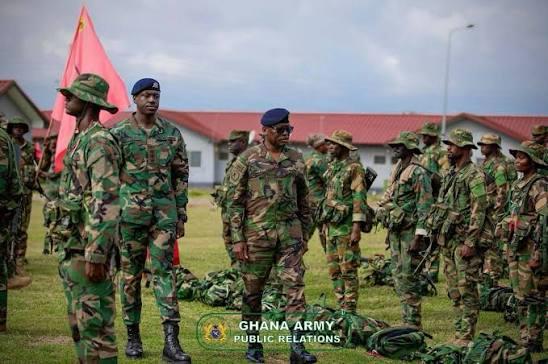
It is against this backdrop that Government should seriously consider assigning the Ghana Armed Forces a strategic responsibility in public sector waste management.
The Ghana Armed Forces have consistently distinguished themselves as one of the nation’s most disciplined and dependable institutions. Whether supporting national security, responding to natural disasters, undertaking engineering projects, or participating in international peacekeeping missions, the military has demonstrated professionalism, efficiency, and an unwavering commitment to national service.
These qualities are precisely what Ghana’s public sanitation system requires.
A military-led public sector waste management programme should focus exclusively on government-managed facilities and public infrastructure, including ministries, schools, hospitals, highways, markets, drainage systems, beaches, parks, and other public spaces. The Armed Forces possess the organizational structure, engineering expertise, logistics capability, transport assets, and nationwide operational presence to execute such a mandate with consistency and measurable results.
This proposal is not intended to replace private waste management companies. Rather, it seeks to redefine responsibilities within the sanitation sector. While private operators continue to provide services to residential, commercial, and industrial clients, the Armed Forces can assume responsibility for maintaining public spaces that are essential to national health, safety, and environmental sustainability.
Beyond improving cleanliness, such an initiative would strengthen flood prevention through routine desilting of drains, enhance public health outcomes, create a more attractive environment for tourism and investment, and reinforce civic discipline across the country. More importantly, it would elevate sanitation from a routine municipal function to a matter of national strategic importance.
Successful nations recognize that a clean environment reflects effective governance. Ghana has repeatedly entrusted the Armed Forces with assignments that demand exceptional discipline, coordination, and operational excellence. Public sector waste management deserves to be viewed through the same lens.
The time has come for bold thinking. A cleaner Ghana requires more than periodic clean-up exercises; it requires an institution capable of delivering sustained results. The Ghana Armed Forces have repeatedly demonstrated that capability. Entrusting them with public sector waste management could become one of the most transformative public service reforms of our time.
Latest Stories
-
GJA accepts Mahama’s request to organise national forum on hate speech
19 minutes -
Democratizing the judiciary: Why Judges in Ghana should engage “We the People” through social media platforms.
22 minutes -
Bond market: Turnover increases by 47% to GH¢4.07bn
34 minutes -
DVLA prepares electronic queue system to reduce congestion
40 minutes -
Hearts of Oak coach Kapor raises alarm over poor pitches in Ghana football
51 minutes -
Dorimon Traditional Council endorses policy to formalise female chieftaincy
54 minutes -
DVLA expands from 33 to 63 offices after opening 30 new service centres across Ghana
55 minutes -
State Housing Company offers 195 homes with a 5% discount; prices start at GH¢950,000
58 minutes -
Learn Deutsch opens German language examination centre in Accra
59 minutes -
Decline in external buffers complicates foreign exchange outlook – IC Insights
60 minutes -
Ghanaian filmmakers urged to tell local stories and take them to the world
1 hour -
Educated but unable to communicate? The missing link in Ghana’s University education
1 hour -
Informant demanded $20 million from NACOC for information on major drug consignment – Muntaka
1 hour -
Gov’t introduces mental health and drug tests for security recruits amid suicide concerns – Interior Minister
1 hour -
DVLA generates GH¢27.14m from dealer plates between January and September 2026
1 hour