

Audio By Carbonatix
There is a specific technical problem associated with large-scale gospel and worship events which is seldom mentioned in ordinary live sound criticism.
I am talking about how possible it is to achieve broadcast-quality clarity when there is a choir made up of more than eighty voices, a live band, several solo headliners and spoken-word sections all taking place within a 21,000-seater arena, without experiencing a single audible dropout?
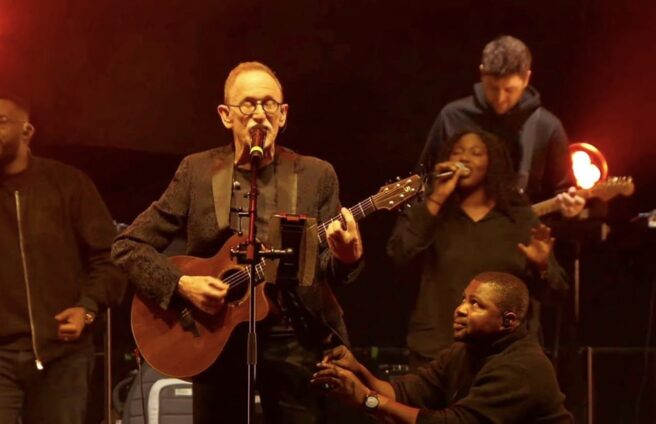
At the Festival of Praise in Manchester in 2026, the solution was mainly the work of one person who was out of sight of the audience. That was Micheal Ogunkanmi, who is credited in both editions as RF Technician, audio patch engineer, monitor engineer for the mass choir and the headline acts, lead on the side-fill systems, and supervisor of a twenty-person volunteer crew.
The Test of RF in a Hostile Room
The RF coordination at the arena is extremely strict because of the large number of channels, the continuous movement of the performers, and the steel-and-concrete building which penalises poor frequency planning. When this high standard is applied, Ogunkanmi’s performance proved it could handle top-tier artists such as Bidemi Olaoba, Dunsi Oyekan, Graham Kendrick, and FaithChild, with minimal interruptions that plague similar events of this size. This is a harder achievement than it looks, and one that is hard to pretend to have achieved. RF stability is not noticeable when it is working and becomes obvious when it fails, so the fact that it is never mentioned in any post-show comments is the most reliable sign of competence.
Where the Craft Is Genuinely Difficult: Mass Choir Monitoring
In the field of live sound, monitoring for a large choir is generally considered one of the most difficult tasks, since it involves keeping dozens of vocal sections in tune with each other while at the same time meeting the completely different mixing requirements of the instrumentalists and the lead vocalists, all from the same stage. This is where the review is most severe: this kind of task cannot be handled by relying on a single method, and a less skilled engineer would have produced a flat, unremarkable mix in an attempt to cope with the complexity. Neither edition adopted that approach. Throughout both the high-energy sections of praise and the quieter, more acoustically exposed reflective parts, the latter being the more difficult situation since thin monitoring is much more noticeable when the music is sparse, the individual choir sections remained clear and understandable.
Systems and Workflow: Less Glamorous, Equally Load-Bearing
The kind of patching and stage routing used at the festivals will be of no interest to anyone outside the industry, and that is exactly the point: structured labelling and routing are provided so changeover delays are not noticeable to the audience. In a similar way, the use of side-fills for the choir risers fulfilled an equally invisible role: it ensured that large vocal groups had enough headroom and balance without causing feedback or overpowering the front-of-house mix, a balance which is easier to explain than actually to achieve from night to night.
Leadership Under Load
The skill required to supervise twenty volunteers who carried out duties in both stage and audio areas at a large-scale live event is truly different from that of operating a console, which is why the review considers it on its own merits and does not include it in the technical assessment. The fact that the volunteer team was able to keep up the required professional standards under pressure indicates that the leadership style combined direction with mentorship rather than merely exercising command, something that is significant when evaluating whether a practitioner contributes to the wider pool of skills in the UK live events industry, not just to the outcome of a single performance.
Assessment
Festival of Praise events offer a useful case study rather than merely serving as a simple success story. The most difficult parts of the brief, keeping RF stability on a large scale, monitoring a large choir, and leading the volunteer team under live pressure, are exactly the areas where it is most tempting to cut corners and where such shortcuts would be most obvious if they were actually taken. In this case, none of these issues were evident. This is a very cautious statement, deliberately so: the fact that there were no failures is a lower standard than the presence of innovation, and this account does not say that Ogunkanmi reinvented arena sound. What it does say is that, when it came to the specific and difficult problem of sound reinforcement for large-scale worship, the effort had withstood scrutiny over a period of more than one year, which is a rarer and more valuable qualification than a single good performance.
Latest Stories
-
Let The Constitution direct Chieftaincy to deliver “All Development Is Local”
14 minutes -
Ghana explores centre of excellence for hearing, communication and cochlear implant care
2 hours -
Schizophrenia-related disorders lead mental health cases recorded in Ghana
2 hours -
Dutch authorities enlist Ghana in hunt for fugitive drug lord Bolle Jos
2 hours -
Ghana housing finance conference adopts communiqué to improve affordable housing access
7 hours -
Special Initiatives Minister urges Wa Technical Institute to enrol more girls as EU-backed solar training lab opens
7 hours -
In the matter of my first year at the Bar
7 hours -
ActionAid Ghana calls for an end to child marriage, greater investment in girls’ rights
8 hours -
Newsfile to tackle World Cup visa scandal, beach demolitions, education strikes, BRICS bid
8 hours -
UK-Ghana Trade & Investment Summit: Trade Resource Centre to help businesses maximise UK-Ghana trade opportunities
8 hours -
Embassy of Denmark celebrates World Maritime Day
8 hours -
Linking LEAP to productive inclusion could cut extreme poverty by 2030 – UNICEF
9 hours -
Trade Ministry backs use of creative arts to rehabilitate prison inmates
9 hours -
Negotiations with government to continue despite strike suspension – GNAT
10 hours -
‘Ghana cannot afford to waste public resources; every cedi has a job’ – Ato Forson
10 hours