


Audio By Carbonatix
Activists from various parts of Africa and beyond have been examining how the principles of digital rights and inclusion can play a role in advancing sustainability efforts amid the challenges of climate change.
During a session at the recent Digital Rights and Inclusion Forum (DRIF24), titled "Bridging the Gap: Digital Rights, Sustainability, and Inclusion in the Face of Climate Change," stakeholders engaged in discussions on critical issues where technology, sustainability, and social inclusion intersection can mitigate climate impacts.
Assistant Director at the Open Climate Project (Creative Commons), Monica Granados, stated the critical importance of open access to knowledge in addressing climate change, highlighting its relevance in the current climate crisis.
Monica pointed out that 57.1% of research outputs spanning from 1980 to 2020 were inaccessible due to paywalls, creating barriers for scientists, communities, and policymakers alike. This, she said, underscores the urgent need for immediate action.
Monica called for a cultural change to promote open knowledge sharing, aiming to connect digital rights, sustainability, and climate action.
She outlined initiatives of the Open Climate Campaign, which include advocacy, coalition building, policy labs, workshops, and the implementation of strong open access policies to facilitate research sharing.
Executive Director of Women for Sustainability Africa, Anita Ofori, spoke on the distinct impacts of climate change on women, underlining the necessity of recognizing and empowering women digitally and economically in response.
She emphasized the importance of bridging the gender gap by providing women with opportunities, particularly in the digital realm, and stressed collaboration between organizations and grassroots groups to address these challenges.
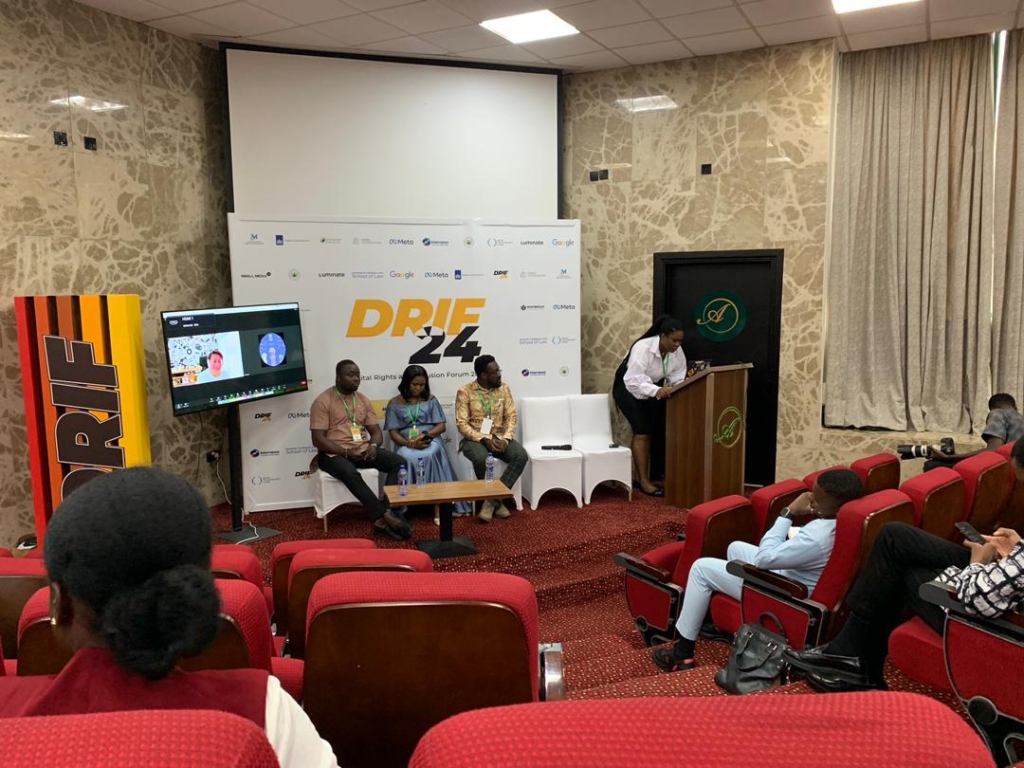
President of ISOC Ghana, Francis Acquah Amaning, highlighted the significance of increasing awareness about climate change. He underscored the importance of digital rights, such as access to online information.
“Technology can help us tackle climate change and improve sectors like farming, healthcare, and energy. For example, technology like smart meters helps us use less energy, and during the COVID-19 pandemic, people could get medical help from home thanks to technology,” he indicated.
He also referenced projects utilizing technology such as Radionet, which employs AI and Raspberry Pi to aid farmers in underserved communities in predicting rainfall patterns.
The Anglophone Africa Coordinator for the Open Knowledge Foundation Network (OKFN), Maxwell Beganim, underscored the substantial role of ICT in mitigating climate change. He emphasized the crucial necessity of safeguarding the digital ecosystem to uphold the rights of activists advocating for climate action.
“ICTs contribute to anthropogenic emissions from manufacturing through to consumers. ICT companies should mainstream cutting down emissions and the use of renewable energies for infrastructure development and consumers exhibit sustainability lifestyle with ICTs,” he said.
Maxwell highlighted policies aimed at extending the shelf life of products and promoting replaceable parts in digital devices as sustainability measures, reducing pressure on manufacturing.
He stressed the importance of educating people on sustainable living and emphasized how ICT can both contribute to climate change and help address it, citing simple actions like adjusting phone charging habits and screen brightness to reduce greenhouse gas emissions.
Policy, Programs, and Projects Lead at the Institute for Energy Security, Yakubu Adam, reflected on DRIF 24 as a significant gathering of young innovators dedicated to addressing inequality and exclusion in Africa's digital landscape.
He stated the importance of innovation in ensuring inclusivity and sustainability aligned with the UN SDGs.
Yakubu said that climate change as a sustainability issue exacerbating global inequality, advocating for leveraging digital rights and innovation to achieve these goals and ensure that no one is left behind.
DRIF serves as a leading international platform convening stakeholders worldwide to discuss and strategize on pressing issues at the nexus of technology, human rights, and digital inclusion. It fosters thought-provoking discussions, knowledge-sharing, and collaboration toward promoting digital rights, fostering inclusivity, and advancing social justice in the digital era.
Latest Stories
-
Ghana’s BRICS move requires clear strategy to manage risks – Godfred Bokpin
54 minutes -
Pay teachers realistic income – Duncan Amoah to gov’t
1 hour -
Bechem to become chicken capital of Ghana – Mahama projects
1 hour -
Gov’t targets recruitment of 16,500 health professionals in 2026
2 hours -
Two-week strike will not derail academic calendar – GNAT President
2 hours -
Headmaster detained after BBC investigation into alleged sexual abuse of students
2 hours -
GNAT pushes for clear implementation procedures of teachers’ conditions of service
2 hours -
Recurrent strikes threaten quality of education and academic calendars – Prof Bokpin
2 hours -
‘Cockroach’ group leaders among hundreds detained in Delhi protest
2 hours -
Don’t let speed of information become your judgement – CJ tells new lawyers
3 hours -
World Cup visa scandal: People have leveraged public office to facilitate fraud – Senyo Hosi
3 hours -
Glut! Farmers count losses as prices crash, customers happy
4 hours -
GSA postpones auction of unserviceable vehicles
4 hours -
Man charged with attempted murder after stabbing
4 hours -
World Cup visa scandal: Senyo Hosi says issue goes beyond calls for Sports Minister’s resignation
4 hours