

Audio By Carbonatix
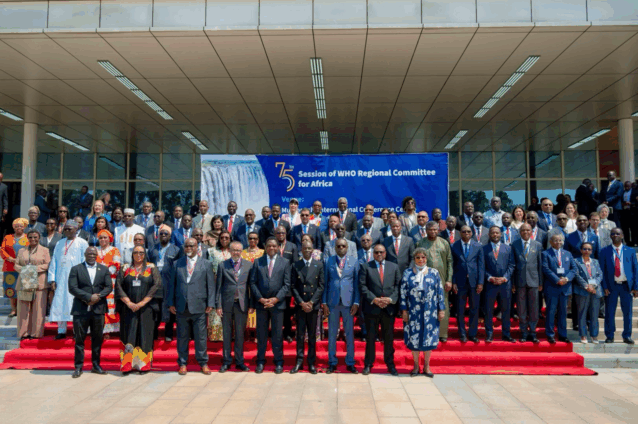
African ministers of health gathering in the Zambian capital, Lusaka, yesterday opened the 75th session of the World Health Organisation (WHO) Regional Committee for Africa, the highest decision-making body on health on the continent.
The ministers from the 47 countries of the WHO African Region, meeting from 25 to 27 August 2025, will deliberate on measures to address challenges as well as endorse key resolutions to improve and promote people’s health.
Opening the meeting, Zambia’s President Hakainde Hichilema pointed out that lessons from the COVID-19 pandemic were crucial in strengthening health diplomacy to address inequalities and called on regional leaders to position health as a driver of regional trade and industrialisation, as well as to harmonise public health regulations across countries.
The president also called for collaboration and a commitment to humanity in making decisions that enhance health and well-being across the region.
Zambian Minister of Health, Dr. Elijah Muchima, called for united action and deeper collaboration to address the continent’s health challenges.
Dr. Muchima said the complexities of today’s health threats demand that the continent stand united and that no single nation can overcome these challenges in isolation. He added that the continent must deepen regional collaboration, share best practices, harness African expertise and innovation, and build long-term resilience across borders.
“The outcomes of this Session will guide our collective action towards a more secure, equitable, and sustainable future for all.”
WHO Director-General Dr. Tedros Adhanom Ghebreyesus said that the Seventy-fifth session of the WHO Africa Regional Committee comes at a vital time for the continent and WHO as the organisation charts a more sustainable future for the health of all people in Africa.
He said WHO is working in lockstep with African nations to overcome the financial and security challenges many face and to capitalise on the great potential Africa offers in health.
“Our goal is clear: to support our Member States in Africa in their drive to build robust national health systems, built on self-reliance, efficacy and a commitment to deliver health for all,” said Dr Tedros.
WHO Regional Director for Africa, Dr. Mohamed Janabi, stressed that African countries need to work together to change the health system so that it is open, accountable, and meets the real needs of Africans.
He said Africa must see health not as an expense but as an essential foundation for development and prosperity.
“We must build systems that are efficient, inclusive and sovereign and we must place people – especially the most vulnerable – at the centre of every policy, programme and partnership.”
Over the next two days, African health ministers will discuss key issues affecting millions across the continent.
One of the main outcomes will be a resolution to speed up progress on oral health, an area long neglected despite its wide impact, aiming to provide better services across the region by 2030.
Delegates will also debate ways to end chronic blood shortages that put mothers, children, and patients with sickle cell disease at risk. A new plan is on the table to modernise supply systems and expand voluntary blood donations.
Ministers will look at strategies to increase access to rehabilitation services, which remain out of reach for two-thirds of Africans who need them.
They will also explore how to improve care for women, children, and adolescents, as the region still accounts for 70% of maternal deaths worldwide.
Another key priority will be the fight against malaria, which continues to claim thousands of lives each year in Africa.
Proposals to close the health workforce gap, currently less than half the global standard, will also be reviewed.
Health security is expected to dominate discussions as well, with new plans to strengthen early detection and emergency preparedness.
This comes after Africa recorded more than 250 public health events in 2024 alone.
Decisions made this week are expected to shape Africa’s health agenda for years to come, to build stronger systems, healthier communities, and a more resilient continent.
Latest Stories
-
David Selassie Anthony declares bid for NDC Deputy National Organiser
5 minutes -
Amin Adam proposes 13 measures to strengthen Ghana’s debt transparency and market confidence
27 minutes -
Mahama announces $2bn annual investment to accelerate industrialisation
32 minutes -
Amin Adam urges monthly disclosure of Sinking Fund as Ghana prepares for DDEP repayments
42 minutes -
Stronger banks will fuel business growth and jobs – ADB MD
43 minutes -
Galamsey: ‘Rivers that fed our grandparents now run the colour of chocolate milk’ – Sam Jonah
45 minutes -
We have been scammed by NDC, government is only doing PR – Abanga Fuseini
46 minutes -
Republic Bank–JoyNews Habitat Fair opens in Ho today
47 minutes -
BoG pledges stability to attract investment, urges stronger Africa–Asia partnerships
51 minutes -
Amin Adam warns treasury bill dependence could expose Ghana to refinancing risks
51 minutes -
Ghana better placed to withstand commodity price shocks – IMF
54 minutes -
GAPTE intensifies efforts to increase bus availability for Aayalolo contra-flow
56 minutes -
Amin Adam warns cedi depreciation could reverse Ghana’s debt relief gains
60 minutes -
Fiscal discipline crucial for pension fund investments – Finance Minister
60 minutes -
BoG Governor rallies IMF to back Africa’s digital sovereignty
1 hour