

Audio By Carbonatix
African health leaders, policymakers and development partners have called for urgent and coordinated action to strengthen the “One Health” approach, which links human, animal and environmental health to better respond to growing global challenges.
The call followed a high-level engagement led by Galien Africa, which has been actively advancing the One Health agenda across the continent.
Galien Africa previously participated in the 2023 and 2025 editions of the One Sustainable Health for All Forum and played a key role in organising the 2024 edition in Dakar. Organisers say these efforts reflect Africa’s increasing commitment to shaping a more collaborative and sustainable global health system.
As the African lead for working groups that emerged from the forum, Galien Africa has continued to promote an integrated health approach that connects human, animal and environmental wellbeing, while ensuring African perspectives are represented.
The latest discussions followed the adoption of the Lyon Declaration in November 2025 and a preparatory webinar held on April 3, 2026, ahead of the One Health Summit in Lyon on April 7.
The webinar brought together more than 200 participants from across sectors, including public institutions, academia, civil society, the media and youth groups.
Participants noted that current global challenges—including disease outbreaks, climate change, environmental degradation and food insecurity—are closely interconnected.
They observed that “current health, climate, environmental, and food crises demonstrate the close interdependence between the health of populations, animals, and ecosystems.”
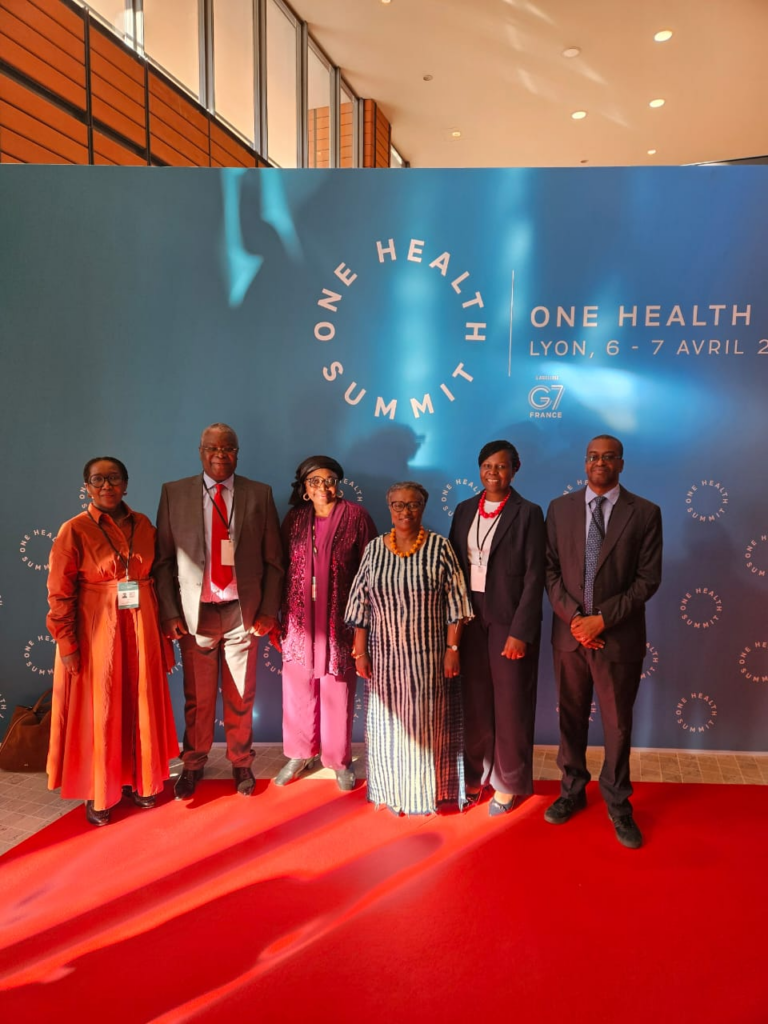
They also highlighted Africa’s growing role in shaping solutions, noting that the continent “must play a central role in building a sustainable, equitable, and resilient global health model,” drawing on its experience, innovation and community-based initiatives.
Participants acknowledged several pressing issues affecting health systems, particularly in developing countries. These include the effects of climate change, biodiversity loss and the degradation of natural resources on public health and nutrition.
They warned that “global health security depends on integrated and multisectoral approaches,” and emphasised that health sovereignty remains a strategic priority for African countries.
The group further stressed the need for improved use of scientific and climate data to anticipate crises, as well as the importance of involving communities—especially youth and women—in designing and implementing policies.
To address these challenges, participants outlined a series of recommendations directed at governments, regional bodies and international partners.
They called for the One Health approach to be formally integrated into national systems, supported by stronger legal and institutional frameworks to enable coordinated action across sectors.
Participants also urged the development of integrated early warning systems linking health, climate and environmental data to prevent crises before they escalate.
On innovation, they stressed the need to support “frugal and context-specific innovations” that respond to local realities, while accelerating local production of medicines, vaccines and medical technologies to reduce reliance on external sources.
Investment in geospatial data and technology was also highlighted as critical, alongside efforts to build skilled human resources capable of managing complex health and environmental systems.
The group further called for improved coordination among stakeholders, greater inclusion of local communities, and stronger recognition of the role of civil society and the media in raising awareness and sharing knowledge.
They also advocated for a more unified African voice in global health discussions, stressing the need to “promote a coordinated African position” in international forums.
Participants emphasised that these commitments must go beyond statements and be translated into “concrete, measurable, and funded actions.”
They noted that the One Health approach should serve as a driver for health sovereignty, sustainable development, climate resilience and greater equity in health outcomes across Africa and the Global South.
By adopting the declaration, stakeholders reaffirmed their commitment to continued dialogue, stronger partnerships and active participation in the 2026 One Health Summit in Lyon.
Latest Stories
-
Hotline Documentary: ‘Silent Football’ to air on JoyPrime and JoyNews today
1 hour -
NDPC examines how evidence shapes Ghana’s development planning and policy decisions
1 hour -
Education Ministry calls urgent talks to break GAUA strike deadlock
1 hour -
NCCE engages women in North East Gonja on rule of law, anti-corruption
1 hour -
NDPC reviews 2004 planning guidelines to reflect changes in decentralised system
1 hour -
Trade Ministry commends Prisons Service for using art to drive inmate rehabilitation
1 hour -
Books, brushes and second chances: Dr Abena Asomaning launches three titles to support prison outreach
2 hours -
Treasury bill auction oversubscribed by 53.5% as yields fall across maturities
2 hours -
NPP warns aspirants premature campaigning could jeopardise eligibility for primaries
2 hours -
Ghana courts investors in Bangkok after exit from $3bn IMF bailout
2 hours -
8 arrested over alleged internet fraud initiation assault in Bono Region
2 hours -
SSNIT says Labadi Beach Redevelopment will create local economic opportunities
2 hours -
BoG proposes 30-day liquidity buffer requirement for banks
2 hours -
BoG plans reviews of banks’ cybersecurity compliance
2 hours -
GRA cautions taxpayers against attacking tax officials
2 hours