

Audio By Carbonatix
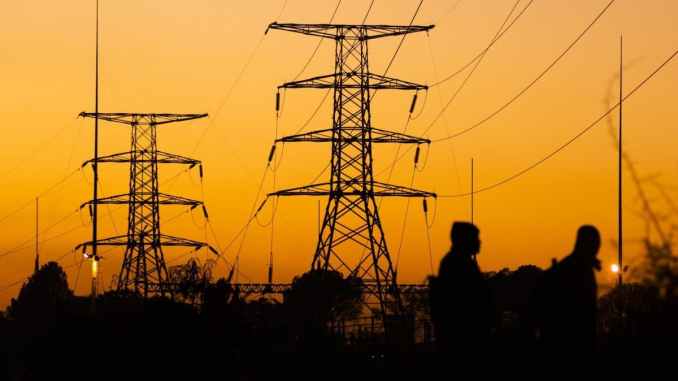
Independent Power Producers (IPPs) have been resolute in demanding immediate payment of over $1 billion owed them by the Electricity Company of Ghana (ECG). According to the group, shutting down plants remains a viable option if the debts are not settled. A restructuring proposal to the IPPs has become necessary as a result of government's inability to honour its debt servicing obligation to both domestic and external creditors this year.
Projected interest payments on loans could cost the state about GH₵53 billion ($5 billion) putting government in a very difficult fiscal position. At this point, it is simply not news that Ghana’s debt levels are so unsustainable that it was thrown out of the International Capital Market. A $3 billion bailout package from the IMF, which is supposed to help redeem its creditworthiness, is now contingent on a mammoth debt operation exercise, and investors at various levels have elected to take a hit. One stubborn holdout has been Independent Power Producers (IPPs), and the reason is not too far-fetched.
Between 2011 and 2016, Ghana witnessed the “dumsor” (Dumsor is Akan for “off and on”) catastrophe of protracted blackouts that compelled Accra to enter Power Purchasing Agreements (PPAs) with IPPs. Even though power production has increased and dependability has improved, the energy sector is now under severe financial stress due to a strain on public resources, growing debt, rising rates, and a dearth of investment. About 32 Power Purchase Agreements (PPAs) are operating in the country. The Volta River Authority (VRA) and the Electricity Company of Ghana (ECG) have PPAs with private IPPs. The Ministry of Energy has also contracted PPAs with Emergency Power Producers (EPPs).
There are 14 known PPAs for operating or near-operational projects with a total installed power generation capacity of 2,825 megawatts (MW). There are several issues with the contract style used by Ghana to secure new energy projects and negotiate PPAs. First, the country has mostly relied on unsolicited proposals to find new energy projects, which can lead to limited competition and higher prices. Additionally, most of these contracts are based on a take-or-pay agreement, which means that the government must pay for the energy-generation capacity even if no electricity is consumed.
Astoundingly, the only information that is made public about these PPAs is the project name, type of contract, technology/fuel, location, and total project cost. In 2018, excess generation capacity contracted under take-or-pay PPAs cost the government $320 million in capacity charges, which was projected to hit $620 million annually with the addition of new plants in 2019. Half a decade down the line, the country’s energy sector generates a debt burden of about $1 billion and excess capacity charges of $500 million annually.
Finance Minister Ken Ofori-Atta, in 2022 insisted the government saved about US$13.2 billion in renegotiating power purchase agreements with six different IPPs. At the end of 2021, when Ghana’s debt GDP ratio reached the historic 80% threshold, IPP payments were a major contributor. The $58 billion in debt stock as of end-December 2021 was mainly attributed to a clean-up of the financial sector, energy sector payments and COVID-19-related expenditures. Accra has thrown in the towel on honouring its energy sector debt obligations. As a result, the Electricity Company of Ghana has been compelled to embark on a mass power disconnection exercise. The company’s message is simple — pay up or get disconnected. It hopes to recover about $500 million (GHȼ5.7 billion) owed it by customers.
According to the power supplier, private manufacturing industries and mining firms are the highest debtors, followed by some government institutions. Just last week, the ECG was on the verge of disconnecting parliament but paused after the House decided to offset 60% of its debt. Although the ECG’s approach of “pay up or get disconnected” may yield some positive results, energy analysts have criticised its sustainability because revenues recovered may not be significant enough to settle the over $1.4 billion owed to independent power suppliers.
Exactly a year ago, the Ministry of Finance assured investors of the continued implementation of the Cash Waterfall Mechanism (CWM) — a payment system allowing debtors to pay higher-tiered creditors their full interest and principal before lower-tiered creditors receive theirs. Any U-turn by the government due to the debt negotiations could leave a serious legal fallout and protracted power rationing. The independent power generators’ control over 60% of Ghana’s available thermal power generation capacity, and any decision to cut power generation could result in another dumsor, which is the last thing Ghanaians want in these hard times.
Latest Stories
-
Struggling Real suffer title blow with Girona draw
1 hour -
Mahama nominates Pamela Graham as Auditor-General
2 hours -
The five big sticking points in US-Iran talks
3 hours -
Melania Trump’s speech propels Epstein crisis back to forefront
3 hours -
What everyone should know about C-sections
4 hours -
Gunmen kill at least four people at Afghanistan picnic spot
4 hours -
Health Ministry engages Ga Mantse ahead of Free Primary Healthcare launch
4 hours -
We can tackle multiple priorities – Sam George defends Anti-LGBTQ Bill push
5 hours -
Statement: Ghana Chamber of Mines’ Response to Claims in Joe Jackson’s “Ananse Stories about the Economy of Ghana”
5 hours -
GES opens 2026 teacher recruitment for licensed B.Ed graduates
5 hours -
Ghana must value skilled trades, build resilient learners — Ibn Chambas
5 hours -
Ghana must rethink education around relevance, resilience and responsibility — Ibn Chambas
5 hours -
Prince Harry faces defamation lawsuit from charity he co-founded
5 hours -
South Korea deploys thermal cameras to track escaped zoo wolf
5 hours -
Calls for royal meeting with Epstein survivors grow ahead of US visit
5 hours