

Audio By Carbonatix
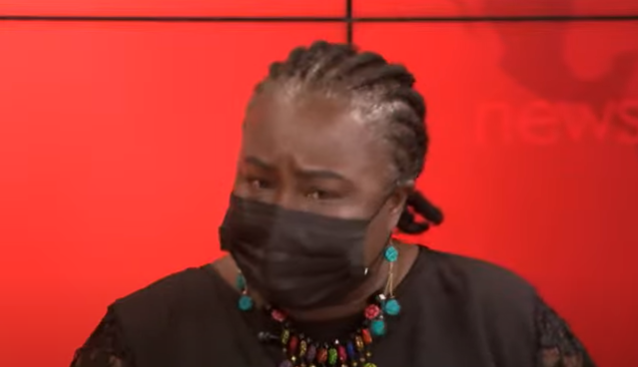
Former Dean of the University of Ghana School of Information and Communication Studies, Professor Audrey Gadzekpo, has blamed the absence of laws that explicitly provide for regulation of the media, for the recent arrests of journalists in the country.
Interacting with Newsfile host, Samson Lardy Anyenini, she bemoaned how despite the change in the media landscape, there have been no laws to regulate how the broadcasting media operates.
"The reason we are in this space is that there are no explicit laws governing and regulating the media, particularly the broadcasting media where all these cases come from."
"We are always overtaken by events. We had a changing media landscape. We needed, immediately before we licensed the 684 or so radio stations that have been granted authorization, almost 500 of which are on-air, a law explicitly stating how the terrain should be regulated. So that people who feel aggrieved know clearly where to go for relief. We don't have that," she said on JoyNews on Saturday.
She noted that at the World Radio Day event held on Friday, Professor Amin Alhassan of Ghana Broadcasting Corporation (GBC) pointed out that the law as it stands now, is obsolete.
Her concerns are in relation to the surge in the apprehension of journalists in the country.
Onua TV’s Morning Show host, Blessed Godsbrain Smart, was detained by National Security Operatives after he had been granted bail by the court following his arrest over extortion.
He was detained along with another staff, Eric Dadzie Copperfield, popularly called DJ GH Boy who is also facing charges of abetment to extort.
Not long after, a journalist with Power FM, Oheneba Boamah Bennie, was handed a 14 days jail term for threatening and insulting President Akufo-Addo.
Also, Accra FM’s Bobie Ansah, who accused First Lady, Rebecca Akufo-Addo of theft, was picked up by persons purported to be National Security operatives and has been charged with the publication of false news and offensive conduct.
According to Prof. Gadzekpo, despite numerous promises, successive administrations have failed to provide legislation but rather relied on sections of the law to penalize journalists.
In view of this, she indicated that "it is time to stop making false promises and have laws that regulate."
"If you had a law that spelled sanctions, some of those sanctions could include even shutting down radio stations. So you don't need to put them in jail," she added.
Latest Stories
-
Burnham had formal meeting with Man City chair while mayor
3 minutes -
Is Ghana producing too many lawyers? What is the best lawyer-to-citizen ratio?
6 minutes -
NDC sinking Ghana’s democracy with Emelia Agbenyo’s appointment – Miracles Aboagye
15 minutes -
Seedorf back in football as Corinthians head coach
28 minutes -
Hincapié and Zubimendi injured in post-match training session
37 minutes -
Fridges in French supermarkets hit by cyberattack
48 minutes -
Qantas flight grounded after bedbug outbreak
57 minutes -
Reality Zone with Vicky Wireko: International Day of the Girl, shaping today’s girl for tomorrow’s future – ZONTA Clubs lead the way
1 hour -
Global health must be led by countries, not designed for them – Mintah Akandoh
2 hours -
Mahama honoured at 2026 World Health Summit in Berlin for global health leadership
2 hours -
Breast cancer is not a death sentence – Besease Kontire Obaapanin, Magmina Foundation lead awareness campaign
2 hours -
EcoBank invests in digital education of 4 Garisson School to mark 40 years in Africa
3 hours -
AGI urges investment in skills and raw materials to strengthen local manufacturing
3 hours -
GPL 2026/27: ‘We have to rectify our mistakes’ – Boadu reacts to Aduana FC defeat
3 hours -
No disability access, no building permit – KMA declares
3 hours