

Audio By Carbonatix
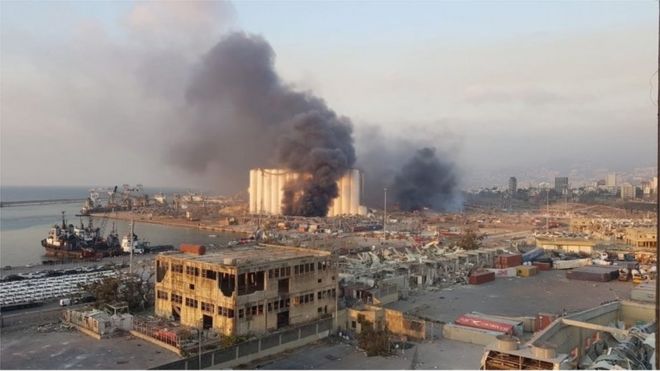
A large blast has hit the Lebanese capital, Beirut, causing widespread damage and injuring many people, officials say.
Reports say the explosion was in the port area of the city, with unconfirmed reports of a second blast. It is not clear what caused them.
Video posted online showed a large mushroom cloud and destroyed buildings.
It comes at a sensitive time, ahead of the verdict in a trial over the killing of ex-PM Rafik Hariri in 2005.
A UN tribunal is due to issue its verdict in the trial of four suspects in the murder by car bomb of Hariri on Friday.
The possible second explosion was reported to be at the Hariri residence in the city.
Lebanon's health minister, Hamad Hasan, has spoken of many injuries and extensive damage.
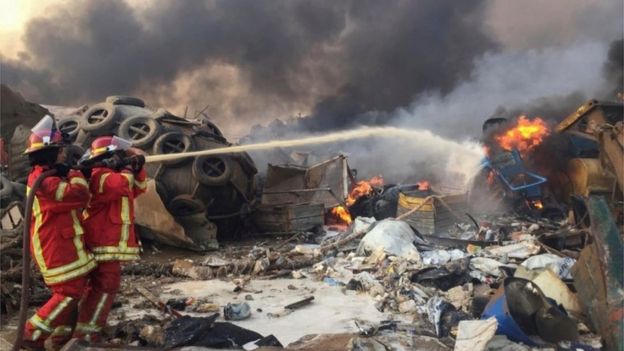
Local media showed people trapped beneath rubble. A witness described the first explosion as deafening. Video footage showed wrecked cars and blast-damaged buildings.
The latest reports come amid political tension in Lebanon, with street demonstrations against the government's handling the worst economic crisis since the 1975-1990 civil war.
There has also been tension on the border with Israel, which said last week that it had thwarted an attempt by Hezbollah to infiltrate Israeli territory.
What's the Hariri case about?
On the morning of 14 February 2005, Rafik Hariri - then an MP who aligned himself with the opposition in parliament - was travelling in a motorcade when the explosion went off in a busy area full of hotels and banks, causing widespread damage.
Mr Hariri had been one of Lebanon's most prominent Sunni politicians and, at the time of his death, had joined calls for Syria to withdraw troops which had been in Lebanon since 1976 following the start of the civil war.
The killing brought tens of thousands of demonstrators on to the streets in protest against the pro-Syrian government, with the finger of blame for the assassination pointed at Lebanon's heavily influential neighbour.
Within two weeks the government resigned and weeks after that, Syria withdrew its forces.
After collecting evidence, the UN and Lebanon set up the Special Tribunal for Lebanon (STL) in The Hague in 2007 to investigate the bombing, and ultimately charged four suspects of the Iranian-backed Hezbollah group with terrorism, murder and attempted murder.
A fifth man linked to the attack, Hezbollah military commander Mustafa Amine Badreddine, was killed in Syria in 2016.
Hezbollah's supporters have dismissed the trial, suggesting that the STL process is not politically neutral.
Latest Stories
-
From near-deferral to three awards: UMaT graduate’s academic journey
44 seconds -
Atta Akyea denies seeking presidential pardon for Wontumi in galamsey case
38 minutes -
Photos: Mahama commissions 85-bed Police Hospital ward, donates two ambulances
47 minutes -
GTEC directs Ghana’s public universities to reopen by October 16 and begin lectures on October 19
48 minutes -
Star Oil donates GH¢1million towards construction of new CID facility
52 minutes -
Court hands Adjetey Sowah, two others lifetime bans after Amputee Football legal dispute
1 hour -
NDC appoints Julius Kwame Anthony as a Deputy Communications Director
1 hour -
Ghana repatriates 120 Nigerians rescued from suspected cybercrime centres
1 hour -
NPP rejects Emelia Agbenyo’s appointment as Deputy EC Chair, demands withdrawal
1 hour -
EOCO grants Suame MP John Darko enquiry bail in GH¢27m SIC investigation
1 hour -
NPP cannot question EC appointment after appointing own people to Commission – Kwakye Ofosu
1 hour -
BoG deepens public trust with regional stakeholder forum in Techiman
1 hour -
‘We have turned the tide’ – Ato Forson says Ghana is ready to take off
2 hours -
Police arrest man captured in viral video assaulting wife in Agona Nkwanta
2 hours -
KATH Mother and Baby Unit construction stalled for 14 months over unpaid contractor arrears
2 hours