

Audio By Carbonatix
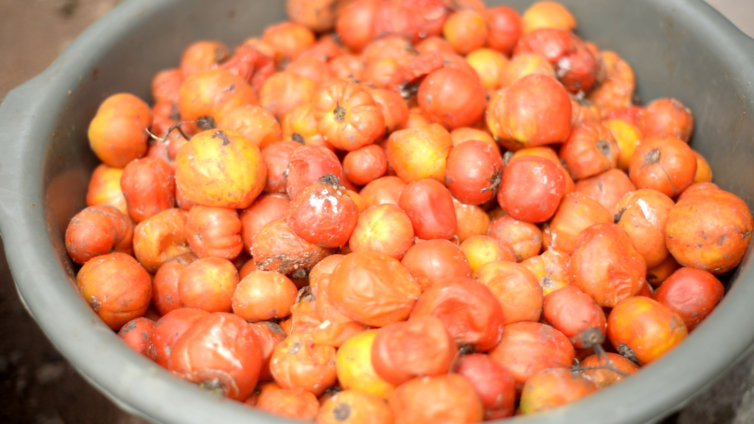
Consumption of spoiled tomatoes is on the increase with more patronage by some commercial food operators in Ghana.
Spoiled tomatoes may have higher nutritional and healthful plant-based chemicals than fresh tomatoes but are highly contaminated with harmful microbes, thus not safe for consumption.
That is the conclusion of a study by the Kwame Nkrumah University of Science and Technology (KNUST), Kumasi, with sponsorship from the Foundation for Food and Agriculture Research and Rockefeller Foundation.
Consumption of tomatoes provides health benefits. However, they’re highly perishable due to their high moisture content, soft nature, postharvest handling and are highly prone to microbial contamination.
The study was undertaken to determine the nutritional and phytochemical compositions of fresh and spoiled tomatoes. In addition, the researchers also sought to determine the levels of microbial load in sampled tomatoes.
For the study, fresh tomatoes and spoiled tomatoes were obtained from different tomato sellers at Borla Market in Kumasi in the Ashanti region of Ghana and analysed.

The researchers found all the spoiled tomatoes had considerably higher levels of nutrients (crude fibre, higher potassium, and high folic acid) as compared to the fresh tomatoes except for moisture and vitamin C.
Again, higher levels of plant-based chemicals known as phytochemicals were found in the spoiled tomatoes, particularly lycopene, beta carotene and chlorogenic acid.
The researchers attribute the results to advance ripening and moisture loss in spoiled tomatoes.
“As ripening goes on, these phytonutrients are synthesized,” lead scientist Prof. Faustina Dufie Wireko-Manu of the KNUST Food Science and Technology said.
The researchers, however, warn spoiled tomatoes are highly contaminated with harmful microbes.
“We found the spoiled tomatoes were contaminated with molds, E Coli and other harmful bacteria, beyond recommended levels by Foods and Drugs Authority (FDA).
"They’re highly contaminated with microbes and therefore not safe for human consumption,” explained Prof. Faustina Dufie Wireko-Manu.
Latest Stories
-
Ghana explores centre of excellence for hearing, communication and cochlear implant care
1 hour -
Schizophrenia-related disorders lead mental health cases recorded in Ghana
1 hour -
Dutch authorities enlist Ghana in hunt for fugitive drug lord Bolle Jos
2 hours -
Ghana housing finance conference adopts communiqué to improve affordable housing access
6 hours -
Special Initiatives Minister urges Wa Technical Institute to enrol more girls as EU-backed solar training lab opens
7 hours -
In the matter of my first year at the Bar
7 hours -
ActionAid Ghana calls for an end to child marriage, greater investment in girls’ rights
7 hours -
Newsfile to tackle World Cup visa scandal, beach demolitions, education strikes, BRICS bid
7 hours -
UK-Ghana Trade & Investment Summit: Trade Resource Centre to help businesses maximise UK-Ghana trade opportunities
8 hours -
Embassy of Denmark celebrates World Maritime Day
8 hours -
Linking LEAP to productive inclusion could cut extreme poverty by 2030 – UNICEF
9 hours -
Trade Ministry backs use of creative arts to rehabilitate prison inmates
9 hours -
Negotiations with government to continue despite strike suspension – GNAT
9 hours -
‘Ghana cannot afford to waste public resources; every cedi has a job’ – Ato Forson
9 hours -
Ghana expects economic boost as World Assemblies of God Congress brings 10,000 delegates to Accra
9 hours