

Audio By Carbonatix
The pollution is all around us. In the smoke from vehicles… the burning of waste… and the dust hanging over busy roads in Accra. But for a long time, there was limited scientific data to show just how polluted some communities really are.
And without data, it has been difficult for authorities to act. Clean Air Fund Lead in Ghana, Desmond Appiah, says that remains a major challenge across Africa.
“The level of air quality data collection in Africa is very low. (0:43) Secondly, because it's low, we are not really putting the information in the hands of the policymakers, in the states that the policymakers can understand.” - Desmond Appiah, Clean Air Fund.
The pollution comes from many sources. One major concern is open burning, which is illegal. But city authorities say monitoring offenders has not always been easy.
Environmental and Municipal Health Officer for Ayawaso North, Richard Donkor, says one of their monitoring locations recorded worrying pollution levels.
“One of our locations, that is the cluster of schools, happened to be the highest on the list of PM 2.5. So it was a great concern. In fact, burning of waste is a crime…We didn't have even one.”
For years, some assemblies had no monitoring equipment at all. Now organisations like Breathe Accra are trying to change that.
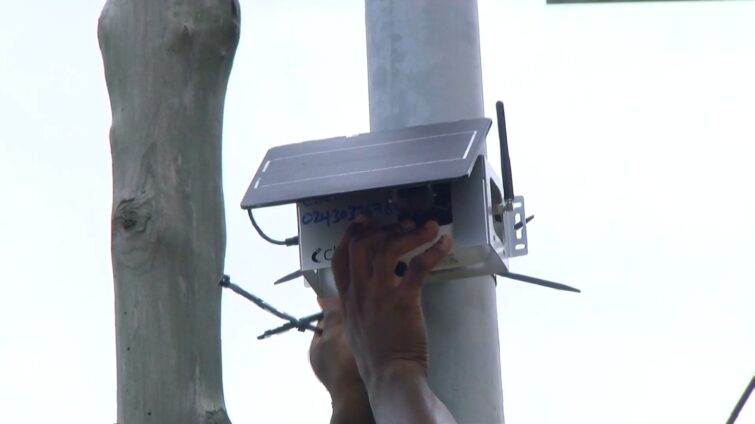
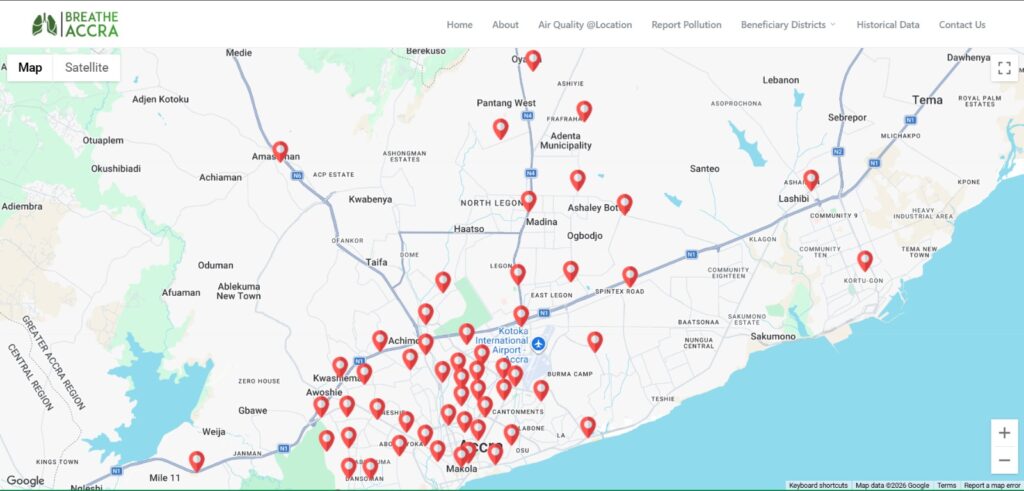
With funding support from Breathe Cities, the project is expanding its air quality monitoring network across Accra. In phase two, thirteen municipal assemblies are each receiving three additional sensors.
That brings the number of real-time air quality sensors in Accra to more than fifty — the largest network of its kind in Ghana and across the sub-region.
Project Coordinator for Breathe Accra, Kelvin Yeboah, says the goal is to help assemblies make decisions backed by data.
“So now that we've given them sensors and training, they have access to the data, which will lead to policy decisions and inform their activities, including enforcing their bylaws. So we expect that going forward, the assemblies will be able to enforce the bylaws on opening, burning, and the rest, backed by the data from the local sensors that we have given them.” – Kelvin Yeboah, Breathe Cities
The new sensors will provide hyperlocal air quality information — helping assemblies identify pollution hotspots, educate residents and even prosecute offenders when necessary.
Municipal and Environmental Health Officer for Ayawaso West Municipality, Alhaji Shaani Murtala, says the data is already revealing the scale of the problem.
“As far as we are concerned, before the sensors, we had not seen the effect of it as compared to when the sensor was mounted at Tetteh Quarshie.” “It will help us because now we know the areas where the pollution levels are high, and it will inform us on how we package our education.” “With the data that we have, if it continues, we have to enforce by taking them to court for the court to find them.”
In Ayawaso North, Richard Donkor says the sensors will also strengthen public education.
“So it is great news for us that now we are having three to monitor air quality and see how best we can mitigate pollution.” “I am super excited in that I'll have real data to convince people.”
Technicians with the project say the sensors will monitor dangerous pollutants, including particulate matter and nitrous oxide, pollutants linked to serious health conditions.
And with more sensors now spread across the capital, city authorities hope they finally have the tools to better understand the air people breathe every day… and take action before it becomes even more dangerous.
This story was a collaboration with New Narratives. Funding was provided by the Clean Air Fund, which had no say in the story’s content.
Latest Stories
-
GHIPO makes case for local plant breeders to protect developed varieties for food sovereignty and reinvestment
2 minutes -
Ghana’s bamboo bikes entrepreneur gets a seat at World Economic Forum
2 minutes -
After years under trees, Akatsi children get a permanent school
3 minutes -
Kanton SHS appeals for more teachers, ICT facilities and infrastructure support
5 minutes -
Black Queens Coach maps out preparations ahead of Olympic qualifying games
10 minutes -
La Traditional Council demands SSNIT documents over Pleasure Beach land claim
11 minutes -
African communities have solutions but lack access – Liberian envoy
15 minutes -
Minority calls for dismissal, prosecution of Sports Minister, GTA CEO over World Cup visa scandal
15 minutes -
Chairman and fellow patriots – Irene Ponu-Brenyah writes to NPP
24 minutes -
Nothing Disappears: What Jamestown Beach reveals about Ghana’s styrofoam ban
26 minutes -
Court delays former NAFCO CEO trial to resolve access to seized gadgets
32 minutes -
Joy FM to offer free LPMs to Super Morning Show advertisers on Oct. 9 to mark Customer Service Week
35 minutes -
Sri Lanka’s ex-first lady arrested over alleged misuse of children’s hospital donations
42 minutes -
La Traditional Council kicks against redevelopment of La Pleasure Beach without consultation
44 minutes -
Some basic schools have just 2 or 3 teachers despite needing 9 – Right To Play
49 minutes