

Audio By Carbonatix
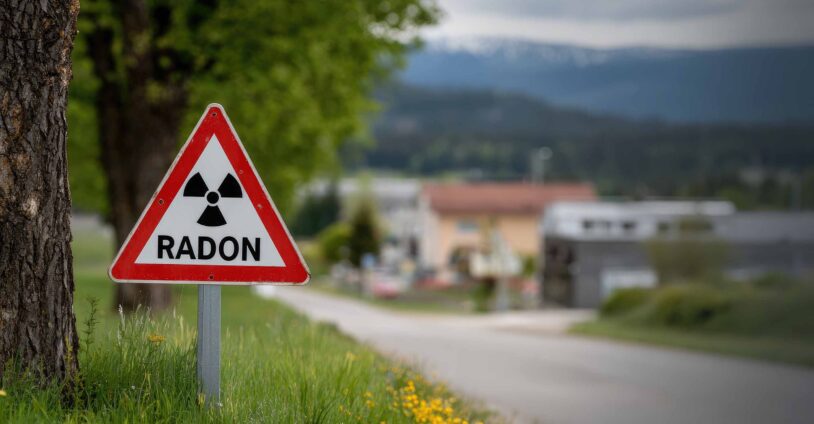
Air pollution is often linked to smoke from vehicles, dust and the burning of waste. But scientists say there is another dangerous pollutant in the air that people cannot see or smell — radon gas.
Researchers at the Ghana Atomic Energy Commission say the radioactive gas is naturally present in the environment, and prolonged exposure could increase the risk of lung cancer, even among non-smokers.
Senior Research Scientist at the Commission, Dr Irene Opoku-Ntim, explains.
“There are other pollutants, as we all know, that we talk about, the dust, the burning and all those things, but there's also another hidden risk that is radon, which is giving people lung cancer beyond smoking and the other pollutants that we know out there,” Dr Irene Opoku-Ntim said.
Radon, sometimes, seeps from the ground into homes through cracks, holes and poorly ventilated spaces.
Once trapped indoors, people breathe it in over time without even knowing. The World Health Organisation says indoor radon levels above 100 becquerels per cubic metre pose a health risk and should trigger action to reduce exposure.
Researchers in Ghana have already identified some areas with higher concentrations of radon.
“So we have a radon map for Ghana, which is a preliminary one that we've done. We are still working on that. That shows that places that have high radon concentration is being correlated with places that have earthquakes. So we've done a bit of research in the high radon areas, that is, Weija, Kasoa, McCarthy Hill, along those stretches. So we have the fault lines that pass through. So within these fault lines, radon in those areas is high because radon is being correlated with earthquakes.”
But scientists say there are ways to reduce the risks.
“If you test the soil and the levels are high, we will advise you on how to build. We see that nowadays, we build by casting our foundation, laying this polyethene. It's one of the ways to reduce the impact. Any space that it gets, it can enter your room. So if you have cracks in your homes, make sure that you seal them.”
Researchers say greater awareness and testing could help families better protect themselves from the hidden pollutant that many people breathe every day without realising it.
This story was a collaboration with New Narratives. Funding was provided by the Clean Air Fund which had no say in the story’s content.
Latest Stories
-
Tiptoe Lane’s tech takeover: The story behind Ghana’s booming informal phone market
52 minutes -
Abanga vows to use social media to counter NDC messaging ahead of 2028 elections
54 minutes -
Okai Mintah seeks Sabah Zita Benson’s support for NDC National Youth Organiser bid
1 hour -
Okai Mintah vows to strengthen NDC campaign machinery ahead of 2028
1 hour -
Mother of four and Jasikan teacher among new Telecel M’ahitti Promo winners
1 hour -
International Youth Shakers Conclave 2026 set to bring global young leaders to London
1 hour -
Gov’t is committed to addressing teachers’ conditions of service, deprived-area allowance – Education Minister
1 hour -
GoldBod’s structure encouraging galamsey – Afenyo-Markin
1 hour -
Tullow starts selling Jubilee, TEN crude to Ghanaian refineries
1 hour -
Local Government Service authorises rationalisation, redistribution of staff
1 hour -
PURC assures consumers of working to ensure quality services in Northern Region
2 hours -
Ghana develops US$4.28bn water financing framework
2 hours -
Christian Council calls for protection of mission schools’ religious identity
2 hours -
Mahama holds discussions with India’s External Affairs Minister
2 hours -
Even when you cough, they come after you — Abanga accuses Mahama govt of criminalising free speech
2 hours