

Audio By Carbonatix
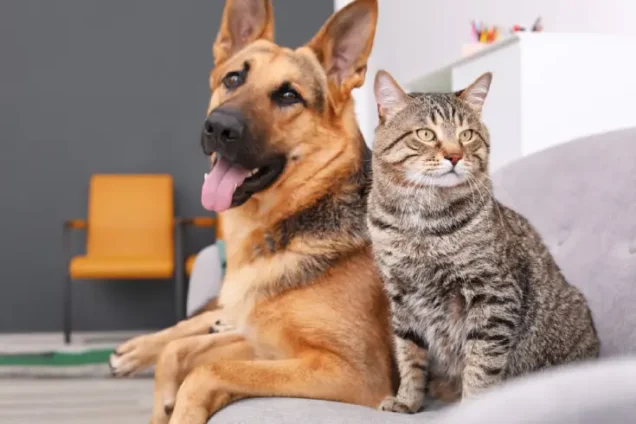
The Institute of Community Sustainability (ICS) has launched a campaign to end the consumption of cats and dogs in Ghana, officially declaring that these animals should be recognised as "vital members of our homes" rather than livestock.
In a press release issued today, Monday, 23rd February 2026, the institute called on the government to urgently criminalise the trade to protect both public health and the nation's social fabric.
Led by Executive Director Eric Jerry Aidoo, the ICS argued that the current trend of treating domestic pets as a food source diminishes their value as loyal partners and emotional companions.
The Dual Role: Companions and Protectors
The ICS highlighted that cats and dogs provide essential services that go far beyond their perceived value in the meat trade. According to the institute, these animals serve two primary roles in Ghanaian society:
- Family Companions: Providing critical emotional support and companionship to both the elderly and children.
- Security Guards: Acting as essential protectors and early warning systems for businesses and private residences.
Beyond the ethical debate, the ICS provided a grim warning regarding the "deadly risk" that unregulated slaughter poses to the general public. The institute identified three specific life-threatening diseases that are easily transmitted through the handling and consumption of these meats:
- Rabies: A fatal viral disease frequently spread during the handling of infected canine carcasses.
- Trichinellosis: A dangerous parasitic infection resulting from the consumption of contaminated meat.
- Cholera: Spread through the unsanitary and illegal conditions typical of the animal meat trade.
Mr Aidoo has formally petitioned the Minister of Health to intervene with decisive legislative measures. The ICS is demanding an immediate three-pronged response from the state:
- A Total Ban: An absolute prohibition on the slaughter of cats and dogs for human consumption.
- Criminalisation: New legislation to criminalise the transport, sale, and trade of these meats.
- Public Awareness: A national health campaign to educate the citizenry on the zoonotic risks.
“We cannot sit idly by while public health is put at risk and our loyal companions are mistreated. It is time for Ghana to align with global health standards and ethical practices. Cats and dogs are our family; they deserve protection, not the slaughterhouse,” Mr Aidoo stated.
The ICS has urged the media to amplify this message, positioning the ban as a necessary step toward building a "sustainable, healthy, and compassionate Ghana".
Latest Stories
-
Iran war reshapes Brics ties but also exposes divisions
19 minutes -
Mahama to oversee handover of right-of-way clearance for Accra-Kumasi Expressway
33 minutes -
Moroccan teenager joins 1,000 young people for IFY 2026 Children’s Programme in Russia
35 minutes -
ISS cooperation offers lessons for resolving conflicts on earth – Russian cosmonaut
43 minutes -
Laboma demolition: 48 Engineer Regiment denies claims of no prior notice
50 minutes -
Photos: Young Africans join global delegates in Russia for 2026 IYF
53 minutes -
100 young journalists lead coverage of International Festival of Youth in Russia
53 minutes -
Business owners, residents pack up belongings amid demolition at Laboma
55 minutes -
US Rep. Tom Tiffany says he sustained minor injuries after plane makes emergency landing
59 minutes -
Ebola infections top 7,000 in Democratic Republic of Congo, government data show
59 minutes -
Critics celebrate Céline Dion’s ‘high-stakes’ comeback show in Paris
60 minutes -
New report of attack on Strait of Hormuz shipping fans fears of threats to oil supplies
60 minutes -
African delegates join IFY 2026 clean-up, collect 22 cubic metres of waste from Russian lake
1 hour -
48 Regiment Engineers leads demolition exercise at Laboma Beach resort
1 hour -
Laboma demolition: Laboma Director calls for halt, says over 3,000 workers at risk
1 hour