

Audio By Carbonatix
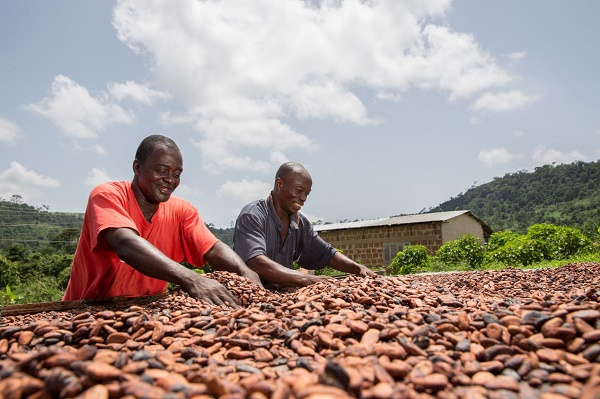
After two decades of failed interventions across the cocoa sector, cocoa farming communities are still battling the effects of poverty, child labour and deforestation.
The 2020 Cocoa Barometer report published this week is a rallying call to action: it outlines the necessary steps governments and industry should take, together with farmers and civic society organisations, to end deforestation and human rights abuses in cocoa supply chains.
As a biennial review of sustainability in the cocoa sector, the 2020 Cocoa Barometer report provides stark details of how little positive impact current and past interventions are having for the farmers at the beginning of the supply chain.
Twenty years into rhetoric, the challenges on the ground remain as large as ever. Poverty is still the daily reality for virtually all West African cocoa farmer families, child labour remains rife and old growth forests continue to be cleared to make way for cocoa production.
Now is an important window of opportunity to move towards justice, as momentum for change is gathering across different stakeholders.
Thanks to campaigning civil society organisations, the last two years have seen an increasing number of chocolate companies asking for regulation; significant global actors like the EU are committed to putting legislation in place; and the world’s two largest producers of cocoa, Cote d’Ivoire and Ghana, have formed a cartel to drive up the price for cocoa farmers.
“After two decades of voluntary initiatives that do not tackle the root causes, it is time for systemic change in the sector,” says Cocoa Barometer co-author Antonie C. Fountain of the VOICE Network.
“All the ingredients are there to make it work, but it is now time to move forward, and put in place ambitious, holistic and mandatory change, so that we can finally tackle the poverty, child labour and deforestation in cocoa.”
But to seize this moment, it is vital that the sector learns from its mistakes, or it risks repeating them. The report finds that the last two decades of interventions have failed for three main reasons.
First, efforts have only been voluntary, not mandatory, meaning that across the sector, actors are failing to do what they need to. Within the multitude of government-driven covenants, national multi-stakeholder platforms and sector-wide collaborations, there are no penalties for non- compliance from companies or governments, nor enforcement to meet targets.
Ironically, however, those at the bottom – cocoa farmers often living below the poverty line – do lose their sustainable cocoa certification if they do not comply. Whilst we’ve seen a significant increase in regulatory processes and commitments to due diligence, they are limited without accountability, transparency and equitable enforcement.
Second, whilst bad farming practice has been addressed, the underlying problems that exacerbate extreme poverty – including low cocoa prices, lack of infrastructure and no transparency and accountability as you move higher in the supply chain – remain unchallenged and unsolved.
There needs to be recognition that in its current form, the business model for high yields of cocoa means poverty for farmers and excessive profit for chocolate manufacturers. It’s time this changed.
Thirdly, efforts to solve complex issues of injustice and unsustainability in the cocoa sector have not been inclusive or holistic enough.
Instead of inviting farmers and civic society to take a respected seat at the decision-making table, problems have been assessed using a top-down industry-based approach.
This serves the interests of industry and government, rather than the producer farmers and their communities.
“We are at the crossroads” says Isaac Gyamfi, managing director for Solidaridad in West Africa. “Do we continue skirting around the issue of farmers wellbeing, or will all stakeholders together radically redesign value distribution and decision making in the cocoa sector? Let’s make space at the table and assure a living income, for both farmers and workers”.
Acknowledging how previous interventions have failed points us to alternative pathways that can put an end to deforestation, poverty and human rights abuses in cocoa supply chains. The report makes three key recommendations:
- Regulation that changes the system, rather than penalising the farmers
Recognising that bad farming is not the problem, but rather a symptom of a deeply unfair system, the report advocates for systems change and regulation that creates an enabling environment. Current forms of certification and farm-based standards increase pressure on farmers: instead, we need laws that hold the powerful accountable, rather than systems that demand farmers to solve systemic issues. Compliance criteria are imbalanced and need restructuring so that companies are held accountable to due diligence systems. - Effective partnerships between producer and consumer countries
We need partnership agreements between producer and consumer countries that facilitate and finance system change, ensuring the right policies are in place. Processes that set partnerships in motion should be inclusive and deliberative, ensuring that civil society and farmer groups have a respected voice at decision-making tables. - Deliver on a fair price for farmers
The single biggest positive impact for farmers and incentive for farming sustainably is delivering a fair price for the cocoa they produce. Cocoa and chocolate companies must find ways to redistribute value along the supply chain so that farmers are guaranteed a living income. Sandra Sarkwah, Coordinator for the Ghana Civil-Society Cocoa Platform (GCCP), supports the publication of the Cocoa Barometer 2020. “Efforts of sector players to change the story of farmers keep on beating about the bush when evidence presents to us the plight of farmers, thus, low income from their hard work is a major threat to cocoa sustainability” she said. “Processors, chocolate manufacturing companies and retailers who earn a large chunk from the value chain must be fair to farmers by paying a living income and this must reach the farmer”. As recommended in the report, Sarkwah confirms “this will require the efforts of various actors, including civil society organisations in both producing and consuming countries, as well as strong farmer cooperatives to demand transparency and accountability for effective delivery of pricing policies for better farm gate prices for farmers”.
Latest Stories
-
Phone dealer murder: 3 suspects remanded as court adjourns Teshie case
6 seconds -
Seamless Technologies CEO Calls for Strategic AI adoption to transform Ghana’s financial services sector
3 minutes -
Cargill, ICI equip 111 youth with vocational skills to tackle child labour
5 minutes -
Council of State member donates $5,000 to NDC UK and Ireland Aldershot branch for water project
10 minutes -
Education Ministry renews return-to-class appeal despite teachers’ refusal to end strike
14 minutes -
Remains of dozens of suspected kidnap victims found in Nigerian forests
15 minutes -
Four bodies found after avalanche hits Himalayan climbing group
21 minutes -
Adipa residents give government seven days to halt Agbogbloshie waste transfer
31 minutes -
Desks rotting in abandoned Kintampo South E-Block: A decade of neglect and a waste of state resources
32 minutes -
West Africa cannot simply import security models without accounting for local realities – WAMS
33 minutes -
Bono East Minister directs MCE to stop hotel project near Konkrompe SHS
56 minutes -
AGN Chair urges action-driven tracking and reporting on inclusive climate adaptation in Ghana’s agriculture
59 minutes -
Man City rule breaches not my concern – Mancini
59 minutes -
NSA releases PIN Codes for 2026/2027 national service private candidates and foreign-trained graduates
1 hour -
GMet forecasts thunderstorms, rain across parts of Ghana this evening
1 hour