

Audio By Carbonatix
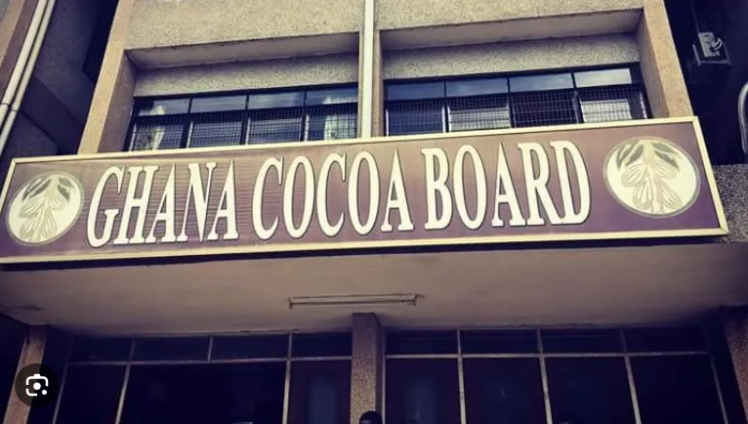
Bank of Ghana Governor, Dr. Johnson Asiama, has revealed that COCOBOD is expecting over $4 billion in inflows before the end of this year.
He explained that the funds are part of a new financing arrangement introduced by COCOBOD to support cocoa purchases for the new crop season.
Speaking in an exclusive interview with Joy Business’ George Wiafe, Dr. Asiama said the inflows should boost the Bank of Ghana’s reserves and strengthen its ability to support the local currency in the coming weeks.
According to him, this development will also signal to the market that the central bank is well-positioned to intervene when needed to meet the demands of businesses and commercial banks.
The Bank’s Economic and Financial Data released in July put Ghana’s international reserves at $11.1 billion.
COCOBOD’s New Financing Deal
In 2023, COCOBOD introduced a new funding model for cocoa bean purchases, requiring global traders to deposit at least 60% of the value of their forward contracts at the start of the season.
The system replaces a three-decade-old pre-export syndicated loan from international banks.
Part of the traders’ deposits will be used to finance purchases from farmers through an existing partnership with licensed cocoa buying companies (LBCs).
In this arrangement, traders fund LBCs to buy cocoa while COCOBOD acts as an intermediary.
Cedi’s Outlook
Dr. Asiama maintained that the development indicates a favourable outlook for the Ghana cedi, despite recent pressures. “As regulator, we have taken the needed actions to ensure that things do not get out of hand,” he assured.
He argued that the macroeconomic situation remains solid and should give businesses confidence in the cedi’s outlook as well as in ongoing measures to improve market liquidity.
“Our net international reserves have not run out, and all the indicators point to a favourable outlook. We currently have it,” he stressed.
The Governor also assured that through “discipline, transparency and firm regulation,” the central bank will build a market where the cedi can trade freely but predictably, anchored in confidence.
However, he warned that those exploiting loopholes—whether offshoring, fueling the black market, or filing fake import forms—will face sanctions.
Latest Stories
-
2026 World Cup: Ghana lose to Croatia to finish third in Group L
11 minutes -
Zipline medical drone delivery: Ghana operations decline as Nigeria expands to reach 100m people
1 hour -
Government, Zoomlion reopen Achimota Transfer Station to tackle post-flood waste crisis
3 hours -
Ghana and Ukraine: Defence rapprochement raises questions about transparency and mandate
4 hours -
PURC donates computers to UCC Institute for Oil and Gas Studies, assures university over electricity billing dispute
4 hours -
MSDA commissions 50,000-litre automated water project for Saltpond Municipal Hospital
4 hours -
Gov’t committed to protecting pension funds for Ghanaian workers – Vice President
4 hours -
Mastercard Foundation charges AIMS Ghana Class of 2026 to drive innovation, leadership and employment across Africa
5 hours -
Black Stars go again tonight
5 hours -
‘AIMS rewrites the equations of your life’ — Alumna Dr Perpetual Andam Boiquaye challenges graduates to pursue bold ambitions
5 hours -
Princess Marie Louise Children’s Hospital marks 100 years with call for greater investment in child healthcare
5 hours -
AIMS Ghana graduates record 130 students from 24 African countries at 14th graduation ceremony
6 hours -
Mahama assures Big Push contractors of prompt payment after project completion
6 hours -
Logba Klikpo faces telecommunications challenges
6 hours -
Chartered Institute of Taxation warns against unauthorised tax practice
6 hours