

Audio By Carbonatix
The United Nations Economic Commission for Africa says it is optimistic that the 2023 United Nations Climate Change Conference or Conference of the Parties of the UNFCCC (COP28) underway in Dubai will fully "operationalize" the much-anticipated loss and damage fund.
The fund has been a long-standing demand of developing nations on the frontlines of climate change coping with the cost of the devastation caused by ever-increasing extreme weather events such as drought, floods, and rising seas.
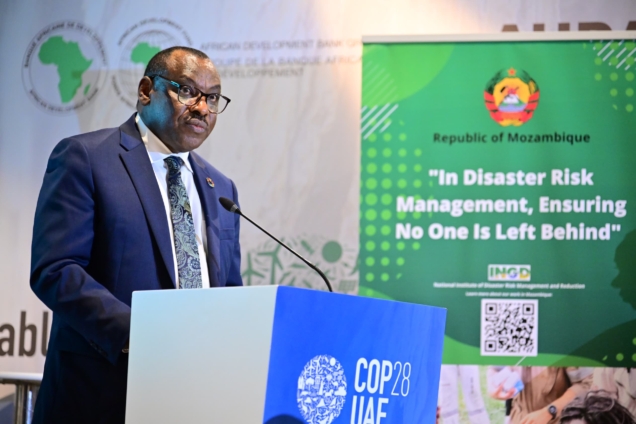
Claver Gatete, Executive Secretary of the United Nations Economic Commission for Africa, in his opening address to participants at the COP28 side event on Loss and Damage, intimated that "we are aware that there is so much work to be done to make the fund operational, but we are optimistic that before the end of this COP28, we'll have an agreed-upon the necessary arrangements."
The Executive Secretary, however, noted with pleasure the efforts of COP28 - Sharm El-Sheikh, which established the loss and damage fund, concluding the entire discussion that crossed almost three decades.
"COP28 has started positively with the adoption of the recommendation of the transitional committee on loss and damage. The fund is now funding pledges amounting to six hundred and fifty-six million as of yesterday (December 2, 2023). It is very encouraging and marks the beginning of a very important era in our efforts to address climate change and its impacts," Claver Gatete intimated.
According to a G20 panel's assessment released at the start of 2023, additional funding of about $3 trillion annually by 2030 will be needed for incremental investments in climate action and for reaching other sustainable development targets.
The Group of 20 countries commissioned the independent group, led by economists Lawrence Summers and N.K. Singh, suggesting changes for multilateral development banks, with an emphasis on boosting funding for goals related to sustainable development and climate change, among other things.
Given the much-needed financing arrangements, the Executive Secretary of UNECA remained hopeful that the pledges would be "promptly translated into actual payments" into the fund while making it usable by the member countries.
In the African context, the UNECA boss supported projections that the economic cost of climate change in developing countries will reach between 290 billion and 580 billion annually by the year 2030.
"This, of course, calls for a lot of resources to be invested, especially for the Loss and Damage fund; thus, there is a need for the rapid scaling up of the Loss and Damage fund," Mr. Gatete noted.
Latest Stories
-
Ghana explores centre of excellence for hearing, communication and cochlear implant care
43 minutes -
Schizophrenia-related disorders lead mental health cases recorded in Ghana
1 hour -
Dutch authorities enlist Ghana in hunt for fugitive drug lord Bolle Jos
1 hour -
Ghana housing finance conference adopts communiqué to improve affordable housing access
6 hours -
Special Initiatives Minister urges Wa Technical Institute to enrol more girls as EU-backed solar training lab opens
6 hours -
In the matter of my first year at the Bar
7 hours -
ActionAid Ghana calls for an end to child marriage, greater investment in girls’ rights
7 hours -
Newsfile to tackle World Cup visa scandal, beach demolitions, education strikes, BRICS bid
7 hours -
UK-Ghana Trade & Investment Summit: Trade Resource Centre to help businesses maximise UK-Ghana trade opportunities
7 hours -
Embassy of Denmark celebrates World Maritime Day
7 hours -
Linking LEAP to productive inclusion could cut extreme poverty by 2030 – UNICEF
9 hours -
Trade Ministry backs use of creative arts to rehabilitate prison inmates
9 hours -
Negotiations with government to continue despite strike suspension – GNAT
9 hours -
‘Ghana cannot afford to waste public resources; every cedi has a job’ – Ato Forson
9 hours -
Ghana expects economic boost as World Assemblies of God Congress brings 10,000 delegates to Accra
9 hours