

Audio By Carbonatix
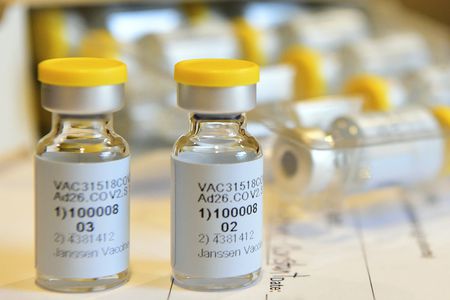
Germany is likely to face a shortage of coronavirus vaccines until at least April, the country's health minister has warned.
"We will still have at least 10 tough weeks with a shortage," Jens Spahn wrote on Twitter.
The pace of Germany's rollout has been criticised, and it has failed to meet its own daily target of vaccinations.
Mr Spahn's comments come amid a row between the EU and the vaccine maker AstraZeneca over supply shortages.
The UK-based company has said production issues at its Europe-based plants means it will be unable to deliver the promised number of doses to the 27-member bloc.
But the EU said the firm must honour its commitments and deliver the jabs by diverting stock from the UK.
On Thursday, Mr Spahn called for a vaccination summit involving pharmaceutical companies, manufacturers and politicians to explore how the rollout could be accelerated.
"Then we will see... where we can support the industry," he said. "We are going through at least 10 tough weeks. We should spend that by working together."
Earlier this week, Mr Spahn backed the EU's proposal to create a register of vaccine exports in order to monitor where doses are being sent.
He also said the falling number of cases in Germany was encouraging and suggested schools could reopen once the current lockdown ends on 14 February.
Meanwhile, the country is preparing to bar travellers from the UK, Brazil and South Africa over concerns over new variants. "We are co-ordinating towards the aim of refusing inbound travel from mutation areas," Interior Minister Horst Seehofer said.
What's happening with the rollout elsewhere?
The pace of the EU's vaccination programme has been criticised in recent weeks, with a number of countries failing to hit their own targets. Officials have blamed a combination of logistical and supply issues.
In Spain, authorities in the capital Madrid have suspended all first doses of the vaccination for at least two weeks because of the ongoing shortages.
A number of other regions, including Catalonia in the north-east, are having similar problems with stock. Catalan officials believe their 30,000 remaining doses will run out this week.
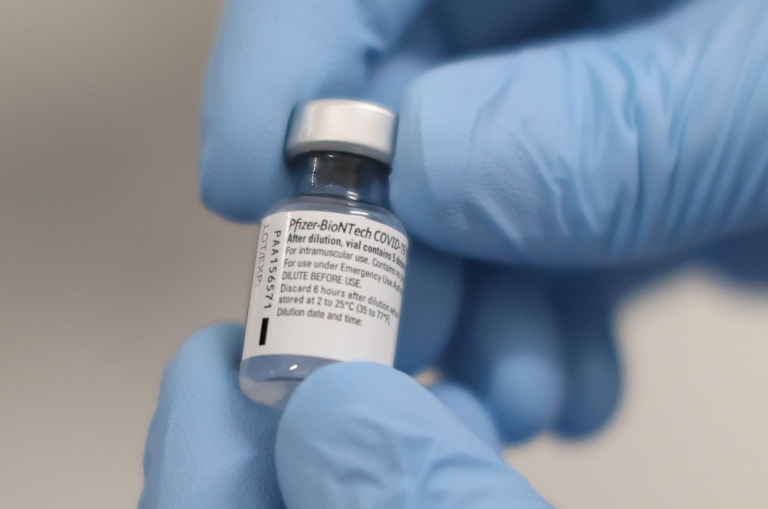
Many countries are facing similar shortages due to delays in shipments of both the Pfizer-BioNTech and Moderna vaccines, which are the only ones currently approved for use in the EU.
There was added confusion in the Czech Republic on Wednesday, after the health ministry called for a two-week halt to new vaccinations due to supply issues only for their statement to be denied by the prime minister.
"This [health ministry statement] was unnecessary," Prime Minister Andrej Babis said. "The vaccination centres need to deal with this themselves."
Elsewhere, Portugal is recording a high number of new infections and reports suggest hospitals in Lisbon are struggling to cope with the influx of patients.
A record 293 deaths were recorded in the country on Wednesday, and doctors from the German army have been deployed to Lisbon to help manage the spike.
Cases have also increased in parts of France and President Emmanuel Macron is reportedly mulling a stricter lockdown.
What's behind the supply problems?
The EU signed a deal with AstraZeneca in August for 300 million doses, with an option for 100 million more, but the UK-Swedish company has reported production delays at plants in the Netherlands and Belgium.
AstraZeneca CEO Pascal Soriot said production was "basically two months behind where we wanted to be".
The EU had hoped that as soon as approval was given - probably on Friday - delivery would start straight away, with some 80 million doses arriving in the 27 nations by March. But the production issues have dented this hope.
Reports said last week the EU would get 60% fewer vaccine doses - about 50 million jabs - than promised in the first quarter of the year.
The bloc is also facing delays with supplies of the Pfizer-BioNTech vaccine, and it has a much bigger deal with the US-German vaccine maker.
Both the EU and AstraZeneca have vowed to work together to resolve the problems, and crisis talks were held on Wednesday.
Latest Stories
-
‘At the age of 12, I was teaching people and collecting money from them’ – Forty Under 40 Awards
14 minutes -
I broke my virginity at the age of 26 after university – Richard Abbey Jnr.
46 minutes -
Sacked for fees, saved by faith: The untold story of Forty Under 40 Awards founder Richard Abbey Jnr
1 hour -
GCB Bank surges GH¢0.45, ETI gains GH¢0.06 as GSE ends week higher
2 hours -
Two teens jailed 55 years for robbery
2 hours -
UDS demands apology for MPhil student wrongly branded as Tamale robber
3 hours -
“We don’t sell fish!” – Tema Shipyard CEO hits back over dead fish discovery
4 hours -
Sam George defends anti-LGBTQ+ Bill as ‘national priority’ amid debate over gov’t focus
4 hours -
Artemis II astronauts safely back on Earth after trip around moon
4 hours -
Sam George unveils massive 1,150-cell site rollout to end network woes
5 hours -
This Saturday on Prime Insight: Fuel levy suspension, LGBTQ+ legislation, and Damang Mine controversy
5 hours -
Struggling Real suffer title blow with Girona draw
6 hours -
Mahama nominates Pamela Graham as Auditor-General
6 hours -
The five big sticking points in US-Iran talks
7 hours -
Melania Trump’s speech propels Epstein crisis back to forefront
8 hours