

Audio By Carbonatix
Mr Awentami Paul Afoko has urged young Ghanaians to embrace the courage of non-conformists, warning that the country’s progress depends on citizens who are willing to stand out, resist societal pressure, and question decisions before accepting them.
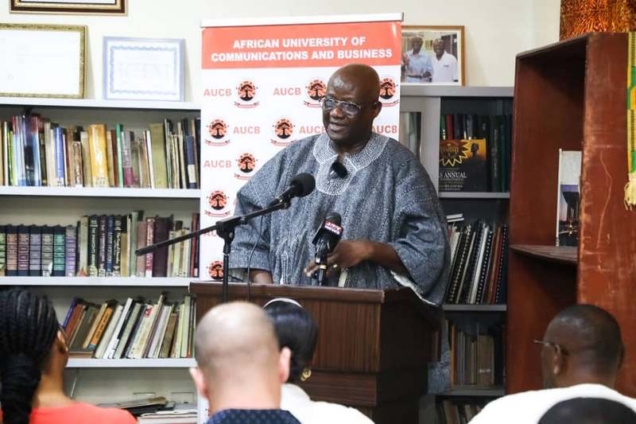
Speaking at the fifth Dialogue Public Lecture held at the Ama Ata Aidoo Centre for Creative Writing at the African University of Communications and Business (AUCB) on November 21, 2025, Mr Afoko said true national transformation will not come from people who simply “join the chorus,” but from those bold enough to challenge norms and refuse to be intimidated by fear or power.
“Living as a non-conformist in a conformist world means refusing to be swallowed by the crowd,” he told the audience. “The ability to question actions before they happen is the trait the youth must adopt if Ghana truly wants progress.”
Mr Afoko acknowledged that non-conformists often face difficulties, but argued that these very struggles are what drive national growth. He cautioned that widespread corruption and the persistence of tribalism remain major threats to development.
“Corruption is everywhere, but when corruption becomes normal and tribalism becomes fashionable, then we have a problem,” he said. “Sadly, tribalism is still around. That is why the youth must stand out and speak the truth even when it is hardest to do so.”
He warned that silence from the country’s brightest minds creates space for mediocrity to dominate public life.
“If the distinguished minds of this country keep quiet, mediocrity will take over,” he said. “And when that happens, the entire nation loses.”
Calling on the youth to recognise the responsibility that comes with standing out, he emphasised that non-conformity is not arrogance, but duty.
“Standing out is being responsible,” he noted. “You might not be noticed today, but you will be noticed eventually. The future belongs to those who refuse to be swallowed by the crowd.”
Mr Afoko added that conformity destroys innovation, justice, growth and progress, warning that if mediocrity becomes acceptable, the nation risks disaster—because intellectuals would then rely on mediocre voices to make laws and policies shaping Ghana’s destiny.
His message echoed the central theme of the lecture: that Ghana’s future depends on courageous citizens ready to challenge harmful norms, defend integrity and insist on accountability.
Latest Stories
-
US immigration officials defend ICE agents who shot man in same car as child
51 seconds -
Commentator Katie Zacharia picked as new White House press secretary
4 minutes -
Drone strike by Sudan paramilitary kills 41 near Ethiopian border, rights group says
11 minutes -
King warns malicious online actors are evolving tactics
18 minutes -
Several injured as Saudi capital airport reportedly hit again
20 minutes -
Christa Pike discharged from hospital and returned to prison, her lawyers say
22 minutes -
Ghana’s BRICS move requires clear strategy to manage risks – Godfred Bokpin
2 hours -
Pay teachers realistic income – Duncan Amoah to gov’t
2 hours -
Bechem to become chicken capital of Ghana – Mahama projects
2 hours -
Gov’t targets recruitment of 16,500 health professionals in 2026
3 hours -
Two-week strike will not derail academic calendar – GNAT President
3 hours -
Headmaster detained after BBC investigation into alleged sexual abuse of students
3 hours -
GNAT pushes for clear implementation procedures of teachers’ conditions of service
3 hours -
Recurrent strikes threaten quality of education and academic calendars – Prof Bokpin
4 hours -
‘Cockroach’ group leaders among hundreds detained in Delhi protest
4 hours