

Audio By Carbonatix
Ghana has chalked another grim milestone as far as the Covid-19 virus is concerned.
The country, according to experts, is experiencing its fourth wave of the pandemic since it broke out in the country in March 2020.
This time, the transmission is being actively driven by the new Omicron variant.
Figures from December 22 showed that the nation's infections reached a record high of 1,320 cases in one day.
Fresh data from Christmas eve indicate that some 1,264 persons contracted the virus, with 8,554 cases currently active out of the cumulative 140,221 confirmed so far.
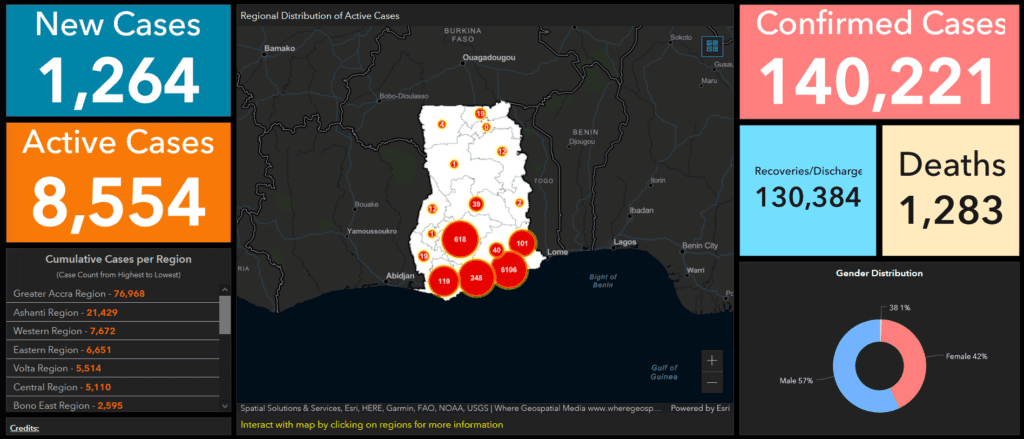
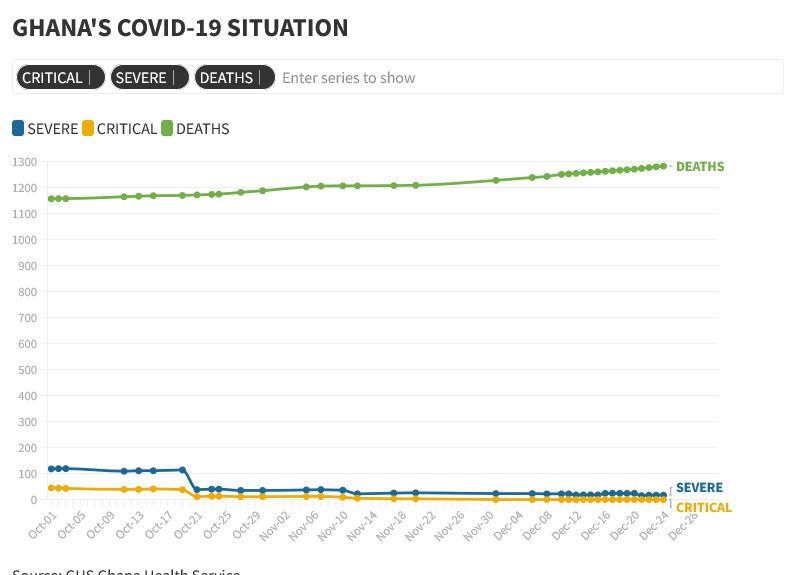
The death toll currently stands at 1,283.
According to the Director of Public Health at the Ghana Health Service, Dr Franklin Asiedu Bekoe, the recent developments are testament to the need for citizens to adhere to health protocols to reduce the spread.
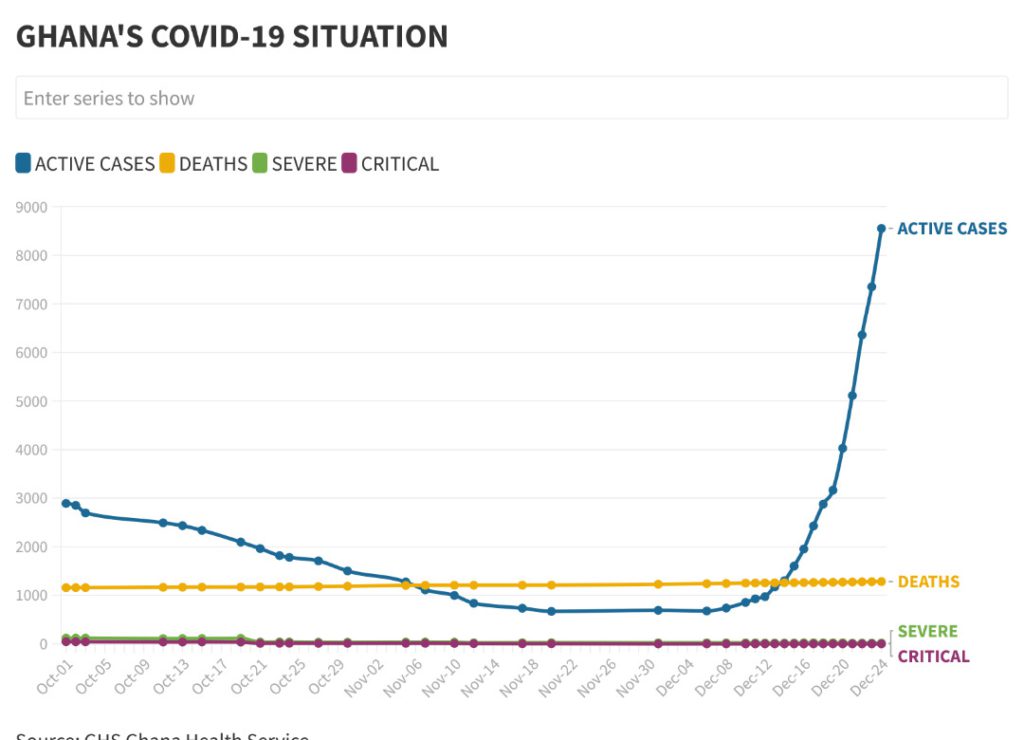
"Clearly, you can see that there is a torrential rise in cases, so if in terms of nomenclature, then we are in it. I mean, if you look at the shape of the curve, we are now a different shape than we had two or three weeks ago," he told JoyNews.
Dr Bekoe is confident that the vaccination campaign being rolled out in the country will help lessen the impact of the Covid-19 virus.
Experts have attributed the hike in numbers to the increase in activities amid the festive season and the highly transmissible nature of the new strain.
Virologist with the Kumasi Centre for Collaborative Research in Tropical Medicine (KCCR), Dr Michael Owusu, believes that Ghana's situation could have been worse but for the milder nature of the new Omicron variant.
Meanwhile, public health expert Nana Kofi Quakyi is warning that health systems will be stretched beyond their current capacity if much is not done to curtail the spread.
Despite the less destructive nature of the variant compared to the Delta strain, Nana foresees that "If you have large numbers of people infected, that small percentage could translate into a big number."
"And if you have a healthcare system that has limited capacity to care for critical and severe cases, then you can see how once you hit that saturation point, people needing care beyond that may not be able to find it," he added.
Latest Stories
-
Benedict Okyere Yeboah: Ghana’s football problem goes beyond sacking a coach
7 minutes -
GPL 2026/27: Darkwah Wiafe’s winner sees All Blacks beat Kotoko
13 minutes -
ITF World Tour : Patel Wins Boys’ Singles Final at J100 Accra
26 minutes -
Ghana must pursue BRICS partnership if it brings economic benefits – Kpebu
29 minutes -
Success and Wright Claims J100 Accra Girls’ Doubles Championship
29 minutes -
ITF J100: America’s Wright wins J100 Accra Girls’ Singles Title
36 minutes -
Expedition hopes to find aviator Amelia Earhart’s plane on remote island
36 minutes -
US seeks changes to rejected $109m health compact with Ghana – Mahama
1 hour -
Nine dead in mass shooting at Pennsylvania home
1 hour -
‘Time for Ukraine to get new president,’ says Trump after Zelensky condemns diesel deal
1 hour -
Hincapie injury adds to Arsenal issues after Guimaraes rescue act
2 hours -
Henderson scores twice as Chelsea thumb Bournemouth
2 hours -
Photos: Mentapulse Africa convenes health and labour summit to address talent retention
2 hours -
Mahama inspects Nkokɔ Nketenkete plant, eyes Bechem as chicken capital
2 hours -
Ghana not seeking full BRICS membership, applying as Partner Country – Ablakwa
2 hours