

Audio By Carbonatix
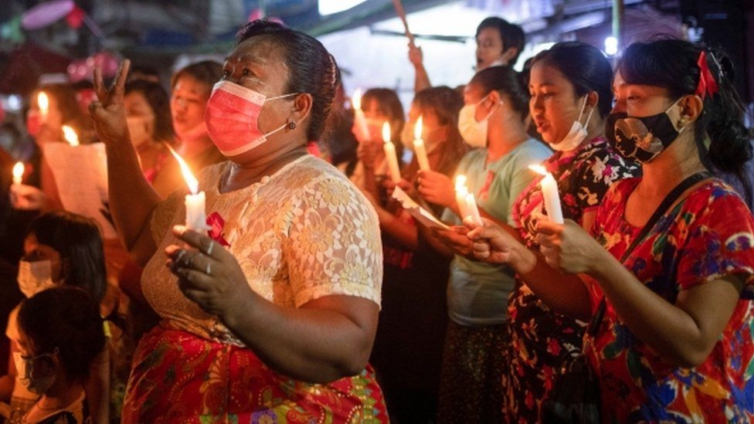
Hundreds of people have rallied in Myanmar's main city, Yangon, to protest against this week's military coup.
"Military dictator, fail, fail; Democracy, win, win," chanted the crowd, the largest protest seen since the military took over.
They called for release of the elected leader Aung San Suu Kyi and others detained by the army.
The protest came despite the military's efforts to stop people mobilising by shutting down social media.
On Friday evening, Telenor, one of the country's main internet providers, confirmed it had been ordered to deny access to the two sites "until further notice".
The coup leaders blocked Facebook on Thursday for the sake of "stability".
And on Saturday, unconfirmed reports emerged of a total internet shutdown.
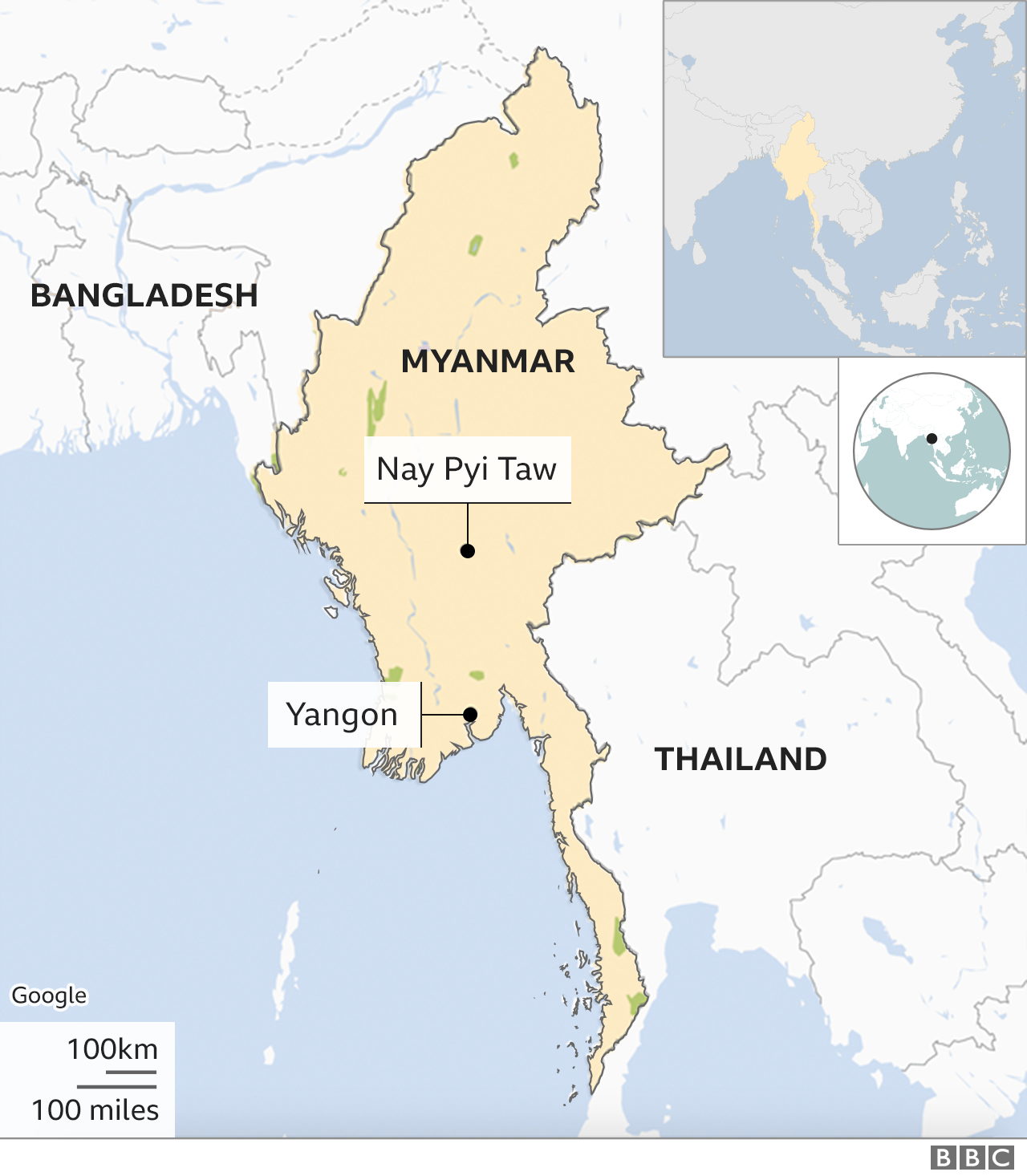
Aung San Suu Kyi is under house arrest, according to her lawyer. Police documents show she is accused of illegally importing and using communications equipment - walkie-talkies - at her home in Nay Pyi Taw.
Why has social media been blocked?
Many Burmese had watched the 1 February coup unfold in real time on Facebook, which is the country's primary source of information and news. But three days later, internet providers were ordered to block the platform for stability reasons.
Following the ban, thousands of users were active on Twitter and Instagram using hashtags to express their opposition to the takeover. By 22:00 local time (15:30 GMT) on Friday access to those platforms had also been denied.
There was no official word from the coup leaders but the AFP news agency said it had seen an unverified ministry document that said the two social media sites were being used to "cause misunderstanding among the public".
Norwegian telecoms provider Telenor expressed "grave concern" at the move and said it had "challenged the necessity and proportionality of the directive... and highlighted the directive's contradiction with international human rights law".
A spokeswoman for Twitter said it had undermined "the public conversation and the rights of people to make their voices heard", Reuters reports.
Facebook, which owns Instagram, called on the Myanmar authorities to "restore connectivity so that people... can communicate with family and friends and access important information".
How are Burmese reacting to the coup?
Myanmar, which is also known as Burma, has remained mostly calm in the aftermath of the coup.
But there have been a number of demonstrations in different parts of the country, with residents in some cities conducting nightly protests from their homes, banging pots and pans and singing revolutionary songs. There have also been daytime flash mobs.
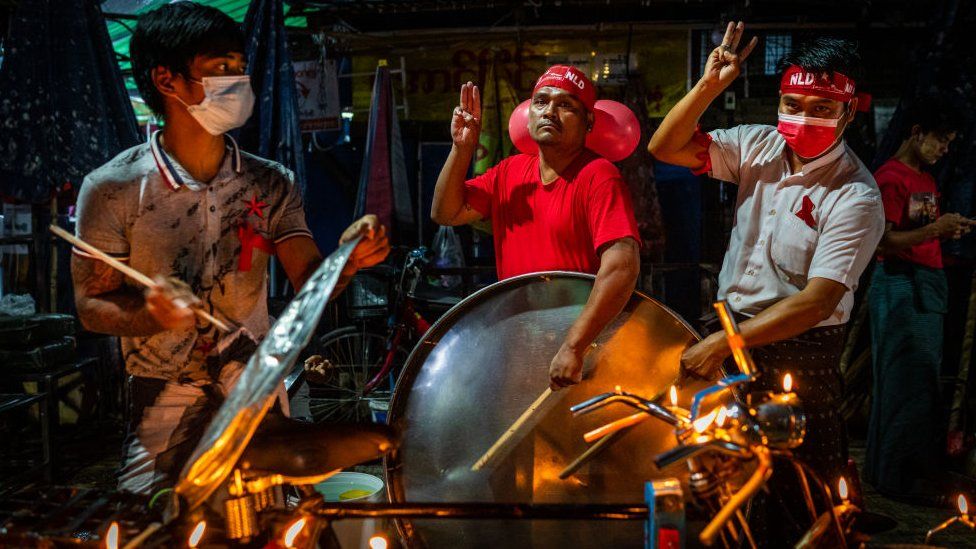
At Friday's demonstration in Yangon, hundreds of teachers and students displayed the three-finger salute - a sign that has been adopted by protesters in the region to show their opposition to authoritarian rule. "We will not let our generation suffer under this kind of military dictatorship," student Min Sithu told AFP.
The BBC's Nyein Chan in Yangon says the Burmese know very well the violent crackdowns the military is capable of, so for now there are no widespread street protests. But now people have had time to digest what is happening, they are finding different ways to fight back and get their voices heard.
Why did the coup take place?
The coup took place as a new session of parliament was set to open.
It followed November's landslide election win by the NLD - which the military claimed was fraudulent, though the country's election commission said there was no evidence to back up those allegations.
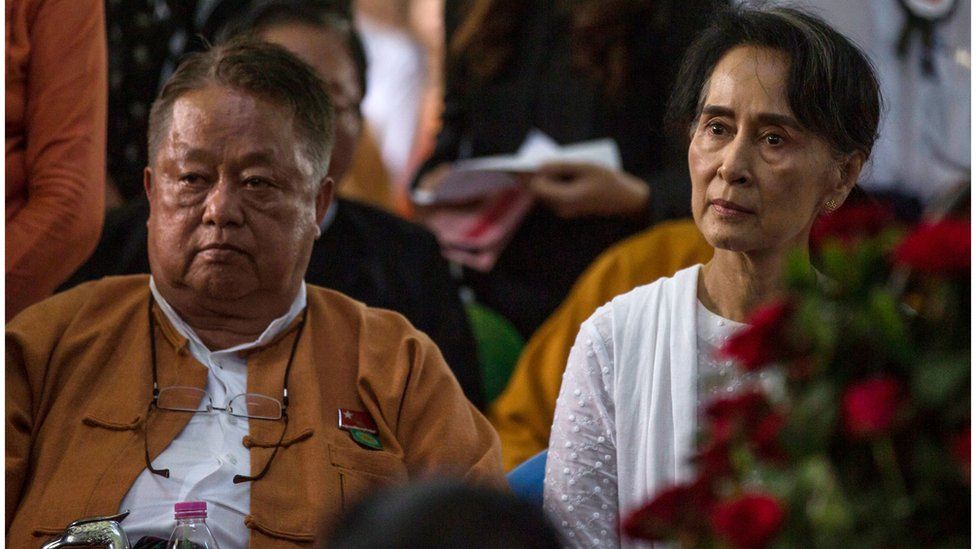
The military has declared a year-long state of emergency and power has been handed over to Commander-in-chief Min Aung Hlaing.
The move has been met with global outrage. On Thursday, US President Joe Biden called on the military to "relinquish power" and release detained officials and activists. The US had already threatened severe sanctions on Myanmar.
However, the military is seemingly undeterred, continuing down its path of consolidating power and appointing new ministers, says the BBC's South East Asia correspondent Jonathan Head.
The UN Security Council also called on the military authorities in Myanmar to release Ms Suu Kyi and other detained leaders - but stopped short of condemning the coup. In doing so, it has brought China and Russia behind a call for her release, in what our correspondent has described as a rare show of international unity.
Myanmar at a glance
Myanmar is a country of 54 million people in South East Asia which shares borders with Bangladesh, India, China, Thailand and Laos.
It was ruled by an oppressive military government from 1962 to 2011, leading to international condemnation and sanctions.
Aung San Suu Kyi spent years campaigning for democratic reforms. A gradual liberalisation began in 2010, though the military still retained considerable influence.
A government led by Ms Suu Kyi came to power after free elections in 2015. But a deadly military crackdown two years later on Rohingya Muslims sent hundreds of thousands fleeing to Bangladesh.
It triggered a rift between Ms Suu Kyi and the international community after she refused to condemn the crackdown or describe it as ethnic cleansing.
She has remained popular at home and her party won again by a landslide in the November 2020 election. But the military have now stepped in to take control once more.
Latest Stories
-
Baffour Awuah deliberately refused to honour EOCO invitation – Deputy AG, Srem-Sai
9 minutes -
‘Believe in these players’ – Carlos Queiroz tells Ghanaians after leaving Black Stars job
9 minutes -
ECG announces planned maintenance outage in parts of Accra on Friday
20 minutes -
Carlos Queiroz sacked as Black Stars head coach
28 minutes -
Parliamentary Sports Committee to ‘interrogate’ Black Stars struggles with Ministry, GFA invitations
36 minutes -
Asutifi North Police arrest 7 in crackdown on suspected drug activities
47 minutes -
Attijariwafa Bank: What to know about the Moroccan Group taking over SG Ghana
50 minutes -
University Librarians Ghana honours past leaders for distinguished service
57 minutes -
Seychelles President leads high-level dialogue on Africa’s digital future at FALS Global Conversations in New York
57 minutes -
24-hour economy requires faster justice for commercial cases – Chief of Staff
1 hour -
Five Agric Colleges receive digital tools to drive climate-smart farming
1 hour -
GPL 2026/27: Kotoko face Karela test as Hamza Obeng takes temporary charge
1 hour -
Morocco strike late to overcome 10-man Black Starlets
2 hours -
Nyaho-Tamakloe calls on Kurt Okraku to resign amid Black Stars struggles
2 hours -
Societe Generale Group agrees to sell Ghana subsidiary to Attijariwafa Bank
2 hours