

Audio By Carbonatix
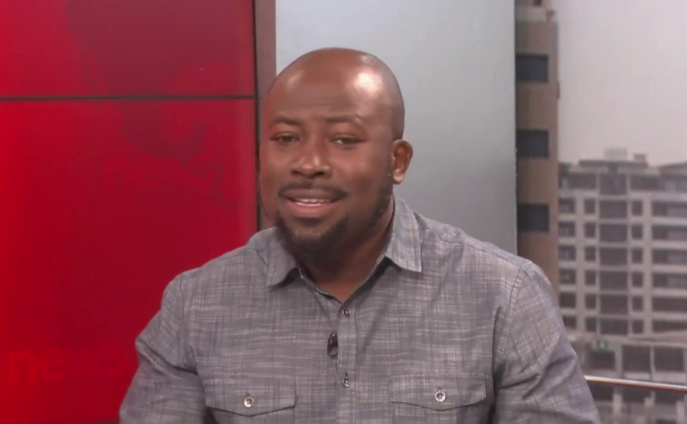
Convener of the Individual Bondholders forum, Senyo Hosi, has noted that there is a lack of equity in the debt exchange programme.
According to him, people who have invested their monies in bonds should not be the only ones suffering from the debt restructuring programme, as this places a disproportionate responsibility on them to support the economic recovery exercise.
“You may have kept your money rather in the bank and invested in government bonds. He may have just decided that he’ll rather keep his money and go and invest in properties, but at the end of the day, we have a problem to solve together.
"Why should it be you who going to put your money in the bonds be the one to suffer and not the one who put his money in the property? There’s an equity problem there,” he said.
Speaking on JoyNews’ Newsfile, Mr Hosi explained the plight of individual bondholders, saying that the monies used in the bonds are from households where many family members depend on it.
He says providers of loanable funds are mainly household individuals and that these funds which are savings from households drive the economy.
Therefore, including these bondholders in the economic recovery programme without careful consultation could cripple them financially.
He explained that the government needs bondholders more than bondholders do government, and as such must be strategic in its mode of communication in the quest to execute the debt exchange programme.
According to him, government must not disrupt household individuals’ confidence in the financial sector else it could impede access to loanable funds which in turn could disrupt the economy.
Individual bondholders have been requesting their exclusion from government’s debt exchange programme.
Some have indicated that they have suffered enough of the economic hardship and that their inclusion in the programme would exacerbate their conditions.
They say they can no longer make further sacrifices unless government returns some commissions made on their monies. Issues have also been raised on the subject of burden sharing as bondholders believe that government is refusing to bear any portion of the burden at all.
Meanwhile, others think that what may be causing a problem in reaching an agreement with the government could be the mode of communication, especially on the part of government, saying government has not been transparent and sincere.
Latest Stories
-
Conflicts among care providers linked to maternal, neonatal deaths – Expert
4 minutes -
GIS marks 10th TIME conference, champions improved teaching practices
12 minutes -
BRICS Or Balance? What Ghana’s bid really means
38 minutes -
GPRTU wants full TRAFFITECH-GH implementation to start in 2027
57 minutes -
Mahama announces plans to import electric wheelchairs for PWDs
1 hour -
KGL U17 Colts 2026: Western beat Prempeh Elite Academy to set up final final with Greater Accra Region
1 hour -
Late Solanke strike salvages 10-man Spurs draw at Man United
1 hour -
Gender Ministry to monitor welfare of Nana Akua Addo’s children amid domestic violence case
2 hours -
Benedict Okyere Yeboah: Ghana’s football problem goes beyond sacking a coach
2 hours -
GPL 2026/27: Darkwah Wiafe’s winner sees All Blacks beat Kotoko
2 hours -
ITF World Tour : Patel Wins Boys’ Singles Final at J100 Accra
2 hours -
Ghana must pursue BRICS partnership if it brings economic benefits – Kpebu
2 hours -
Success and Wright Claims J100 Accra Girls’ Doubles Championship
2 hours -
ITF J100: America’s Wright wins J100 Accra Girls’ Singles Title
2 hours -
Expedition hopes to find aviator Amelia Earhart’s plane on remote island
2 hours