

Audio By Carbonatix
In many parts of Africa, female menstrual health poses significant barriers for millions of young girls.
For most girls, the lack of access to affordable and hygienic sanitary products means missing school, withdrawing from social activities, and losing confidence.
But one Ghanaian startup is determined to change that by turning agricultural waste into female sanitary hygiene products.
Meet Kodu Technology, a social enterprise co-founded by Iddi Mohammed Faried, Mubaraka Umar Farouk and Longi Aadam Hayendimah that is transforming plantain and banana waste into eco-friendly and affordable sanitary pads.
Rooted in innovation, sustainability, and social justice, Kodu Technology’s mission is to ensure menstrual hygiene products are accessible.

“At Kodu Technology, we believe no girl should miss out on life because of her period, and no resource should go to waste. Turning plantain and banana waste into sanitary pads isn’t just innovation; it’s dignity, sustainability, and impact in action,” Iddi Mohammed Faried highlighted.
Kodu Technology’s solution addresses two critical issues at once: the challenge of period poverty and the environmental impact of agricultural waste.
By sourcing fibrous materials from agricultural residues, waste that would otherwise rot or be burned, the startup creates high-absorbency, biodegradable sanitary pads that are safe for women and also reduce environmental footprints.

Kosmos Innovation Center (KIC) and the Mastercard Foundation provided funding support to Kodu Technology through KIC’s AgriTech Challenge and Incubation Programs.
These programs play a key role in helping startups like Kodu Technology grow from business ideation and concept to reality, accelerated growth, scale and investor readiness.
Following their participation in the KIC program, Kodu Technology, on its own, has also been able to raise funding with other organisations. In 2023, they were the winners of the Circular Economy Competition.
In 2024, they emerged as winners for the Go Gettaz Agripreneur prize, competing with other start-ups across the continent for the prize money to scale up their operations.
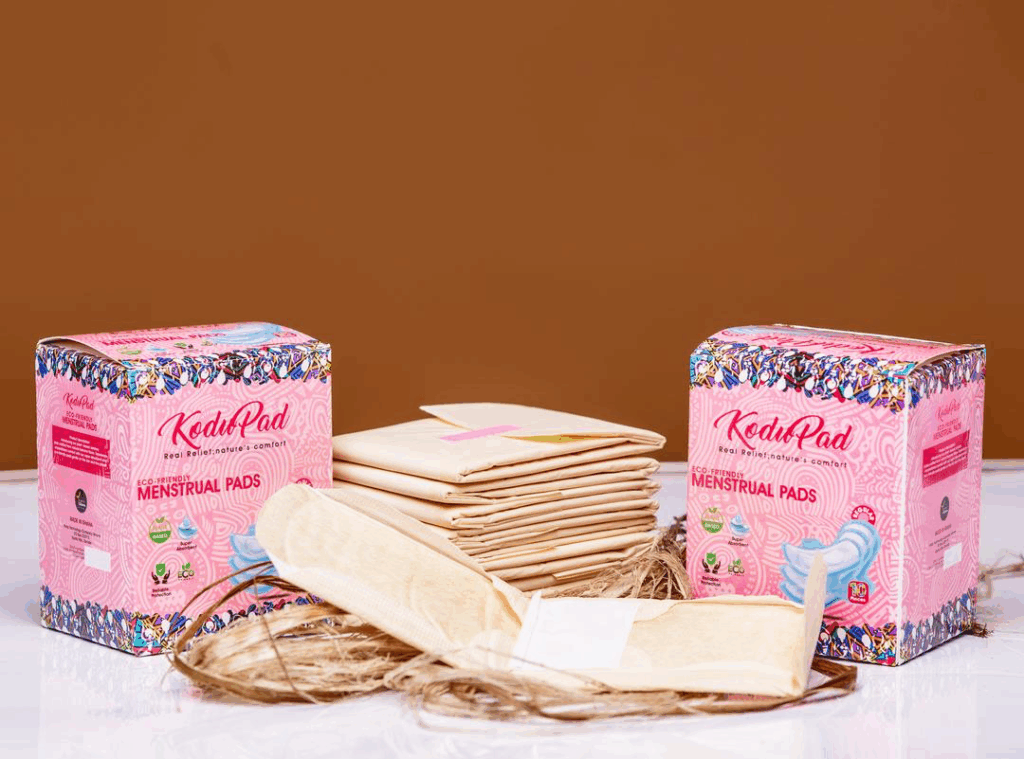
“At KIC, we support businesses that tackle real-world problems with innovative, locally driven solutions, and Kodu Technology exemplifies how agribusiness innovation can extend beyond food to address broader social challenges to promote sustainability and youth empowerment,” said Benjamin Gyan-Kesse, Executive Director of KIC.
Kodu Technology’s impact goes beyond product innovation. The company is also a driver of rural empowerment, partnering with women’s groups and smallholder farmers to source raw materials and distribute the final products. In doing so, Kodu Technology is creating jobs, supporting local economies, and building awareness about menstrual health and hygiene.
Their community-based approach has led to hundreds of girls and women gaining access to safe sanitary products, often for the first time.
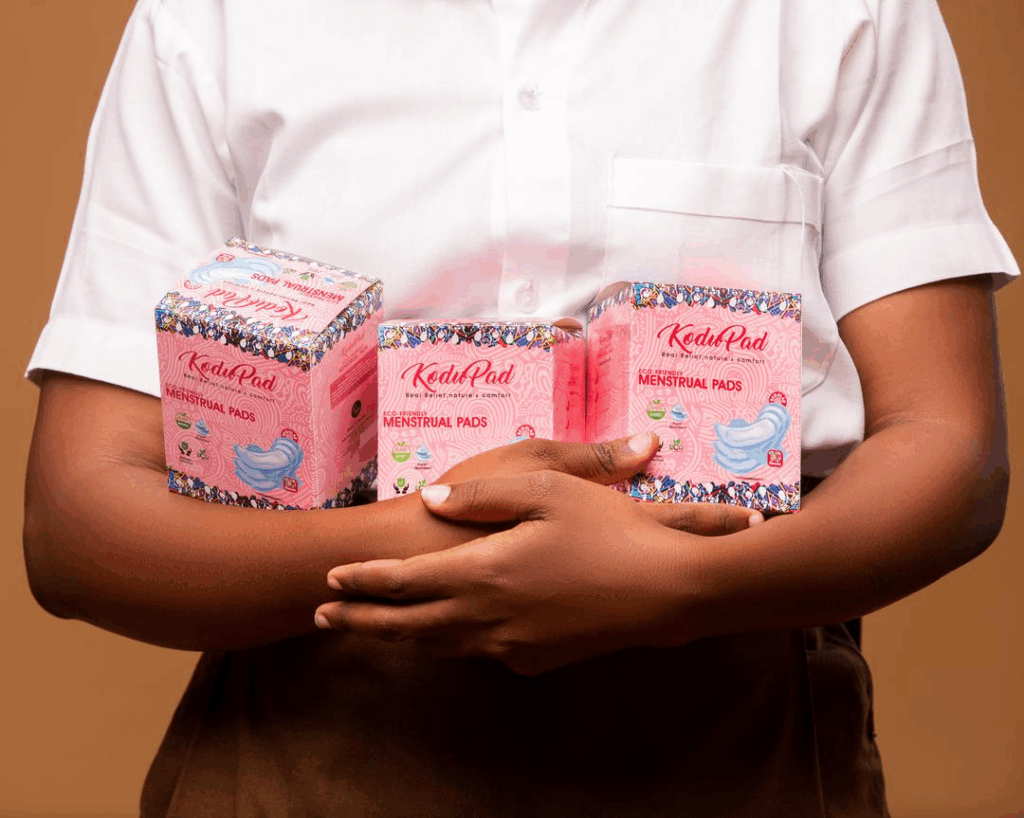
Schools in underserved communities are also benefiting, with Kodu Technology leading menstrual health education programs that challenge stigma and open dialogue.
The startup’s work has gained recognition from several development partners and innovation hubs across Ghana and beyond. As the company scales, its ambition is clear: to reshape menstrual health access across Africa.
Kodu Technology through the support of KIC and Mastercard Foundation is proving that girls deserve better, and that innovation rooted in local realities can spark global change.
Latest Stories
-
Christa Pike’s prognosis still unclear after failed execution, lawyer says
15 minutes -
SLTF to advance fees for first-year students facing admission payment deadlines
17 minutes -
Ghana Institute of Architects calls for action to make adequate housing a human right
17 minutes -
BoG, Police arrest seven over cedi bouquets
18 minutes -
NCPTAs appeal to striking teachers to return to classroom
18 minutes -
Government plans engineered landfills and waste transfer stations nationwide – Ayariga
20 minutes -
Second edition of Prince Amoako Jr giveback project scheduled for December
23 minutes -
Muntaka commissions polyclinic at Ayigya Zongo to address healthcare challenges
30 minutes -
World Habitat Day: Adequate housing for all – a right we must build
32 minutes -
Ghana Institute of Architects urges government to adopt coordinated agenda for affordable housing
32 minutes -
Yutong bus extensively damaged by fire at Gbogdaa
32 minutes -
Spanish PM Sánchez calls early election after housing protests
38 minutes -
GH¢3,000 monthly allowances for Paramount Chiefs and Queen Mothers fully paid – Ayariga
38 minutes -
Government disbursed over GH¢5bn to MMDAs in 2025- Ayariga
39 minutes -
Teachers’ strike: Abosamso queenmother, assemblyman take over classroom
42 minutes