

Audio By Carbonatix
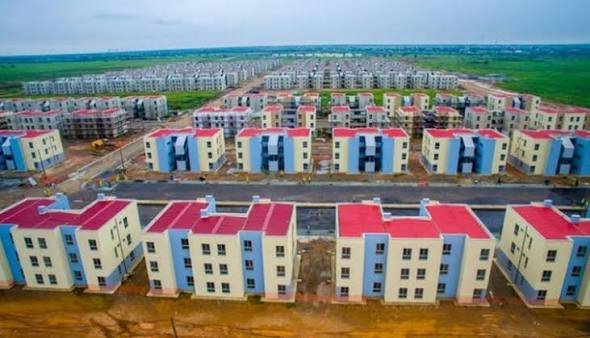
A home is more than four walls and a roof. It is where families are raised, where children grow, and where communities take shape. Yet for millions of people worldwide, adequate housing is still out of reach. Accordingly, the World Habitat Day was set aside by the United Nations in 1985 to draw attention to this critical gap and the state of human settlement in general.
The theme for this year, "Adequate Housing for All", coincides with the theme for the World Architecture Day, which is marked on the same day by the International Union of Architects. This year's World Architecture Day is being observed under the theme "Housing is a Human Right. Build It."
Together, the two messages say something simple: housing is a basic need, and societies must find practical ways to provide it. The UN estimates that over 3 billion people lack adequate housing, with more than 1.1 billion living in informal settlements.
For Ghana, the conversation is urgent.
The Ghana situation
For many Ghanaians, a decent home remains one of life's biggest aspirations. Getting there, however, has become harder.
It starts with land. Acquiring a plot can swallow a large chunk of a family's savings, and the risks do not end there. Multiple sales of the same land, land guard disputes, and unclear documentation are common. Even when the land is secure, building is another hurdle. Cement, steel, roofing sheets, electrical and plumbing fittings -every input has climbed in price, and completing a house now costs far more than most households can afford.
For those who rely on financing, long-term housing loans remain scarce and expensive. The result is a build that stretches over years, with families adding a room at a time as money allows. Others never get there and stay in rented accommodation.
So the question is not whether housing is a right. It is how to make that right affordable and accessible to ordinary Ghanaians.
More than four walls
Adequate housing means more than a structure to sleep in. It means security, dignity, and reasonable access to services. Location matters -roads, water, sanitation, electricity, schools, healthcare, jobs and transport all shape whether a house is truly liveable.
That makes housing a shared responsibility. Government, local authorities, banks, developers, architects, engineers, contractors and communities all have a role. It is also an economic issue. The housing sector supports a wide chain of businesses and livelihoods, from mortgage providers and estate developers to artisans and building material retailers. More affordable homes can create jobs while improving living conditions.
Affordability is the real test
Increasing the number of houses built does not solve the problem if those houses remain out of reach for most households.
Ghana needs solutions that connect supply, affordability and finance. Banks must design products that reflect how people actually earn. Developers must find ways to cut costs without cutting quality. Government and local authorities must deal with land, infrastructure and planning. And buyers need reliable information before making decisions about land, mortgages, construction and ownership.
Beyond Accra
The housing challenge is not confined to the big cities. As towns across the country expand, the need for adequate housing and well-planned communities grows with them. That makes regional engagement important.
The JoyNews–Republic Bank Habitat Fair is one example, bringing housing stakeholders closer to prospective homeowners. Its third Mini Clinic takes the conversation to Ho this weekend, giving residents in the Volta Region a chance to engage experts on financing, land acquisition, construction and homeownership.
For many people, access to the right information is as valuable as access to money.
From right to reality
World Habitat Day is a moment to look beyond the number of houses built and ask a harder question: are we building homes and communities that ordinary Ghanaians can afford, live in safely, and call their own?
Answering that will take government, the private sector, financial institutions, professionals and communities working together. The UN's call for "Adequate Housing for All", alongside the UIA's "Housing is a Human Right. Build It.", gives us a useful framework.
For Ghana, the task is to turn those words into practical solutions -homes that are accessible, affordable and sustainable.
As the Habitat Fair takes that conversation to Ho this weekend, the message is timely. Adequate housing should not be a privilege for those who can afford it. It is a right we must build together.
Latest Stories
-
Ray Michael Djan Jr puts Ghanaian creativity on global stage with Chelsea anthem
1 minute -
Matilda Dibloni Kokar elected USAG president after two-year dormancy
4 minutes -
NPP delegates wanted youthful energy with Kojo Bamba’s election – Political scientist
7 minutes -
Zenith Bank supports Childhood Cancer Unit at Greater Accra Regional Hospital
7 minutes -
KMA empowers 64 persons with disabilities; Mayor unveils plan for sustainable skills centre
9 minutes -
DJs Union urges musicians to prioritise respect, communication amid industry tensions
17 minutes -
“Ghanaian DJs deserve their flowers” – Lasmid
17 minutes -
Zenith Bank supports childhood cancer unit at Greater Accra Regional Hospital
19 minutes -
‘Who’s in charge doesn’t really matter; we’re all servants’ – John Boadu on leader of NPP
23 minutes -
Christa Pike’s prognosis still unclear after failed execution, lawyer says
38 minutes -
SLTF to advance fees for first-year students facing admission payment deadlines
41 minutes -
Ghana Institute of Architects calls for action to make adequate housing a human right
41 minutes -
BoG, Police arrest seven over alleged misuse of Ghana Cedi as bouquets
42 minutes -
NCPTAs appeal to striking teachers to return to classroom
42 minutes -
Government plans engineered landfills and waste transfer stations nationwide – Ayariga
44 minutes