

Audio By Carbonatix
Herbal medicine experts have called for the establishment of a single national standard for herbal medicines and a review of the implementation of Ghana’s Essential Herbal Medicines List, warning that inconsistencies in regulation and procurement are hindering the growth of the industry.
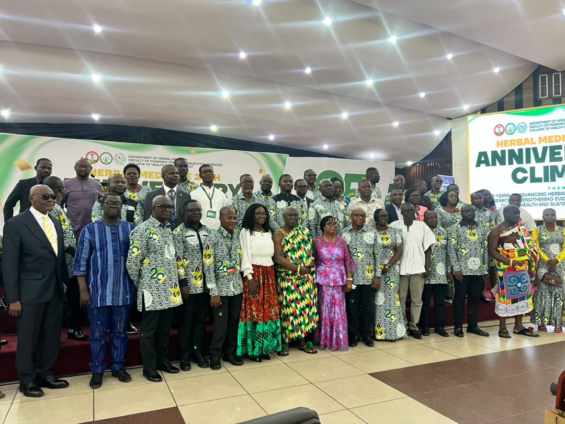
The calls were made at the climax of the 25th anniversary celebration of the Department of Herbal Medicine at the Faculty of Pharmacy and Pharmaceutical Sciences, College of Health Sciences, Kwame Nkrumah University of Science and Technology (KNUST).
General Secretary of the Ghana Federation of Traditional Medicine Practitioners Associations, Okogye Abibiduro Nana Kwadwo Kobiri, appealed to the government to develop a single national standard for herbal medicines to guide manufacturers and regulators.
He argued that the Ghana Standards Authority should establish uniform standards that would be adopted by the Food and Drugs Authority (FDA), the Traditional Medicine Practice Council and industry players to eliminate inconsistencies in regulatory processes.
“It is time the Ghana Standards Authority comes out with a standard procedure for herbal medicines so that the FDA, the Traditional Medicine Practice Council and industry all work with the same standard. The changing policies are creating confusion for industry,” he asserted.
Nana Kobiri also expressed concern over the implementation of Ghana’s Essential Herbal Medicines List, saying many public health facilities procure herbal medicines almost exclusively from the Centre for Plant Medicine Research despite the existence of a broader list approved by the Ministry of Health.
He argued that relying heavily on products from a single institution limits the growth of other herbal medicine manufacturers and practitioners.
“Mampong has only a few products on the list. If hospitals purchase only those products, it does not represent the entire traditional medicine sector. The Centre is supposed to conduct research for the industry, not compete with it,” he said.
Speaking at the event, Professor Regina Appiah-Opong of the Noguchi Memorial Institute for Medical Research also called on the government and private stakeholders to provide greater financial support for herbal medicine research and development.

She said investment is critical to ensuring herbal medicines produced in Ghana undergo rigorous scientific evaluation, including safety screening, dosage determination, shelf-life assessment and quality assurance, to boost public confidence and increase their acceptance both locally and internationally.
According to Prof. Appiah-Opong, Ghana’s herbal medicine industry contributes far less economically than those of countries such as South Africa and Egypt, largely due to inadequate funding for research and commercialization.
“The first one, as we all know, is money. We need funds to do research. We have to ensure that every herbal medicine produced is carefully screened for dosage, shelf life and everything that makes that product standard for people to be confident in it, not only in Ghana but also abroad,” she stated.
She noted that although many herbal medicines have proven therapeutic potential, the absence of sufficient scientific evidence and clinical trials continues to fuel skepticism about their safety and effectiveness.
“Many are struggling to accept herbal medicines because they ask, ‘Where’s the evidence that it works? Where’s the evidence that it’s safe?’ We know many of these medicines are useful, but we have to do the science,” she added, urging the government to prioritize investment in healthcare research.
The event, held under the theme, “25 Years of Advancing Herbal Medicine Education: Strengthening Evidence-Based Practice for Global Health and Sustainable Development,” brought together traditional leaders, academics, alumni, students, researchers, policymakers and other stakeholders to reflect on the department’s contributions to herbal medicine education and discuss strategies to strengthen evidence-based practice and enhance the sector’s contribution to national development.
Latest Stories
-
Global InfoAnalytics poll puts John Boadu, Justin Kodua and Titus Glover ahead in NPP executive race
33 minutes -
Ghana to establish skills development university with $50m from German support package
39 minutes -
Baffour Awuah under EOCO investigation over alleged financial loss and money laundering – Deputy AG
46 minutes -
How healthy is Ghana’s health sector?
51 minutes -
HACSA Tech4Girls graduates 80 young women with digital and technology skills
52 minutes -
Arrest of Manhyia South MP should involve Parliament, not police station – Kpebu
1 hour -
Two Nigerians sentenced to 189 months in US prison over $2.4m cyber fraud
2 hours -
Cristiano Ronaldo leaves Portugal’s training camp after rift with Head Coach
2 hours -
Ghana Energy Awards opens nominations for landmark 10th anniversary edition
2 hours -
Aayalolo contra-flow: Are we treating the symptom instead of the disease?
2 hours -
GTEC orders Colleges of Education to begin 2026/2027 admissions despite fees approval delay
2 hours -
Legal reforms must solve real problems, improve justice – Bagbin
2 hours -
Ofori-Sarpong named Alumni President of the Year, honoured for PRESEC dormitory project
3 hours -
Germany commits $132m to Ghana for skills development and training university – Pelpuo
3 hours -
‘Influence should go beyond visibility’ – Taadi Banyinba GH launches The TB Impact
3 hours