

Audio By Carbonatix
An Associate Professor of Economics, Eric Osei-Assibey has urged commercial banks to focus on the domestic economy as the country battles to revamp it.
According to him, despite the current economic instability, there are still opportunities for banks to explore that can sustainably grow and transform the country’s economy.
He further indicated that banks will also stand to benefit from it when the country’s economy is derisked.
“The opportunity that is available for the productive sectors. We’ve all seen the uptake in the demand for domestic products, especially poultry products, rice, maize, soya etc. but these are the areas that the banks have shied away from investing in because they classify them as highly risky.
“But given what is happening now with the domestic debt restructuring and high inflation, the only way to recover and transform the economy is for the banks to take advantage of the situation and begin to invest heavily in the agricultural value chain to strengthen the productive sectors.”
Prof Osei-Assibey said this when delivering a presentation under the theme “Ghana’s Medium-Term Outlook; Navigating Through Economic Uncertainties Ami an IMF Program” on Thursday.
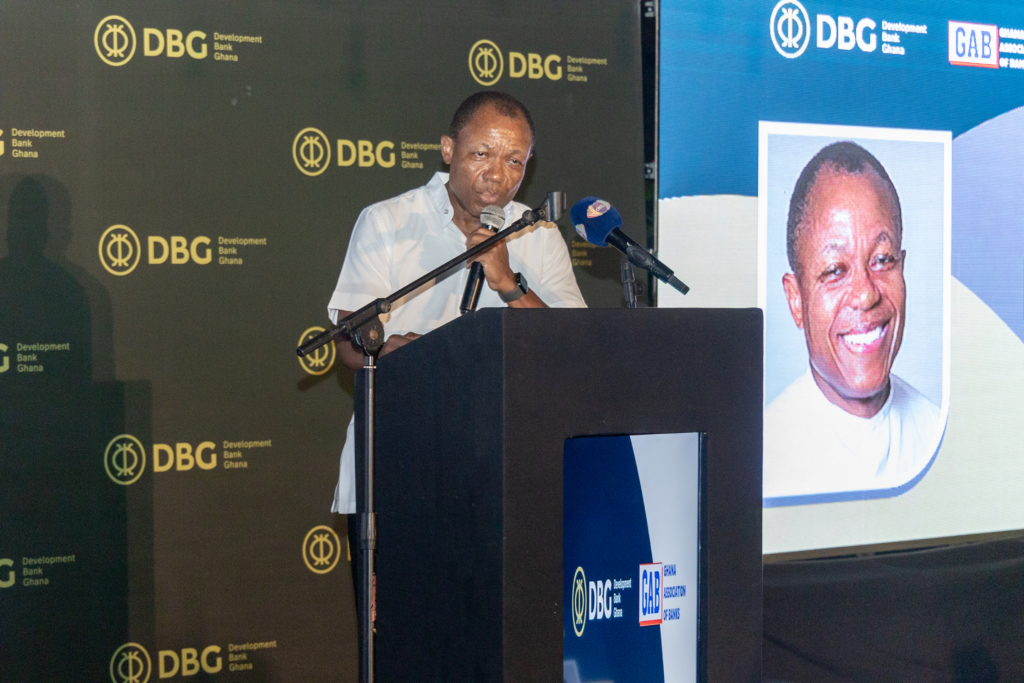
The event also marked a new partnership between the Development Bank of Ghana (DBG) and the Ghana Association of Bankers (GAB).
For the Associate Professor, the establishment of DBG is a laudable approach to financial institutions supporting the local economy, especially in this difficult period.
He insisted that these domestic investments are the way forward to solving Ghana’s unstable economy.
“Our economy is import-driven, hence any external shock affects us significantly so if we [banks] should invest more in production, manufacturing we would have more reserves which will provide enough employment for our teeming youth.
“The ripple effect on the country is enormous. We have the land, there are vast lands available and we have amazing weather, so all that is needed is the technical support and investment financing,” he stressed.
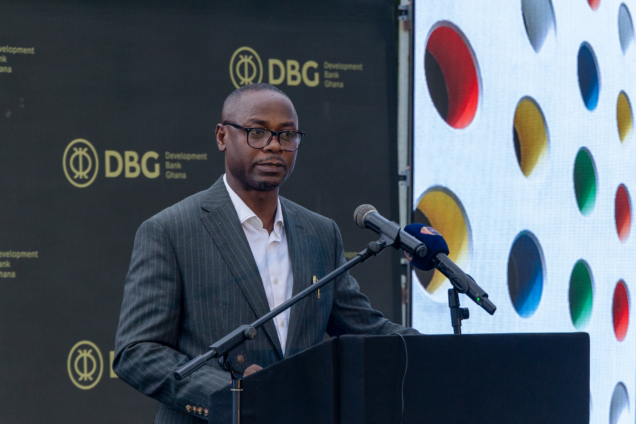
On his part, the Chief Executive of DBG, Kwamina Duker said his outfit remain committed to supporting the growth of businesses in Ghana amid these challenges.
Highlighting some of DBG’s achievements he said, “We provided capacity building to 644 local businesses, including 444 young entrepreneurs, and 52 staff from 13 financial institutions during the quarter. This training focused on various aspects of business management, entrepreneurship, and specialised lending to improve the sustainability and growth potential of SMEs, as well as enhance the lending capabilities of PFIs.
“DBG took deliberate actions to meet all covenants as required by its funding partners. This demonstrates the bank's commitment to responsible and sustainable lending practices, with the aim to position us as the best institution for attracting development finance funding into the country,” he added.
Latest Stories
-
Trump confirms meeting with Anthropic’s Amodei, repeats dismissal of AI fears
23 minutes -
China pushes back against US on Iran and Cuba in UN speech
32 minutes -
OpenAI, Anthropic CEOs called to appear at Australian AI probe
53 minutes -
T-bills auction: Government exceeds target marginally; yield on 91-day bill remains unchanged
4 hours -
GPL 2026/27: 10-man Aduana hand Kotoko defeat in Kumasi
4 hours -
GPL 2026/27: Medeama ease past Basake Holy Stars
5 hours -
Appiah Adomako writes: Why DVLA must stop treating every expired licence holder as delinquent
5 hours -
Tuchel rues ‘big mistakes’ – did Manchester City charges have impact?
5 hours -
Localization must transfer decision-making power, not just project responsibilities
5 hours -
Modernising Ghana’s traditional markets through the 24-Hour Economy markets initiative
5 hours -
New economy will boost local production and create jobs – Finance Minister
5 hours -
Manchester City chairman confident club will prove innocence
5 hours -
Republic of Ireland ‘raised awareness worldwide’ in Israel game
5 hours -
Germany still winless under Klopp after loss to Greece
5 hours -
Ronaldo on bench as Portugal beat Norway
5 hours