

Audio By Carbonatix
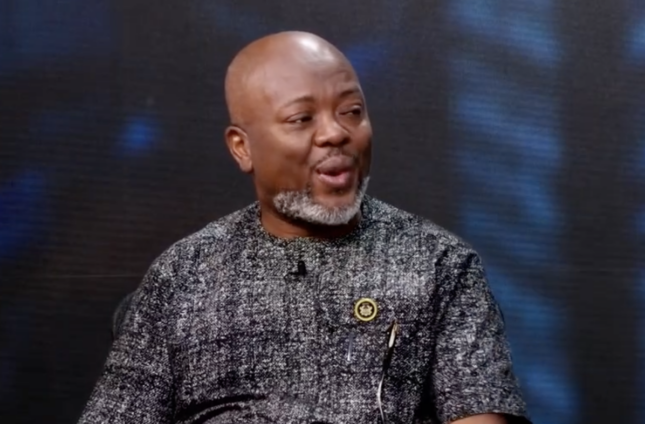
A member of the NDC Legal Team, Victor Kwadjoga Adawudu, says both the National Democratic Congress (NDC) and the New Patriotic Party (NPP) have turned arrests over offensive social media posts into political tools that help energise their supporters.
Speaking on JoyNews’ PM Express on Tuesday, he argued that while the law on offensive conduct should remain as a deterrent, it must not be weaponised against political opponents.
His comments come amid public debate over the conviction of 43-year-old TikToker Camilla Alhassan, who was sentenced by an Accra Circuit Court to one year in prison with hard labour after pleading guilty to offensive conduct conducive to breaches of the peace.
Prosecutors said she made offensive and derogatory remarks about President John Mahama in a TikTok video.
The NPP has condemned the sentence, describing it as an attack on free speech, and has pledged to support her appeal while urging civil society and other institutions to speak out.
Asked whether the provisions on offensive conduct in the Criminal Code should be repealed, Mr Adawudu said that decision should ultimately reflect the wishes of Ghanaians.
“Yes, if that is the sentiment of the populace, that they want this to be repealed. I think that if they see sense in using it,” he said.
He, however, maintained that the law still serves a purpose, especially in an era dominated by social media.
“Whilst this law should be there to serve as a deterrent to others, people who do unprintable things, it is for the people to know that when I do anything which is misguided, unguided, or say unprintable words, there is a law that can catch up.”
Rejecting the suggestion that the law criminalises free speech, Mr Adawudu argued that many social media users deliberately post offensive content for political attention.
“Most of the things you see on social media this time are unprintable,” he said.
He said some party loyalists intentionally insult public figures because the resulting arrest often benefits their political parties.
“It has become a route for party devotees to use it as a claim to fame. So now they go say things unprintable, insult others, insult leaders, and at the end of the day, they have a brush with the law, and they are being taken.”
According to him, the reaction that follows has become predictable.
“What do you see? You see the whole party machinery jumps in, and for the party, what it helps them is to energise the base. It is done by both parties.”
He stressed that the law should only be enforced in exceptional cases.
“I think that it will be there to serve by using it sparingly. It’s not just that you weaponise and use it against each other.”
Responding to concerns that the provision has been used repeatedly under the current administration, Adawudu blamed what he described as overzealous law enforcement officers.
“Normally from where I sit and what I know, it is some overzealous policemen when there’s something that is clear, something that may not even merit, some overzealous policemen and law enforcers feel that this is what we do.”
He suggested that in some instances senior officials may not even be aware of arrests before suspects are taken to court.
Drawing on his experience as a lawyer, Adawudu said he represented several people charged under the same provisions during the previous NPP administration, including Bobbie and Oheneba.
Reflecting on those cases, he questioned the effectiveness of the law in securing convictions.
“For what I can see from my practice is that most of the charges that they use this section 207, 208, at the end of the bill, when bail is granted, it fizzles out.”
Latest Stories
-
Labour Minister wants SOEs to help shape new public pay system
4 hours -
IPEC will ensure Equity and Sustainability in SOEs Compensation
5 hours -
White House bars CNN from travelling with Trump on Air Force One
6 hours -
Fennis wins second consecutive ITF J60 title in Accra
6 hours -
Spain beat England in thriller after Kane penalty miss
6 hours -
GPL 2026/27: Zaidan’s late goal ends Hearts of Oak unbeaten start
6 hours -
CEOs demand clarity on pay harmonisation, board autonomy as FWSC engages SOEs bosses over IPEC transition
6 hours -
2026 Women’s Super Cup: FC Savannah, Epiphany Warriors maintain top spots ahead of final group games
6 hours -
‘Is EOCO responsible for determining lawyers’ fees?’ – Baffour Awuah
6 hours -
David Beckles claims second J60 Accra title
6 hours -
No France cocaine suspect linked to Mahama, Vice President’s security details – NACOC
7 hours -
Anwelle Foundation launched in Jirapa to tackle poverty, youth unemployment
7 hours -
Joy Sports Editor Fentuo Tahiru Fentuo to moderate inaugural Music Meets Football Summit in Zambia
7 hours -
Court premises too volatile for Baffour Awuah’s attempted arrest by EOCO – Inusah Fuseini
7 hours -
Drug bust: Under no circumstances will NACOC leadership be compromised – Twum-Barimah
7 hours