

Audio By Carbonatix
If you have been following recent developments in Ghana, you may have read or heard the official announcement, “Vice President Professor Opoku-Agyemang to seek medical treatment abroad after sudden illness.” The aftermath of the Presidency's announcement, however, exposed our vulnerability to misinformation and disinformation as a country.
I was shocked to the core when, while sitting in public transport, I overheard a conversation between two women, with one confidently telling the other that ‘Vice nu y3 se wawu o’ which translates, ‘the Vice President has kicked the bucket.’ Her tone wasn't speculative, she delivered itwith certainty and clarity in her voice. For a moment, I had to question myself: Had I missed something? Was I not keeping up with the news? You should have seen how quickly I grabbed my phone to check credible news sources and immediately debunked this falsehood outright to prevent further spread.
Depending on the intent behind its spread, false or misleading content could be classified as either misinformation, disinformation or malinformation. Misinformation can be explained as the unintentional sharing of information, while disinformation involves the deliberate dissemination of false information with the intention to cause harm. Malinformation on the other hand, is based on fact, but used out of context to mislead, harm or manipulate.
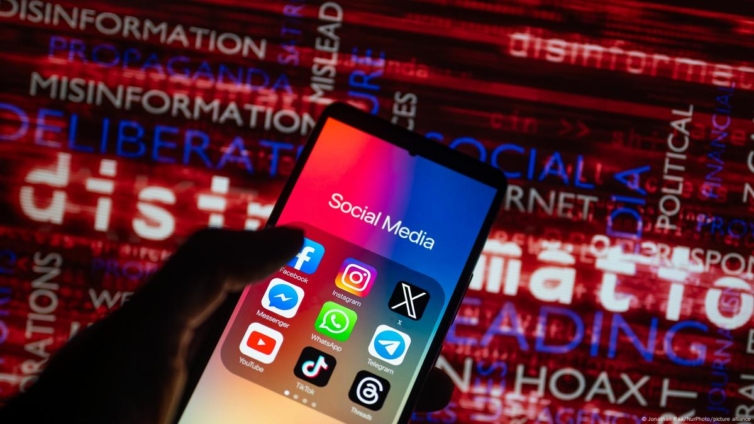
These concepts are not new to the world. However, the rapid expansion of internet access and social media platforms such as Facebook, X (formerly Twitter), TikTok, and Instagram, combined with the rise of artificial intelligence has opened the floodgates for misinformation and disinformation. This dangerous mix has made it easier than ever to spread false or misleading content on an unprecedented scale.
In Ghana, efforts to combat misinformation and disinformation have primarily focused on several key initiatives including the promulgation of legal instruments, the launch of the GhanaTodaywebsite to promote reliable information sharing, awareness creation and training programs on media and information literacy (MIL)andfact-checking, as well as conferences to explore sustainable solutions.
Although Ghana has not enacted any specific law addressing misinformation and disinformation, authorities have frequently applied relevant provisions in existing legislation to deal with persons purported to be spreading mis/disinformation.
The Electronic Communications Act (2008), Sections 185 and 208 of the Criminal Offenses Act (1960), and the Cybersecurity Act (2020) over the years have frequently been used against individuals accused of spreading false information.
However, it is interesting to note that, these laws being used to combat mis/disinformation fail to capture the contemporary dynamics in the media and information ecosystem. They fail to account for modern threats like AI-generated deepfakes, which have become increasingly prevalent and easy to produce at scale.
Moreover, the vague terminologies in existing legal frameworks, particularly undefined concepts like “fear and panic,” renders them dangerously susceptible to arbitrary enforcement that may infringe on free speech and expression. This legislative gaps became glaringly apparent during Ghana's December 2020 elections, when sophisticated deepfake contents spread, social media algorithms prioritized sensational falsehoods over factual reporting, and both domestic and foreign actors deployed networks of bots and fake accounts in an attempt to undermine the integrity of our elections.
The stark reality is that information disorder in our current information ecosystem bears little resemblance to the fake news scenarios envisioned by 1960s-era legislation, yet Ghana’s legal toolkit remains frozen in that era.
As Ghana works towards comprehensive legislation to combat the growing threat of misinformation and disinformation, we cannot afford to sit idle. Stakeholders must intensify efforts to equip citizens with critical media literacy skills, empower fact-checkers with robust support, and review outdated laws for the digital age. AI-generated deepfakes will only grow more sophisticated hence, our defenses must improve quickly. This is not just about policing falsehoods, but also preserving the very foundations of our democracy. The choice before us is clear: either we proactively build a society resilient to information disorder or we risk surrendering our public discourse to those who would weaponize lies.
Latest Stories
-
Burnham had formal meeting with Man City chair while mayor
6 minutes -
Is Ghana producing too many lawyers? What is the best lawyer-to-citizen ratio?
8 minutes -
NDC sinking Ghana’s democracy with Emelia Agbenyo’s appointment – Miracles Aboagye
18 minutes -
Seedorf back in football as Corinthians head coach
31 minutes -
Hincapié and Zubimendi injured in post-match training session
40 minutes -
Fridges in French supermarkets hit by cyberattack
51 minutes -
Qantas flight grounded after bedbug outbreak
60 minutes -
Reality Zone with Vicky Wireko: International Day of the Girl, shaping today’s girl for tomorrow’s future – ZONTA Clubs lead the way
1 hour -
Global health must be led by countries, not designed for them – Mintah Akandoh
2 hours -
Mahama honoured at 2026 World Health Summit in Berlin for global health leadership
2 hours -
Breast cancer is not a death sentence – Besease Kontire Obaapanin, Magmina Foundation lead awareness campaign
2 hours -
EcoBank invests in digital education of 4 Garisson School to mark 40 years in Africa
3 hours -
AGI urges investment in skills and raw materials to strengthen local manufacturing
3 hours -
GPL 2026/27: ‘We have to rectify our mistakes’ – Boadu reacts to Aduana FC defeat
3 hours -
No disability access, no building permit – KMA declares
3 hours