

Audio By Carbonatix
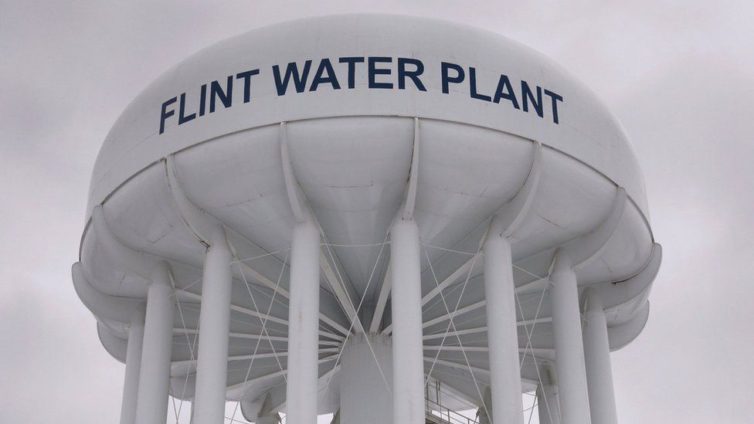
A US judge has approved a $626m (£467m) settlement for victims of the 2014-15 lead water crisis in Flint, Michigan.
Most of the money will go to the city's children exposed to drinking poisoned water, affected adults, business owners and anyone who paid water bills.
At least 12 people died after Flint switched its water supply to the Flint river in 2014 without treating the corrosive water to save money.
As a result, lead in some old pipes broke off and flowed through taps.
An outbreak of Legionnaires' disease followed, and nearly 100,000 residents were left without safe tap water.
Thousands of city residents later filed lawsuits against the state of Michigan.
"The settlement reached here is a remarkable achievement for many reasons," District Judge Judith Levy said on Wednesday.
She added that the deal "sets forth a comprehensive compensation programme and timeline that is consistent for every qualifying participant".
Most of the settlement will be paid by the state of Michigan, which was accused of repeatedly overlooking the public health risks.
Last year, prosecutors dropped all criminal charges against officials awaiting trial over the crisis, saying a more thorough investigation was needed.
Flint is a majority African-American city, where more than 40% of the residents live in poverty.
Why did the poisoning happen?
In 2014, Flint switched its water supply away from Detroit's system, which draws from Lake Huron, and instead used water from the Flint river.
Flint was in a financial state of emergency and the switch was meant to save the city millions of dollars.
But the water from the river was more corrosive than Lake Huron's water and was not treated properly, causing lead - a powerful neurotoxin - to leach from the pipes.
Residents started noticing that tap water sometimes came out blue or yellow - and many began to lose their hair, or develop rashes on their arms and face.
Despite this, local officials and leaders denied anything was wrong for over a year, even as residents complained that the water tasted and looked strange.
The city has since switched back to using Detroit's water system.
However, many local residents still rely on bottled water for drinking, cooking and washing, saying they no longer trust the government.
Latest Stories
-
Bahass Foundation launches vocational skills training to support mental health recovery in Wa
27 minutes -
NPP orders parliamentary aspirants and their supporters to suspend campaign activities
1 hour -
Techiman unites against child marriage: Joy Impact Makers Awardee leads charge on International Day of the Girl Child
1 hour -
Ghana Psychological Association calls for greater involvement of people with lived experience in mental health care
2 hours -
Ablakwa says Ghana could evacuate more citizens from South Africa if the situation worsens
3 hours -
Violence against girls must be tackled through individual responsibility – Gender advocate
3 hours -
Ghana’s BRICS bid must be guided by national interest – International Affairs Analyst
3 hours -
Journalists look back on a decade of breast cancer reporting in Ghana
4 hours -
President Mahama ends Resetting Ghana tour of Ahafo Region
6 hours -
African negotiators seek delivery of climate commitments at COP31
6 hours -
BoG develops AI rules for financial sector
6 hours -
‘Big Push’: Government assures contractors of prompt payments
6 hours -
Court fines miner for breaking into gold buying shop
6 hours -
Tarkwa court jails labourer for three years over GH¢123,000 theft
7 hours -
GAEC must retain nuclear scientists for Ghana’s nuclear ambitions – Minister
7 hours