

Audio By Carbonatix
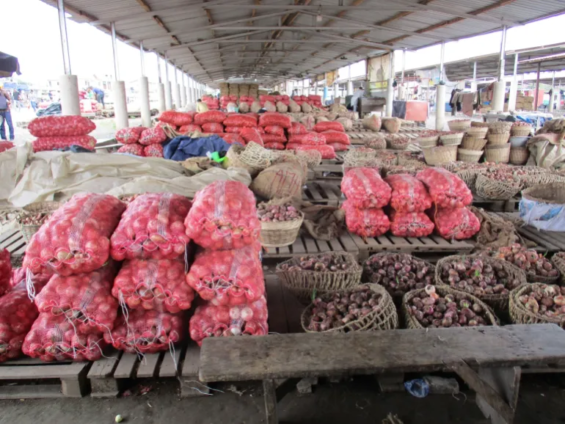
Traders and consumers at the Kaneshie, Odwana and Mallam Atta markets in the Accra Metropolitan Districts have decried the increase in prices of food commodities amid the current economic situation of the country.
They shared their concerns about the escalation of prices of commodities to the Ghanaian Times during asurvey at the aforementioned markets in Accra.
At the Kaneshie market, 30 pieces of tomatoes which used to be sold for GH¢20 was now sold at the same amount for six pieces, while a basket of tomatoes which was sold for GH¢50 and GH¢60 has gone up significantly, trading at GH¢600 and GH¢700.
Also, a cup of beans which was sold at GH¢6 now goes up GH¢8, while a kilogramme of rice which was sold for GH¢12 now pegged at GH¢20,
The Ghanaian Times further observed that a sizeable onion which was sold at 50p and GH¢1, was now selling from GH¢2 and above, while a tuber of yam which was sold at GH¢8 and GH¢7 now sells at GH¢14, GH¢15, and GH¢20, depending on its type and size.
At the Mallam Atta Market, four pieces of Okro which was sold at GH¢1 two months ago, now sells at GH¢2 for three pieces, while turkey berries which was sold at GH¢2 now sells at GH¢4 and GH¢5.
A sack of cassava was initially sold at GH¢150 and GH¢200 now sells at GH¢250 and GH¢350 depending on the size. However 15 pieces of cassava which was sold at GH¢20 two months ago now sells at the same amount for six pieces.
Mrs Olivia Antwi, a customer at the market, told the Ghanaian Times that the soaring cost of food commodities had made it difficult to manage herhousehold expenses.
“It’s becoming increasingly difficult to manage our household expenses with these relentless price increases,” she lamented.
According to her, she found it difficult to provide food for the family as her “housekeeping money” of GH¢100 could not match the increasing price of food commodities on the market.
“I’ve tried to cut corners wherever I can, buying cheaper cuts of meat, opting for store-brand products, but there’s only so much I can do,” she added.
Mrs Abena Adobea, a fried yam seller at the Odwana market, blamed the surge of the price of yam on the transportation cost from the urban centres.
“My husband’s income hasn’t increased, but our expenses keep rising. It feels like we’re constantly playing catch-up, trying to stretch every cedi to cover basic necessities”, she said.
Latest Stories
-
Labour Minister wants SOEs to help shape new public pay system
2 hours -
IPEC will ensure Equity and Sustainability in SOEs Compensation
2 hours -
White House bars CNN from travelling with Trump on Air Force One
3 hours -
Fennis wins second consecutive ITF J60 title in Accra
3 hours -
Spain beat England in thriller after Kane penalty miss
3 hours -
GPL 2026/27: Zaidan’s late goal ends Hearts of Oak unbeaten start
3 hours -
CEOs demand clarity on pay harmonisation, board autonomy as FWSC engages SOEs bosses over IPEC transition
3 hours -
2026 Women’s Super Cup: FC Savannah, Epiphany Warriors maintain top spots ahead of final group games
3 hours -
‘Is EOCO responsible for determining lawyers’ fees?’ – Baffour Awuah
4 hours -
David Beckles claims second J60 Accra title
4 hours -
No France cocaine suspect linked to Mahama, Vice President’s security details – NACOC
4 hours -
Anwelle Foundation launched in Jirapa to tackle poverty, youth unemployment
4 hours -
Joy Sports Editor Fentuo Tahiru Fentuo to moderate inaugural Music Meets Football Summit in Zambia
5 hours -
Court premises too volatile for Baffour Awuah’s attempted arrest by EOCO – Inusah Fuseini
5 hours -
Drug bust: Under no circumstances will NACOC leadership be compromised – Twum-Barimah
5 hours