

Audio By Carbonatix
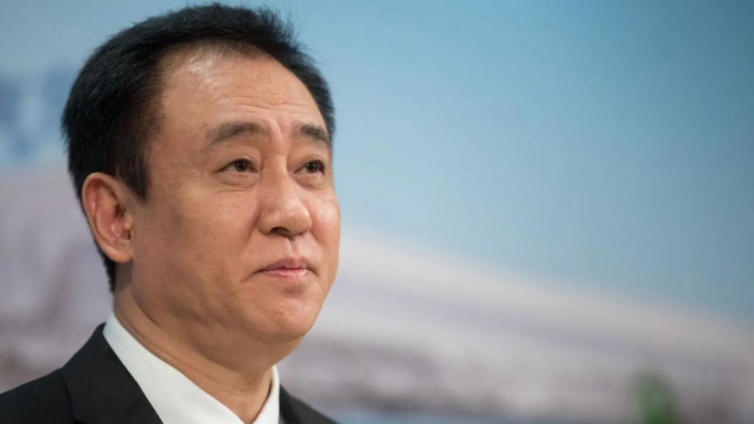
Hui Ka Yan, the founder of embattled Chinese property developer Evergrande, has pleaded guilty to a number of charges, including embezzlement of assets and corporate bribery, according to a statement issued by the court.
Hui expressed remorse during the public hearing on 13 and 14 April in Shenzhen, according to Chinese state media.
The court said it will announce its verdict on the case at a later date.
His guilty plea marks a pivotal moment in the fallout from Evergrande's collapse, which has shaken China's property sector and left investors and domestic banks reeling.
Evergrande was once China's biggest real estate firm, with a stock market valuation of more than $50bn (£37bn), but collapsed into a debt-driven crisis in 2021 that has unravelled its business.
The court heard that the company had taken millions of dollars in pre-sale funding from potential house buyers that were not used for construction. Instead, the funds were diverted to new projects, which resulted in hundreds of unfinished properties across China.
Hui, also known as Xu Jiayin, rose from humble beginnings in rural China, where he was raised by his grandmother before venturing into property development and establishing Evergrande in 1996.
Evergrande's downfall has often been cited as a trigger for China's persistent property market slump, which spiralled downwards in 2021 and has weighed heavily on the country's economic development.
At the time of its collapse, Evergrande had around 1,300 projects in the works across 280 cities in China.
Evergrande became known as the world's most indebted property developer after much of its empire was built on $300bn of borrowed money.
But its business was dealt a blow when Beijing introduced new rules in 2020 to control property debt, leading Evergrande to sell its properties at significant discounts to ensure cash flow.
In March 2024, Hui was fined $6.5m and banned from China's capital market for life for his company overstating its revenue by $78bn.
Hui was once Asia's richest person, with a fortune estimated at $42.5bn in 2017, according to a Forbes list of the continent's wealthiest people.
His company grew rapidly, lifted by an economic boom in China that was driven by heavy borrowing.
The business empire expanded beyond property and into making electric cars, food, and drinks. The firm also bought a majority stake in Guangzhou FC, which became China's top football team.
Evergrande's stock market valuation shrank by 99% before its shares were delisted from the Hong Kong exchange in August 2025, after more than a decade and a half of trading.
Latest Stories
-
Standard Chartered Bank delivers strong returns and sustainable shareholder value
2 minutes -
Akufo-Addo’s role in the artificial cedi stability is indisputable — Facts do not bend to political convenience
4 minutes -
Breaking Bad actor RJ Mitte dies aged 34
11 minutes -
Wontumi pleads not guilty in GH¢30m Exim Bank loan case
16 minutes -
Beyond the Flyer: Awareness without screening is not enough
22 minutes -
Bekwai MP donates GH¢100,000 to hospital for specialist equipment
30 minutes -
Van Vicker sues Lil Win for defamation, demands GH¢10m
36 minutes -
FIFA/ FIBA agency Pep Sports moves to admit Ghana’s 7-Foot Basketball talent to its Ultra-Modern Sports campus after MyJoyOnline report
38 minutes -
GAUA strike disrupts academic plans at University of Ghana as students, parents express frustration
42 minutes -
Dad’s Army/African Polistas crowned champions of 2026 Accra Polo Club Trustees’ Cup
49 minutes -
Mahama approves Integrated Basic Education Model, with funding expected in 2027 under GETFund formula
52 minutes -
Money-driven elections fuelling corruption – Haruna Iddrisu
56 minutes -
Excessive borrowing ‘cracked’ Ghana’s economy under Akufo-Addo – Haruna Iddrisu
1 hour -
NPP’s silence on economic indicators suggests Mahama is doing better – Haruna Iddrisu
1 hour -
GoldBod must be more accountable to Ghanaians – Haruna Iddrisu
2 hours