

Audio By Carbonatix
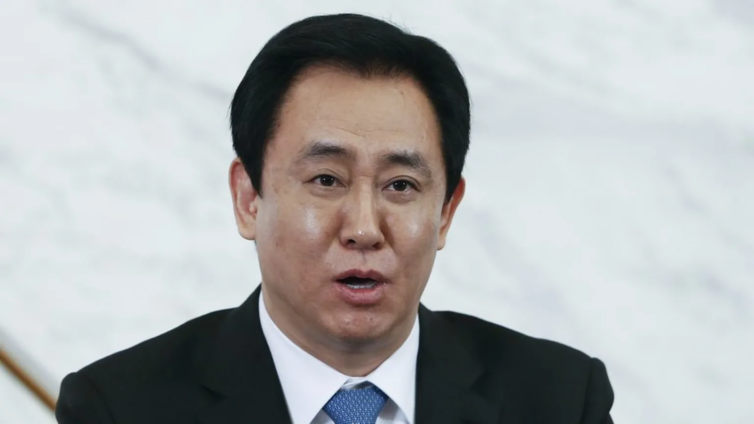
Struggling Chinese property giant Evergrande and its founder, Hui Ka Yan, have been accused of inflating revenues by $78bn (£61.6bn) in the two years before the firm defaulted on its debt.
The country's financial markets regulator has fined the company's mainland business Hengda Real Estate $583.5m.
Mr Hui also faces being banned for life from China's financial markets.
In January, Evergrande was ordered to liquidate by a Hong Kong court.
The China Securities Regulatory Commission (CSRC) laid much of the blame on Mr Hui, who was once China's richest man, for allegedly instructing staff to "falsely inflate" Hengda's annual results in 2019 and 2020.
Mr Hui was also fined $6.5m, according to a filing by the company to the Shenzhen and Shanghai stock exchanges.
Evergrande did not immediately respond to a BBC request for comment.
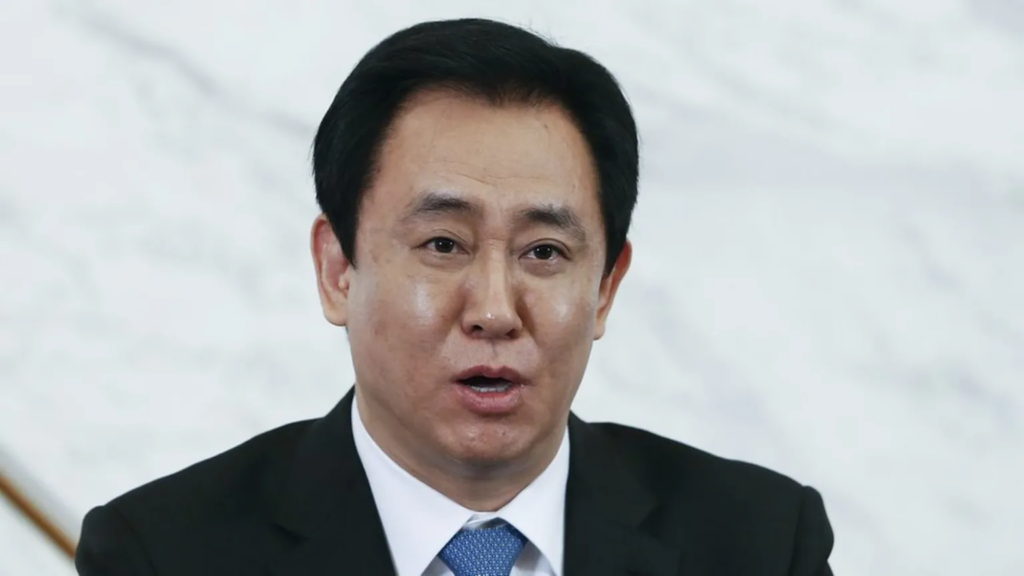
Last September, Mr Hui who is also the company's chairman was put under police surveillance as he was investigated over suspected "illegal crimes".
The announcement comes days after the CSRC vowed to crack down on securities fraud, and protect small investors with "teeth and horns".
Evergrande has been the poster child of China's real estate crisis with more than $300bn of debt.
Liquidators have been appointed to look at Evergrande's overall financial position and identify potential restructuring strategies.
That could include seizing and selling off assets, so that the proceeds can be used to repay outstanding debts.
However, the Chinese government may be reluctant to see work halt on property developments in China, where many would-be homeowners are waiting for homes they have already paid for.
Problems in China's property market are having a major impact as the sector accounts for around a third of the world's second largest economy.
The industry has been facing a major financial squeeze since 2021, when authorities introduced measures to curb the amount big real estate developers could borrow.
Since then several large property firms have defaulted on their debts.
On Monday, official data showed that property investment in China fell 9% in January and February from a year ago.
New construction starts also dropped by 30% which was their their worst fall in more than a year.
Latest Stories
-
Standard Chartered Bank delivers strong returns and sustainable shareholder value
2 minutes -
Akufo-Addo’s role in the artificial cedi stability is indisputable — Facts do not bend to political convenience
5 minutes -
Breaking Bad actor RJ Mitte dies aged 34
11 minutes -
Wontumi pleads not guilty in GH¢30m Exim Bank loan case
16 minutes -
Beyond the Flyer: Awareness without screening is not enough
23 minutes -
Bekwai MP donates GH¢100,000 to hospital for specialist equipment
30 minutes -
Van Vicker sues Lil Win for defamation, demands GH¢10m
36 minutes -
FIFA/ FIBA agency Pep Sports moves to admit Ghana’s 7-Foot Basketball talent to its Ultra-Modern Sports campus after MyJoyOnline report
38 minutes -
GAUA strike disrupts academic plans at University of Ghana as students, parents express frustration
43 minutes -
Dad’s Army/African Polistas crowned champions of 2026 Accra Polo Club Trustees’ Cup
50 minutes -
Mahama approves Integrated Basic Education Model, with funding expected in 2027 under GETFund formula
52 minutes -
Money-driven elections fuelling corruption – Haruna Iddrisu
57 minutes -
Excessive borrowing ‘cracked’ Ghana’s economy under Akufo-Addo – Haruna Iddrisu
1 hour -
NPP’s silence on economic indicators suggests Mahama is doing better – Haruna Iddrisu
1 hour -
GoldBod must be more accountable to Ghanaians – Haruna Iddrisu
2 hours