

Audio By Carbonatix
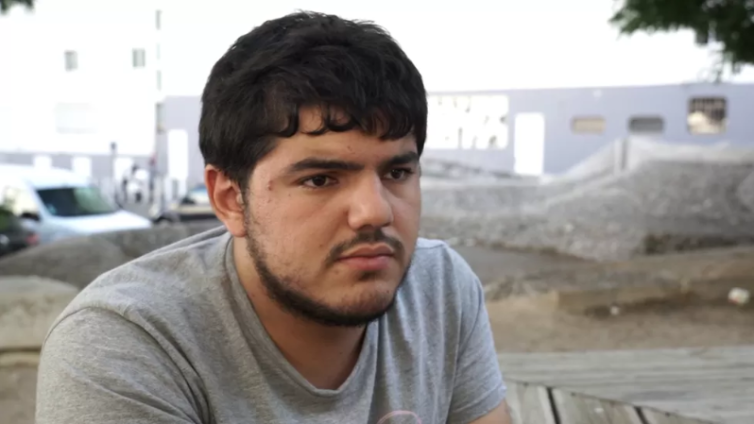
Amine was 17 when his brother's badly burned body was recovered from the boot of a torched car.
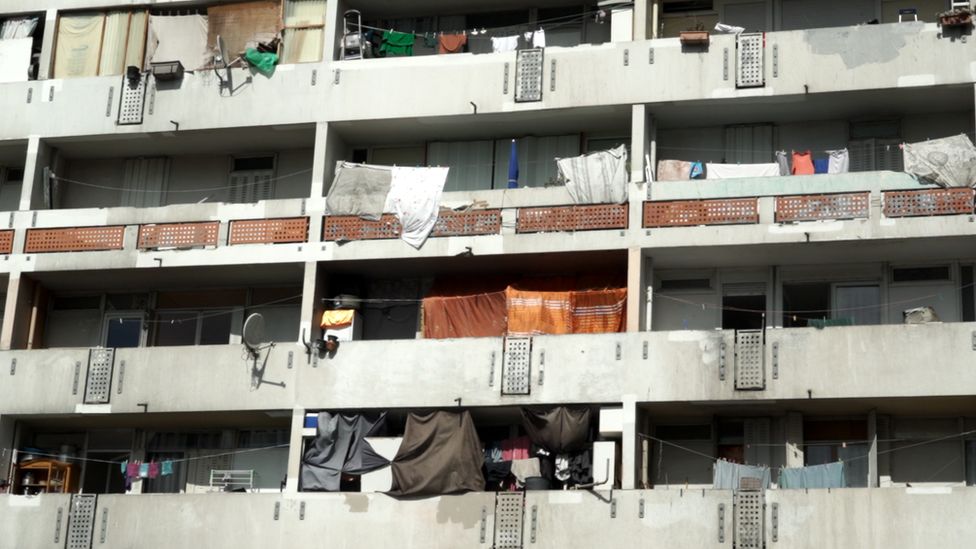
"My brother unfortunately fell into drugs early," he says, his face impassive as he glances up at the scruffy high-rise flats that surround us.
We sit, talking about his brother, who had trafficked drugs before his murder, in one of Marseille's most notorious neighbourhoods.
Amine, now 19, grew up here on the Frais-Vallon estate, a vast and deprived social housing project in the north of the city, which is blighted by gang and drug-related violence.
Not far away, a couple of young men lounge on a wall. Drug dealers work openly here in the harsh afternoon sunlight.
Trafficking is, Amine says, a seductive choice for the children who grow up here and have little money - and even fewer prospects.
"There are no other options. There are no companies coming here and saying we'll pay you more than minimum wage… here people are supermarket cashiers or cleaners or security guards. We can't be judges, lawyers or accountants."
He wasn't surprised by the recent riots - which also flared in Marseille, where businesses including a gun shop were vandalised and looted.
The riots followed protests over the fatal shooting by police of 17-year-old Nahel M in Paris.
"We are always in the same mess, the same misery and nothing will change, so I understand the anger of the young people. I don't justify the violence, but I understand it."
The riots and their aftermath have revealed the depth of anger, frustration and abandonment felt by so many French citizens.
We met Mado, a middle-aged woman who lives on the estate, near what used to be a community police station here.
This was, for many, a physical link between them and the French state; its demise grimly symbolic of an increasing disconnection.
"It's like living in a bin here," says Mado. "It's not safe. People defecate in the lifts and stairwells. For the politicians we are nothing. We are really nothing."
A man, Mourad, speaks angrily as he tells us that there are rats everywhere here.
"We don't all have the same rights. Politicians go on the media and say there are no second-class citizens, but it's not true in reality."
But few, perhaps, comprehend more clearly the profound divisions in French society - or their consequences - than Amine.
He now works to steer youngsters on the estate away from crime, but also supports the families of those who have paid with their lives.
Last year there were 31 drug trafficking-related murders in Marseille. This year there have been 23. Two-thirds of the victims were under the age of 30.
The French authorities have acknowledged both the tragedy and the problem.
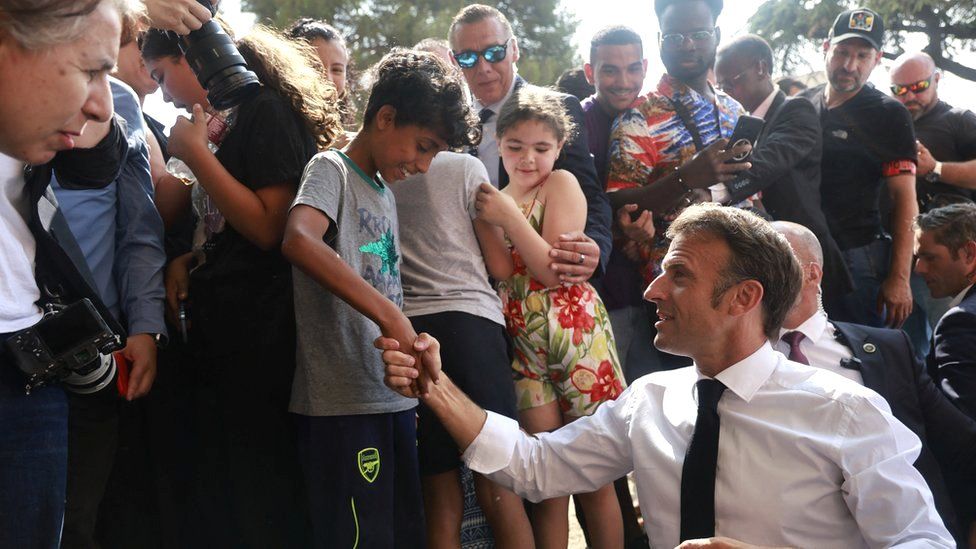
Two years ago, President Emmanuel Macron promised to fix Marseille. He announced a €5bn (£4.3bn; $5.4bn) plan to tackle crime and deprivation in the city.
He came back to the southern port city just before the riots to reinforce his commitment.
"Everything has to move faster," President Macron said at the beginning of a three-day trip, in which he visited the sites of regeneration projects including a police station, a school, a prison and a hospital.
But Amine, who has met him twice, has lost faith.
"When Macron comes, he comes to make announcements, not to listen to us."
Even the mayor of Marseille, Benoît Payan, acknowledges that he needs to bring his city together.
"For too long my town has been divided between people who are poor and people who are not. Between those who are considered by the public authorities and those who are not."
It is supposed to be a fundamental French value. But here, égalité (equality) is now an ambition.
Latest Stories
-
Government inherited GH¢111bn debt burden but continues infrastructure projects – Lands Minister
3 minutes -
Mallam Atta traders urge government to speed up 24-hour market redevelopment
12 minutes -
Catholic Church has a duty to speak on issues affecting human dignity – Bishop Gyamfi
22 minutes -
KATH sickle cell, blood bank project stalled over $1.6m legal dispute – CEO
36 minutes -
Restricting preaching in moving vehicles is an attempt to gag the church – Rev. Kwadwo Bempah
40 minutes -
Central Charismatic Baptist Church marks 30 years, urges review of law restricting preaching on buses
41 minutes -
Mafi Kope residents appeal for urgent medical intervention over illnesses affecting children, adults
49 minutes -
ECG to limit planned power outages in Ashanti to two days a week
50 minutes -
NYA CEO, management doing ‘yeoman’s job’with meagre budget — Parliament’s Youth Committee Chairman
54 minutes -
Mahama commends Trade Minister for championing Ghana’s industrial growth
1 hour -
Public cautioned against transactions over Borteyman land as Supreme Court rules in favour of Sino Africa
1 hour -
Ghana Air Force mourns with Nigeria over 25 citizens killed aircraft accident
1 hour -
Minority demands permanent scrapping of GSA’s $300 PVoC charge on imported vehicles
1 hour -
White vs traditional marriage: Aesthetics above culture?
2 hours -
Tumu Municipal Hospital receives new delivery bed to boost maternity care
2 hours