


Audio By Carbonatix
In 2012, President John Evans Atta Mills launched a $55 million Olam wheat mill in Tema, aiming to stabilise Ghana's flour supply. The timing was strategic. Ghana, at the time, imported most of its wheat flour, leaving bakeries and consumers vulnerable to global price shocks and supply disruptions.
The Olam Agri flour mill processed high-quality wheat from global sources into fortified brands like First Choice and Royal Gold, becoming a game-changer in a short span.
The facility operates an in-house bakery which tests formulations under local conditions before products reach customers and works with a technical sales team which supports bakeries nationwide.
The mill employed 300 people and achieved FSSC food safety certification, covering everything from grain storage to final packaging.
Scaling Up & Reaching Out
By 2017, surging demand outpaced production capacity. Olam Agri's expansion doubled output to 275,000 metric tons annually, transforming Ghana from an importer into West Africa's wheat flour export hub serving Togo, Benin, Niger, and Burkina Faso. In 2019, Olam Agri became the market leader in Ghana's local flour industry through this scaling up.
The upgrade created more jobs and reduced foreign exchange pressure. More importantly, it stabilized flour supply across the region during periods of global wheat volatility.
Beyond Production: Building a Healthier Bakery Ecosystem
By the early 2020s, Olam Agri had extended its focus beyond tonnage. The company recognised that food security depended not only on milling capacity and availability, but also required skilled, healthy bakers operating safe bakeries in hygienic environments.
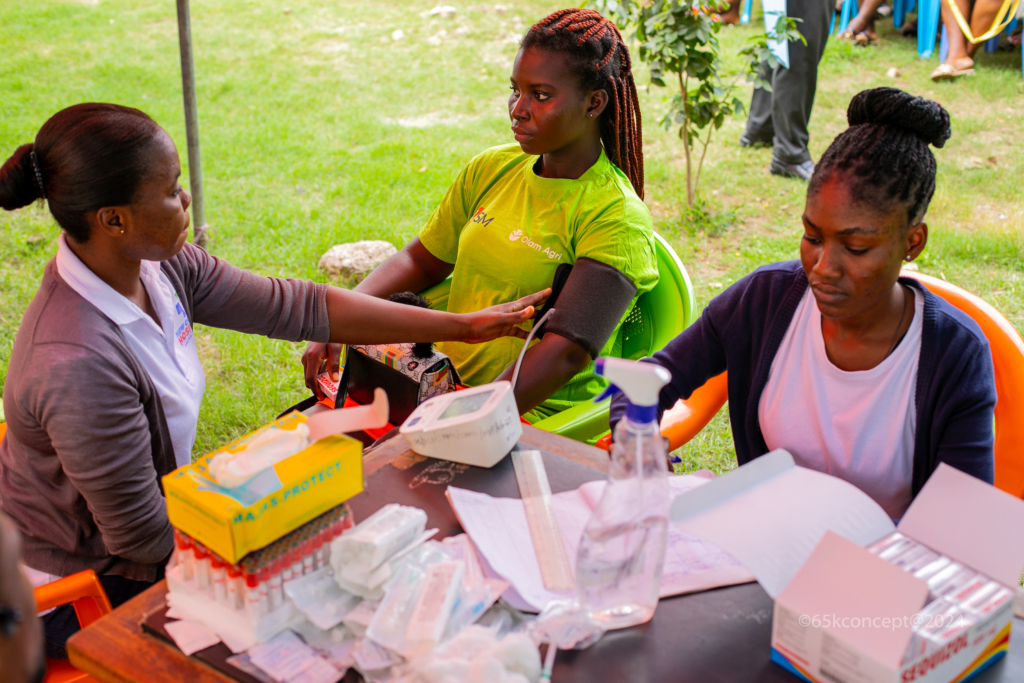
The ‘My Healthy Baker’ campaign, launched in 2022, has provided medical screening for over 8,000 bakers across the country, covering: hepatitis B testing, blood pressure checks, breast cancer screening, plus food safety education.
The ‘Grain Hygiene Standards Management’ program has trained more than 1,400 bakeries in structured hygiene protocols, with regular audits and support— which is very critical during the rainy seasons when food contamination risks are high.
There is also the ‘Raising Generations’ initiative, run in partnership with Ghana's Technical and Vocational Education and Training Service, offers scholarships and strengthens vocational pathways for bakers' dependents.
Finally, Olam Agri’s Annual Bakers' Conferences bring hundreds of professional bakers together and foster knowledge-sharing and problem-solving techniques, as well as discuss market challenges.
These programmes have a measurable impact. Bakeries report reduced spoilage, more consistent product quality, and better capacity to serve year-round demand.
The Pasta Facility
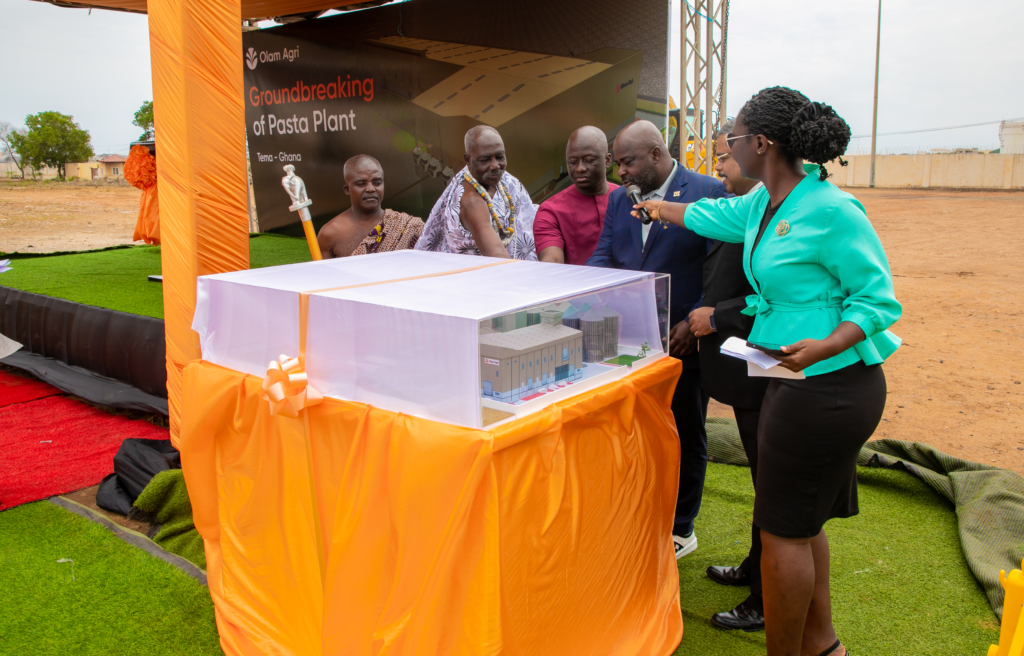
Building on the experience and success of a decade of wheat processing, Olam Agri is developing a pasta production plant adjacent to its facility in Tema. "With this facility, we will be able to bring high-quality, highly nutritious, and affordable pasta products closer to our Ghanaian consumers than ever before," said Baibhav Biswas, Country Head of Olam Agri in Ghana.
"This speaks of our commitment to Ghana and our efforts to contribute positively to the economic development and food security in the country thanks to greater stability in the supply and affordability of pasta."
Complementing the $55 million investment in the flour mill, Olam Agri is investing $40 million in the new pasta plant.
The initiative addresses Ghana's heavy reliance on imported pasta despite ample local flour capacity, creating jobs, retaining value domestically, and extending the value chain from milling to finished products. The pasta plant will add another 200 employees to the existing flour mill workforce of 300.
What It Demonstrates
The Tema wheat mill represents more than one company's investment. It demonstrates how industrial food production can be structured to serve multiple objectives: stabilising domestic supply, creating employment, building regional trade, and supporting the broader value chain through skills development and health programmes.
Twelve years after President Mills cut the ribbon, the facility has doubled in size, spawned a pasta plant, and helped establish Ghana as a flour exporter.
The model works because it addresses food security as a system, not just production capacity, but the technical support, health infrastructure, and skills training that make that capacity sustainable.
For Ghana's food manufacturing sector, the lesson is clear: strategic investments in agro-industrial infrastructure can compound over time, generating economic and social returns that ripple far beyond the factory gate.
Latest Stories
-
Struggling Real suffer title blow with Girona draw
57 minutes -
Mahama nominates Pamela Graham as Auditor-General
1 hour -
The five big sticking points in US-Iran talks
2 hours -
Melania Trump’s speech propels Epstein crisis back to forefront
3 hours -
What everyone should know about C-sections
3 hours -
Gunmen kill at least four people at Afghanistan picnic spot
3 hours -
Health Ministry engages Ga Mantse ahead of Free Primary Healthcare launch
4 hours -
We can tackle multiple priorities – Sam George defends Anti-LGBTQ Bill push
4 hours -
Statement: Ghana Chamber of Mines’ Response to Claims in Joe Jackson’s “Ananse Stories about the Economy of Ghana”
4 hours -
GES opens 2026 teacher recruitment for licensed B.Ed graduates
4 hours -
Ghana must value skilled trades, build resilient learners — Ibn Chambas
4 hours -
Ghana must rethink education around relevance, resilience and responsibility — Ibn Chambas
4 hours -
Prince Harry faces defamation lawsuit from charity he co-founded
4 hours -
South Korea deploys thermal cameras to track escaped zoo wolf
4 hours -
Calls for royal meeting with Epstein survivors grow ahead of US visit
5 hours