

Audio By Carbonatix
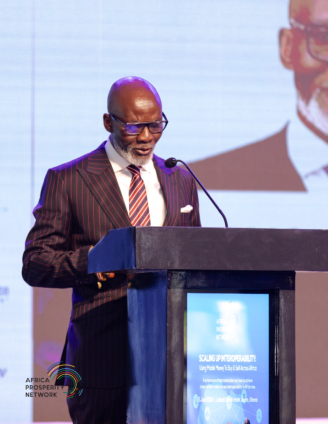
The events surrounding South Africa's self-imposed June 30 deadline for undocumented foreign nationals to leave the country represent one of the most extraordinary chapters of governance in post-apartheid Africa, but they should also inject fresh urgency into the continent's integration agenda, Gabby Asare Otchere-Darko has said.
In a strongly-worded analysis, the Founder and Executive Chairman of the Africa Prosperity Network drew parallels with historical mass expulsions across the continent — including Ghana's Alien Compliance Order of 1969, Uganda's expulsion of Asians under Idi Amin in 1972, and Nigeria's "Ghana Must Go" exercise of 1983 — but argued that South Africa's current crisis is fundamentally different and potentially more disturbing.
"These episodes were regrettable, traumatic and, in some cases, catastrophic. But they had one thing in common: they were state-driven policies, executed by governments exercising sovereign authority, however myopically," he wrote.
"What makes South Africa's June 30 moment different, and perhaps more disturbing, is that the state itself was not leading events. It was reacting to them."
Mr Otchere-Darko observed that citizen movements, social media personalities and self-appointed activists succeeded in shaping the national conversation on immigration in ways few could have anticipated, with videos attracting millions of views on TikTok, Instagram and other platforms.
He raised concerns about the authorities' initial response, suggesting that the state stood by while intimidation, harassment and public vigilantism flourished without decisive intervention.
"When a state hesitates to exercise its authority, others inevitably step forward to fill the vacuum," he stated.
The legal practitioner warned that South Africa is today at risk of becoming a continental outlier on African solidarity, with its moral authority on the continent being seriously damaged by the events.
"This is why many analysts argue that what we are witnessing is not simply a migration crisis. What the rest of Africa appears to be seeing is the visible manifestation of a state losing control over the narrative, over the streets and, ultimately, over its own legitimacy to influence the continent's all-important policy direction on economic integration and related matters," he wrote.
He noted that President Cyril Ramaphosa's government has suffered a serious blow to its credibility and has its work cut out to restore it, adding that if South Africa cannot be seen to guarantee the safety and dignity of all those living within its borders, including fellow Africans, then institutions such as the African Union must be prepared to speak and act with greater moral clarity.
Mr Otchere-Darko argued that the deeper truth behind the crisis lies in African leaders' collective failure to implement the continent's most ambitious integration projects.
He pointed to the Treaty Establishing the African Economic Community, adopted in Abuja in 1991, which envisioned a progressively integrated Africa with free movement, a customs union, a common market and ultimately an African Economic Community.
The subsequent Protocol to the Treaty Relating to Free Movement of Persons, Right of Residence and Right of Establishment, adopted in Addis Ababa in 2018, was intended to make that vision a reality. Yet eight years later, only four countries have ratified it.
"Africa's leaders embraced the rhetoric of integration while retreating from its practical implementation. What is unfolding in South Africa is, in part, the consequence of insufficient action on integration," he stated.
He noted the irony that South Africa, whose domestic politics often betray scepticism towards deeper African integration, stands to gain the most from it, pointing to the continent's single market of 1.5 billion people and the opportunities it offers for economies with advanced manufacturing, services and logistics sectors.
"The prosperity of South Africa lies not in turning inward, but in embracing the rest of Africa more warmly," he wrote.
Drawing on social psychology, Mr Otchere-Darko characterised the Afrophobia visible in South Africa today as less about foreigners than about disappointment with a political and economic system that has failed to deliver security, prosperity and dignity.
"Rather than confront the structural causes of that failure, some activists have chosen a weaker and more vulnerable target: black Africans from elsewhere on the continent," he said.
He described the phenomenon as "the politics of unification through a common enemy — the creation or exaggeration of an external threat to divert attention from internal failures. It is scapegoating masquerading as patriotism."
The author, who is also Senior Partner of Africa Legal Associates, ALPi Ghana, a Pan-African commercial law firm, urged greater pressure on African leaders to implement AU policies and strategies that will enable the free movement of people, goods, services, capital and creativity across Africa.
"The way we fight this is to pile greater pressure on our leaders across the African continent to implement the policies and strategies of the AU that will enable the free movement of people, goods, services, capital and creativity across Africa for our shared prosperity and dignity," he concluded.
Latest Stories
-
From Campaign Propaganda to Gov’t Accountability: When the message-makers demand a seat at the table
8 minutes -
Ashanti Region Security Coordinator warns sand winners to stay off Accra–Kumasi Expressway site
12 minutes -
PZ Cussons Ghana promotes hand washing among schoolchildren through Camel campaign
36 minutes -
30 NDC aspirants file nominations in Upper West as regional election approaches
50 minutes -
UPSA launches laptop assembly plant, requiring new students to assemble their own devices
55 minutes -
UCC sociologist calls for action on gender inequality to end child marriage
57 minutes -
LSN questions Ghana’s proposed five-year presidential term and DCE election reforms
58 minutes -
AFCON 2027Q: Bjorkegren to lead Black Stars for Somalia doubleheader with Tanko and Attram as assistants
59 minutes -
AMA completes road repairs on Kwame Nkrumah Avenue
1 hour -
Law Students’ Network warns executive dominance could undermine constitutional review
1 hour -
Mahama to meet relevant stakeholders over concerns about the new Customs Act
1 hour -
CHASS demands a 20% increase in SHS funding and payment of outstanding debts
1 hour -
Investigation launched after male body found in County Cork
1 hour -
We have been scammed by NDC, government is only doing PR – Abanga Fuseini
1 hour -
Tamale Teaching Hospital records 44 new breast cancer cases in six months
1 hour